


Previous
Next

Construction

CONSTRUCTION COURSES FOR 16-19 YEAR OLDS

The South West’s construction industry annual recruitment requirement of 2.6% per year, is the strongest across the UK. 

Our outstanding range of courses are taught by experienced professionals in high-quality facilities, and provide qualifications that are recognised across the industry.

Use this page to discover your perfect career and associated course options - Vocational qualifications (full-time in the campus workshops) or Apprenticeships in the workplace.


a male student doing some woodwork
CEH logo
CEH construction logo

As a Weston College student you will become part of our exciting new Construction Career Excellence Hub. Your study programme will have lots of career boosting benefits, all with the aim of giving you the opportunity to become career ready! This includes unrivalled exposure to employers, enhanced work experience, employer visits and more...
Our Construction Career Excellence Hub endorsers include:

Balfour Betty logo
GallifordTry logo
St Modwen Logo
Wilmot Dixon Logo
Bradfords building suppliers logo
Kier Logo


Hydrock logo
Hinkley point c logo

Find out more

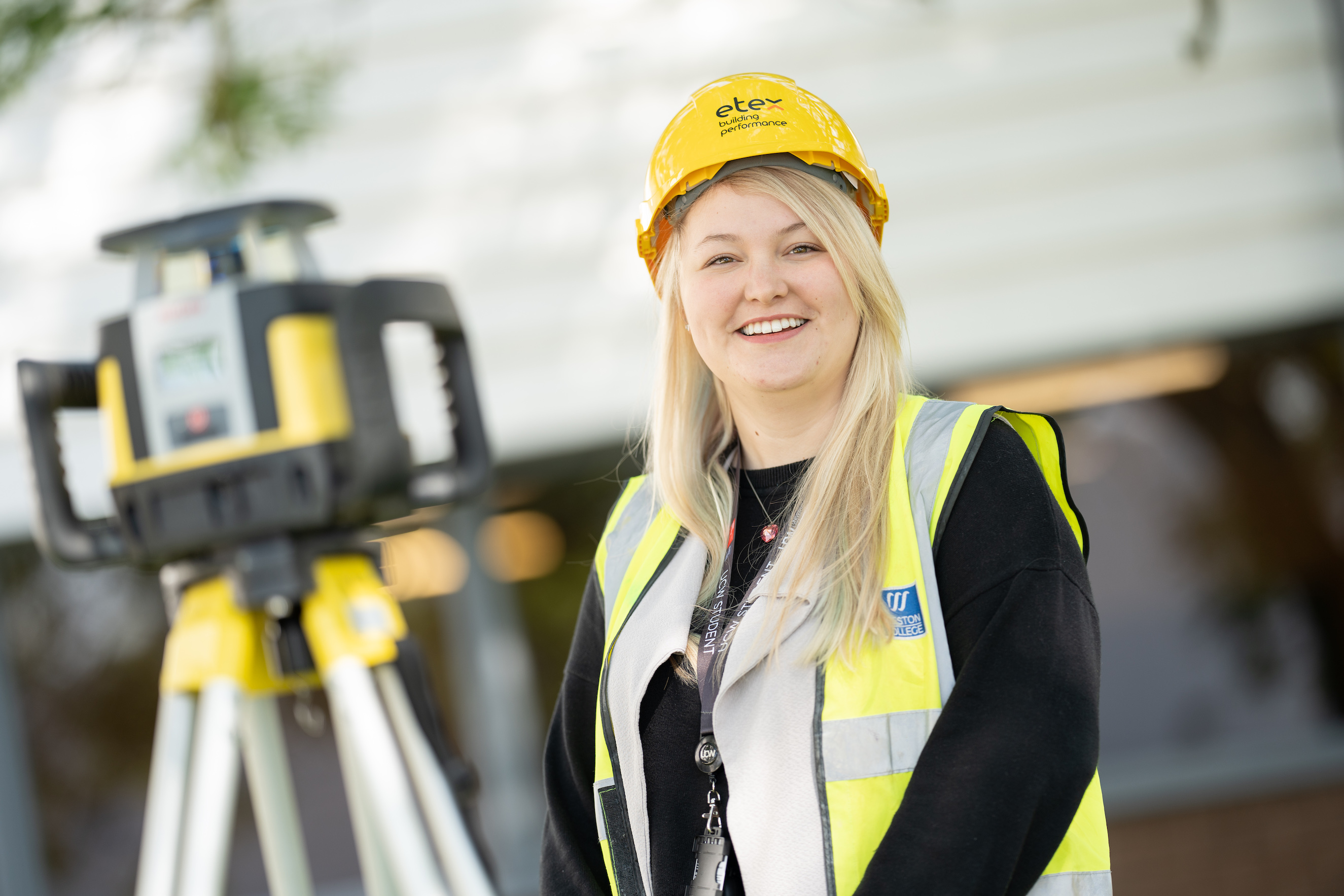
women smiling in a hard hat

WHAT OUR PARTNERS SAY...

We’re delighted to be involved with the Construction Career Excellence Hub. It gives learners the chance to hear from and speak to industry professionals and hear what it is really like to have a career within the construction industry. They can see the breadth of careers our industry has to offer.

Danielle Haskings

Social Value Manager, Wilmott Dixon

The Construction Career Excellence Hub presents an exciting opportunity for us to invest in local talent and develop learners who could become the future leaders in our business.
Weston College is the perfect location for people to develop their construction skills, and we are thrilled to play a role in your development and offer further assistance on your journey into our industry.

David Bowdley

Operations Director, Galliford Try

OUR CONSTRUCTION VIDEOS

Industry Facts

A career in construction can involve all kinds of settings and skills. It could range from working on building sites for new builds, to renovations, to creating beautifully crafted furniture. Led by experienced professionals, with great links with local employers to help launch your career, our courses are designed to give you the skills that will prepare you for employment.

Over 53,000 construction companies in the South West
Electrical professionals can earn up to £45,000 a year
Over 11,000 building projects across the South West
Over 2.7 million employees in the construction industry in the UK
 

Facilities

The South West Skills Campus offers state-of-the-art training facilities dedicated to construction training.


LATEST NEWS

Richard Hanney Headshot

<p>Richard Hanney, Head of Construction at Weston College, discusses the mental health challenges facing the construction industry, and the college’s approach to supporting students.</p><p>&nbsp;</p><p><strong>Can you introduce construction at Weston College?</strong></p><p>At Weston College, construction is more than just learning a trade – it’s about developing skilled, work ready individuals who understand both the technical and human side of the industry. We deliver a wide range of programmes across trades including <a href="https://www.weston.ac.uk/what-can-i-study/courses-16-18-year-olds/i-wan…;, <a href="https://www.weston.ac.uk/what-can-i-study/courses-16-18-year-olds/i-wan…;, <a href="https://www.weston.ac.uk/what-can-i-study/courses-16-18-year-olds/i-wan…;, <a href="https://www.weston.ac.uk/what-can-i-study/courses-16-18-year-olds/i-wan…;, and <a href="https://www.weston.ac.uk/what-can-i-study/courses-16-18-year-olds/i-wan…;, all rooted in real world application. Our focus is on high standards, professional behaviours, and building a culture that reflects industry expectations from day one. We don’t just train learners to pass qualifications; we prepare them to thrive in demanding, fast paced environments.</p><p>&nbsp;</p><p><strong>How do you prepare learners for the realities of the workplace?&nbsp;</strong></p><p>We mirror industry as closely as possible. That means clear expectations around punctuality, standards, teamwork, and accountability. From day one, learners are expected to present themselves professionally in industry standard uniform and bring their own tools, helping to build pride, responsibility, and a true sense of belonging to the trade.</p><p>Learners experience real life working conditions through employer set projects, live briefs, and meaningful work experience. Alongside this, we’ve worked with employers to define the “top 10 tasks” for each trade, the core, practical skills that allow learners to contribute from their very first day on site or in an apprenticeship.</p><p>We also place a strong emphasis on behaviours, how to communicate, how to respond to pressure, and how to take pride in their work. The goal is simple: when they step onto site, nothing feels unfamiliar, and they are ready to add value immediately.</p><p>&nbsp;</p><p><strong>How do you support them with mental and emotional challenges?&nbsp;</strong></p><p>We take a proactive, whole learner approach. Mental health and wellbeing are embedded into tutorials, personal development sessions, and day today interactions. Staff are trained to spot early signs of struggle, and we create environments where learners feel safe to talk. We also connect them with wider support services where needed.</p><p>A key part of our approach is recognising the reality of construction as a predominantly male industry, where mental health challenges are often underreported. National data shows that suicide rates in construction are significantly higher than in many other sectors, and this is often linked to stigma, pressure, and a culture where individuals feel they have to “just get on with it.” We address this directly with our learners.</p><p>This academic year, our construction team has responded to several high profile incidents involving learner wellbeing. Our collaborative, proactive approach, working closely with college support services and external stakeholders, has been a strong demonstration of our culture and ethos in action, ensuring learners receive the right support at the right time.</p><p>We work hard to break down those barriers early, normalising conversations around men’s mental health and reinforcing that speaking up is not a weakness, but a strength. We encourage learners to look out for each other, to check in, and to understand that a simple conversation can make a real difference. Just as importantly, we educate them that mental health is no different to physical health , if something isn’t right, it needs support, not silence.</p><p>Ultimately, we are not just preparing learners to work in construction, we are preparing them to navigate its pressures in a healthier, more sustainable way, both for themselves and for the teams they will be part of.</p><p>&nbsp;</p><p><strong>Why does construction face such high levels of mental health issues?</strong></p><p>Construction faces a unique combination of pressures that, when layered together, significantly increase the risk of poor mental health. At its core, it is a high demand, high pressure industry. Tight deadlines, long hours, physically demanding work, and constant pressure to deliver all contribute to chronic stress and fatigue. Research consistently highlights stress, anxiety, and depression as the most common forms of psychological distress among construction workers.</p><p>Beyond the day today pressures, there are wider structural challenges. Job insecurity, fluctuating workloads, financial pressure, and working away from home can all lead to social isolation and strain on personal relationships. These factors don’t just affect performance on site, they impact life outside of work, creating a cycle that is difficult to break.</p><p>There is also a strong link between physical and mental health in construction. Long-term pain, injury, and fatigue are common, and evidence shows these can contribute directly to psychological distress over time.</p><p>Critically, the industry often lacks consistent, visible support systems. Limited social support, poor help seeking behaviours, and a lack of integrated mental health provision mean that issues can build up unnoticed. In some cases, individuals turn to unhealthy coping mechanisms such as alcohol or substance use, which further compounds the problem.</p><p>When you combine all of this, high pressure, physical strain, job insecurity, and limited support, you create an environment where mental health challenges are more likely to develop and less likely to be addressed early. That is why the industry continues to see disproportionately high levels of mental health issues compared to many other sectors.</p><p>&nbsp;</p><p><strong>What cultural norms in construction make it hard to talk about mental health?</strong></p><p>One of the biggest barriers in construction is cultural rather than structural. The industry has long been built on values such as toughness, resilience, and self-reliance. While these are important qualities, they have often been interpreted in a way that discourages openness, where showing vulnerability is seen as weakness rather than strength.</p><p>Research shows that in male dominated industries like construction, individuals are more likely to adopt and reinforce “masculine norms” such as emotional control, independence, and reluctance to seek help. In particular, a strong emphasis on self-reliance has been identified as a key factor linked to poorer mental health outcomes.</p><p>There is also a persistent stigma around mental health. Many workers feel uncomfortable discussing personal struggles, and conversations tend to stay at surface level. Evidence shows that deeper discussions about mental health are rare, and individuals often mask their difficulties, sometimes until a crisis point, which is why serious incidents can appear to come “out of the blue.”</p><p>The social dynamics on site can reinforce this. Banter, humour, and a tough communication style are part of the culture and can build strong team bonds, but they can also act as a barrier. It is often easier to deflect with humour than to open up about how you’re really feeling.</p><p>Finally, there is often a lack of confidence in how to respond. Many workers and managers simply don’t feel equipped to have conversations about mental health, which means opportunities to support each other are missed.</p><p>Changing this doesn’t mean losing the identity of the industry, it means evolving it. The next step for construction is to redefine strength, where resilience includes the ability to speak up, support others, and recognise when something isn’t right.</p><p>&nbsp;</p><p><strong>How do these pressures affect wellbeing?</strong></p><p>If left unchecked, these pressures don’t just lead to stress they compound into sustained psychological distress. Research shows that construction workers commonly experience overlapping issues such as stress, anxiety, depression, and fatigue, often all at once rather than in isolation.</p><p>What makes construction particularly challenging is how these pressures build over time. Tight deadlines, long hours, and physical strain create cumulative stress, which can lead to burnout, reduced concentration, and poor decision making. On site, that has real consequences mental fatigue is directly linked to lower safety awareness, increased incident rates, and reduced quality of work.</p><p>There is also a wider human impact. Evidence shows that poor mental health in construction doesn’t stay at work it affects relationships, increases social isolation, and can lead to harmful coping mechanisms such as substance use.</p><p>At its most serious, the consequences are stark. Suicide rates in construction remain significantly higher than the national average, highlighting what happens when pressure, stigma, and lack of support intersect over time.</p><p>In short, this isn’t just a wellbeing issue it’s a performance, safety, and human issue combined.</p><p>&nbsp;</p><p><strong>Why is a focus on mental health so important in construction?</strong></p><p>Because mental health underpins everything the industry relies on safety, productivity, and people.</p><p>Research consistently shows that psychological distress has a direct impact on safety outcomes, productivity, and overall work quality. When individuals are struggling mentally, they are less focused, less engaged, and more likely to make mistakes. In a high risk environment like construction, that can be the difference between a near miss and a serious incident.</p><p>There is also a clear business case. Mental health related issues account for hundreds of thousands of lost working days across the industry, alongside increased absenteeism and reduced performance.</p><p>But beyond performance, this is about sustainability of the workforce. The industry is already facing skills shortages if people are burning out, leaving, or not entering the sector due to its reputation, that challenge only grows.</p><p>We’ve made significant progress in physical safety over the last 20 years. The next step is clear: mental health needs to be treated with the same level of priority, structure, and accountability. Not as an initiative but as a core part of how we operate.</p><p>&nbsp;</p><p><strong>What can learners do to support themselves and others?</strong></p><p>The starting point is awareness. Learners need to understand that mental health is part of the job, not separate from it. Recognising early signs of stress whether that’s fatigue, frustration, or withdrawal is critical, because research shows these issues often build gradually over time.</p><p>Secondly, we encourage them to challenge the culture they are entering. Evidence shows that in construction, many individuals don’t seek help and often mask how they’re feeling, which is why serious issues can appear to come “out of the blue.” Learners have an opportunity to be part of changing that by talking, checking in with each other, and creating peer support networks from day one.</p><p>There’s also a practical element: knowing where to go for support, whether that’s a tutor, employer, or external service. Confidence in accessing help is just as important as recognising the need for it.</p><p>Ultimately, we want learners to take responsibility not just for their own wellbeing, but for the team around them. In construction, no one works alone and that applies to mental health just as much as it does to safety.</p><p>&nbsp;</p><p><strong>What could a mentally healthier industry look like in 10 years?</strong></p><p>A mentally healthier construction industry would look very different but in many ways, it would feel familiar.</p><p>The biggest shift would be cultural. Research highlights that stigma, macho culture, and poor help seeking behaviours are key barriers today. In 10 years, those barriers should be significantly reduced. Conversations about mental health would be normalised no different to discussions about physical safety.</p><p>From a structural perspective, we would see consistent systems in place across the industry: trained managers who understand mental health, clear support pathways, and proactive wellbeing strategies embedded into day to day operations. Evidence already shows that organisational support and open communication are among the most effective ways to reduce psychological distress.</p><p>Most importantly, individuals would feel confident speaking up early before issues escalate. That’s the real shift: moving from reactive support to preventative culture.</p><p>&nbsp;</p><p><strong>How would the industry change if mental health matched physical safety in priority?</strong></p><p>It would be transformational.</p><p>We know from decades of progress in physical safety that when the industry prioritises something, it improves. The same principle applies here. If mental health was treated with equal importance measured, discussed, and embedded into daily practice you would see tangible changes across the board.</p><p>Safety would improve, because workers would be more focused and less fatigued. Productivity would increase, as individuals are more engaged and able to perform at their best. Teams would be stronger, with better communication and trust.</p><p>Crucially, retention would improve. Research shows that poor mental health contributes to people leaving the industry, while stigma discourages new entrants. Addressing this would not only protect the current workforce but also make construction more attractive to the next generation.</p><p>Ultimately, it would shift construction from being seen as a high-pressure, high-risk environment to a high performance, people focused industry. One that delivers not just on projects but on the wellbeing of the people who build them.</p>

Finton and Ashton stood in front of birnbeck pier

<p>Two of Weston College’s Construction Professions students are gaining invaluable real-world experience through their involvement in the project to restore <strong>Birnbeck Pier</strong> in Weston-super-Mare. Through our strong partnership with <a href="https://n-somerset.gov.uk/">North Somerset Council</a> and leading industry contractors, these learners have secured exciting opportunities to contribute to this landmark scheme as part of their 315-hour industry placement.</p><p>Students studying the T-Level in <a href="https://www.weston.ac.uk/what-can-i-study/courses-16-18-year-olds/surve…, Surveying and Planning for Construction</a> benefit from a blend of classroom learning and practical, on-site experience. At Birnbeck Pier, this includes guided technical site walks and the chance to engage directly with experienced construction professionals, helping to bring their studies to life.</p><p>Following a competitive selection process, two of our students were chosen to undertake extended placements with the council’s appointed contractors. These placements form a core part of the T-Level qualification, and are essential in equipping learners with the technical knowledge and industry experience needed to launch successful careers in construction.</p><p>One of our students, Fin, joined the project in mid-December after being appointed by Bristol-based contractors <strong>Smith and Brenson, </strong>who are delivering the landside phase of the development. Over the past four months, Fin has become an integral part of the on-site team, gaining experience in both site operations and project coordination.</p><p>Our second student, Ashton, recently began their placement with <strong>Mackley,</strong> a specialist civil engineering contractor leading the restoration of the Grade II* listed pier structure. This work offers a unique opportunity to contribute to a complex marine and heritage project of national significance.</p><p>Finton said:<em> “I’ve learnt a great deal since starting my placement. The hands-on work I’ve done has been very helpful as it’s given me a strong understanding of the project and the challenges that come with it. Working in the site office and joining project meetings has been especially beneficial for my college course as it’s allowed me to see the different roles people take on within projects and how they contribute to the overall outcome. This is also helping me to develop a clearer understanding of what I might like to do in my future career and the different options available to me."</em></p><p>Ashton said:<em> “I’m gaining real hands-on experience alongside classroom learning, which makes everything feel more relevant and exciting. It’s helped me build confidence in my skills and given me a clear path towards a future career in the industry. Considering how important the pier is historically, it’s great to be playing a small role in its restoration. It closed before I was born, so I’m looking forward to being able to access it for the first time once work is complete.”</em></p><p>Daniel Comerford, Lecturer in Construction Professions, said: <em>“We are extremely grateful to North Somerset Council and their contractors - Smith and Brenson, and Mackley - in allowing two of our learners the opportunity to work on the Birnbeck Pier project. This will allow them to put into practice the skills that we teach them in college, to a real-life, complex project, which in turn will increase their learning and understanding of the complexities of the construction industry.”</em></p><p>We are incredibly grateful to <strong>North Somerset Council </strong>and their contractors, <strong>Smith and Brenson </strong>and<strong> Mackley, </strong>for their ongoing support in providing these placements. Collaborations like this are key to creating meaningful career pathways for our students and supporting the development of the next generation of construction professionals.</p>

Griffiths logo

<p>We spoke with Kate from <a href="https://griffiths.co.uk/">Alun Griffiths</a> about the ways in which Griffiths consistently collaborate with Weston College.</p><p>&nbsp;</p><p><strong>1. Could you introduce yourself and explain your role at Alun Griffiths?</strong></p><p>My name is Kate Hamilton-Border, and I am the Regional Social Value Coordinator-England at Griffiths. I am responsible for the coordination of our social value activity across all our projects in England, ranging from working with local charities, supporting careers and stem activities in education settings, and developing local employment opportunities.</p><p>&nbsp;</p><p><strong>2. What services does Alun Griffiths provide?</strong></p><p>Griffiths is one of the leading civil engineering and construction contractors in Wales and the West of England, delivering major infrastructure that supports economic growth, connectivity, and community wellbeing. Founded in 1968 by Alun Griffiths OBE, the company has grown from a regional contractor into a trusted delivery partner for national and local government, transport authorities, and private sector clients.</p><p>With a workforce of more than 500 people, Griffiths specialises in highways, rail, active travel, structures, environmental engineering, public realm improvements, and complex infrastructure programmes. The company operates its own directly employed labour force, plant fleet, and materials production facilities, enabling high standards of quality, safety, and programme certainty.</p><p>&nbsp;</p><p><strong>3. In what ways does Alun Griffiths collaborate with Weston College?</strong></p><p>Griffiths works with Weston College in several different ways, from providing T Level placement opportunities, Apprenticeships at levels 2,3, and 4 and supporting staff development with additional qualifications. Our staff are also involved in careers education activities and support curriculum design as members of the Construction Professionals Advisory Board. Our collaborations are not just limited to those involved in Civil Engineering and Construction however and we pride ourselves on thinking outside the box when it comes to supporting the college, including opportunities for Kings Trust and Empower learners to develop skills.</p><p>&nbsp;</p><p><strong>4. How has your partnership with Weston College benefited your organisation?</strong></p><p>We are proud to be partnering with Weston College; it enables us to develop our early careers offer and provide those who are considering starting their journey in the sector a solid platform to build from. Staff involved with the college enjoy learning from students and staff and sharing their own experiences, valuing time 'away from the day job' and having a sense of achievement knowing they have made a valuable contribution to the North Somerset communities we work in.</p><p>&nbsp;</p><p><strong>5. Can you share examples of how learners have benefited from Alun Griffiths’ involvement as a CEH partner?</strong></p><p>Although Griffiths has only recently joined the <a href="https://www.weston.ac.uk/FutureTalentBusinessPartner">Career Excellence Hub</a>, we are already beginning to see early benefits for learners through our involvement, with further activity planned for the coming months.</p><p>Early examples include:</p><ul><li>Access to employer expertise: Through initial discussions and planned activity, learners are beginning to benefit from direct access to our teams, including engineers, quantity surveyors, social value leads, and operational staff. This is helping to build awareness of career pathways and the skills required to progress.</li><li>Strengthened employer–college collaboration: By joining the CEH, we have established a more structured partnership with Weston College, ensuring that future curriculum input, site visits, and employer-led sessions are aligned with live industry needs. This will directly support learner readiness for employment.</li></ul><p>Planned activity for the coming year includes:</p><ul><li>Site visits to active Griffiths projects in the North Somerset and Bristol areas</li><li>Guest lectures and technical talks from our project teams</li><li>T level work placements and early-career engagement opportunities</li><li>Support with employability skills, including mock interviews and CV guidance</li></ul><p>As our partnership develops, we expect to gather stronger, more measurable evidence of learner impact. We are committed to playing an active role within the CEH and ensuring that learners gain meaningful, career-enhancing experiences through our involvement.</p><p>&nbsp;</p><p><strong>6. Could you highlight any success stories involving Weston College learners?</strong></p><p>During National Apprenticeship Week 2026, we were proud to shine a spotlight on the people who embody what apprenticeships are all about - opportunity, growth, and long-term careers. Few stories capture this better than Jack Billingham’s nine-year journey with Griffiths. Jack joined us in 2016 as an Apprentice Groundworker, eager to learn and build a future in construction.</p><p>Through determination, structured training and the support of colleagues across our business, he has progressed all the way to Senior Engineer at our Bristol Airport site. His journey began with a Level 2 Construction Operations and Civil Engineering Apprenticeship, combining hands-on experience on the South Bristol Link Road project with day-release learning at Weston College.</p><p>Within a year, Jack had mastered the fundamentals of groundworks, drainage, concreting, and road construction - and was ready for more. He went on to complete a Level 3 Civil Engineering Technician Apprenticeship, gaining experience across flood defence schemes and a major junction improvement project.</p><p>This broadened his technical understanding and strengthened his ambition to progress further. Jack then undertook a Level 4 Higher National Certificate in Construction &amp; the Built Environment, again with Weston College. During this time, he stepped up to the role of Site Engineer at Bristol Airport, working first on enabling works and later the Airport’s Multi-Storey Car Park 2 - the largest single project investment on the site at the time. He even took on line-management responsibility, supporting a graduate engineer while applying his classroom learning directly on site.</p><p>With encouragement from colleagues and support through Griffiths’ professional development pathway, Jack achieved EngTech MICE status with the Institution of Civil Engineers. This milestone led to his promotion to Senior Engineer, now delivering the North Side Car Parks and Terminal Extension projects.</p><p>Jack’s story is more than a personal success - it reflects our commitment to developing local talent, investing in people, and creating long-term careers, not just project-long employment. His expertise now benefits our Bristol Airport sites and the wider South West, demonstrating the lasting community value that apprenticeships can create. And the journey doesn’t stop here. With new apprentices joining our West of England team, Jack is playing a key role in mentoring the next generation of construction professionals, passing on the same support that helped shape his own career.</p><p>&nbsp;</p><p><strong>7. What skills, attributes, or qualities do you look for when recruiting apprentices or industry placement students?</strong></p><ul><li>GCSEs (or equivalent) in Mathematics and English (typically grade 4 / C or above).</li><li>Good numeracy and literacy.</li><li>Basic IT literacy (e.g., MS Office); willingness to learn CAD/BIM.</li><li>Strong communication and interpersonal ability.</li><li>Problem-solving mindset, energy, enthusiasm, and a positive attitude.</li><li>Good organisational skills and attention to detail.</li></ul><p>&nbsp;</p><p><strong>8. What advice would you give to organisations considering partnering with Weston College?</strong></p><p>Reach out and see what opportunities there are for you, the College is welcoming and staff are always willing to hear new ideas and support organisations in a way which suits you, we have valued the bespoke ways in which we have been able to work with them.</p><p>&nbsp;</p><p><strong>9. Is there anything else you would like to add?</strong></p><p>Griffiths is proud to be the headline sponsor of the Weston College Business Awards 2026, strengthening our partnership with Weston College and supporting an event that showcases the very best in learner achievement, employer collaboration, and educational excellence.</p><p>&nbsp;</p><a href="https://www.weston.ac.uk/node/88092"><img src="/sites/default/files/inline-images/Power%20Up%20-%20WEB%20BANNER_5.jpg" data-entity-uuid="964d5b09-a01f-42d9-a5f6-c03118ff93aa" data-entity-type="file" alt="Power Up Logo" width="5522" height="1355"></a>

Got a question?

Whatever you'd like to know, we're here to help...

Apply or find out more


Marketing Permissions

We’d love to keep you informed about vacancies, courses, and updates we think you’ll find valuable. You can unsubscribe or opt out at any time.
Your personal information will be handled in accordance with our Privacy Policy.

Please let us know how you’d like to hear from us:

Email

By submitting this form you are consenting to Weston College recording and processing the personal information on this form, for any purposes of the college associated with the provision of advice and guidance to potential students on the range of courses available to them, college facilities and any other associated information. In accordance with the Data Protection Act 2018, the information will only be used for the above mentioned purposes.

You will need to complete a full enrolment form prior to starting your course.

CAPTCHA
This question is for testing whether or not you are a human visitor and to prevent automated spam submissions.