










Looking for the perfect course? Find courses
 
blue background
Mobile blue background
Two students from Weston College, representing academic and vocational training.

OPEN EVENTS

DISCOVER OUR NEXT EVENT

blue background
blue background
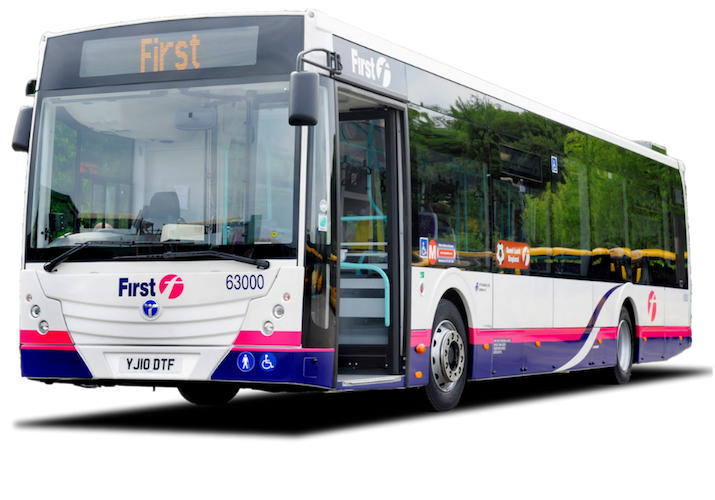
a first bus

GETTING TO COLLEGE

SEE GUIDANCE ON GETTING
YOUR TRAVEL TICKETS

blue background
blue backgroound
2 graduated female students in their gowns

DEGREES AT WESTON

APPLY NOW AT UNIVERSITY
CENTRE WESTON

Previous
Next

We are Weston College 

We are Creating
Brighter Futures.

Read More

Weston College has a wide range of courses to suit all learning styles 

Weston College is an award-winning college of further and higher education in Weston-super-Mare. It provides education and vocational training to nearly 30,000 learners across the country.

We put the learner first and are entrepreneurial in our approach and innovative in our thinking. As a college, we are ambitious and aspirational and are responsive to the needs of students, staff, businesses, and the community.

Latest News

There is always so much going on across our various campuses and courses. Stay up to date on our latest news.
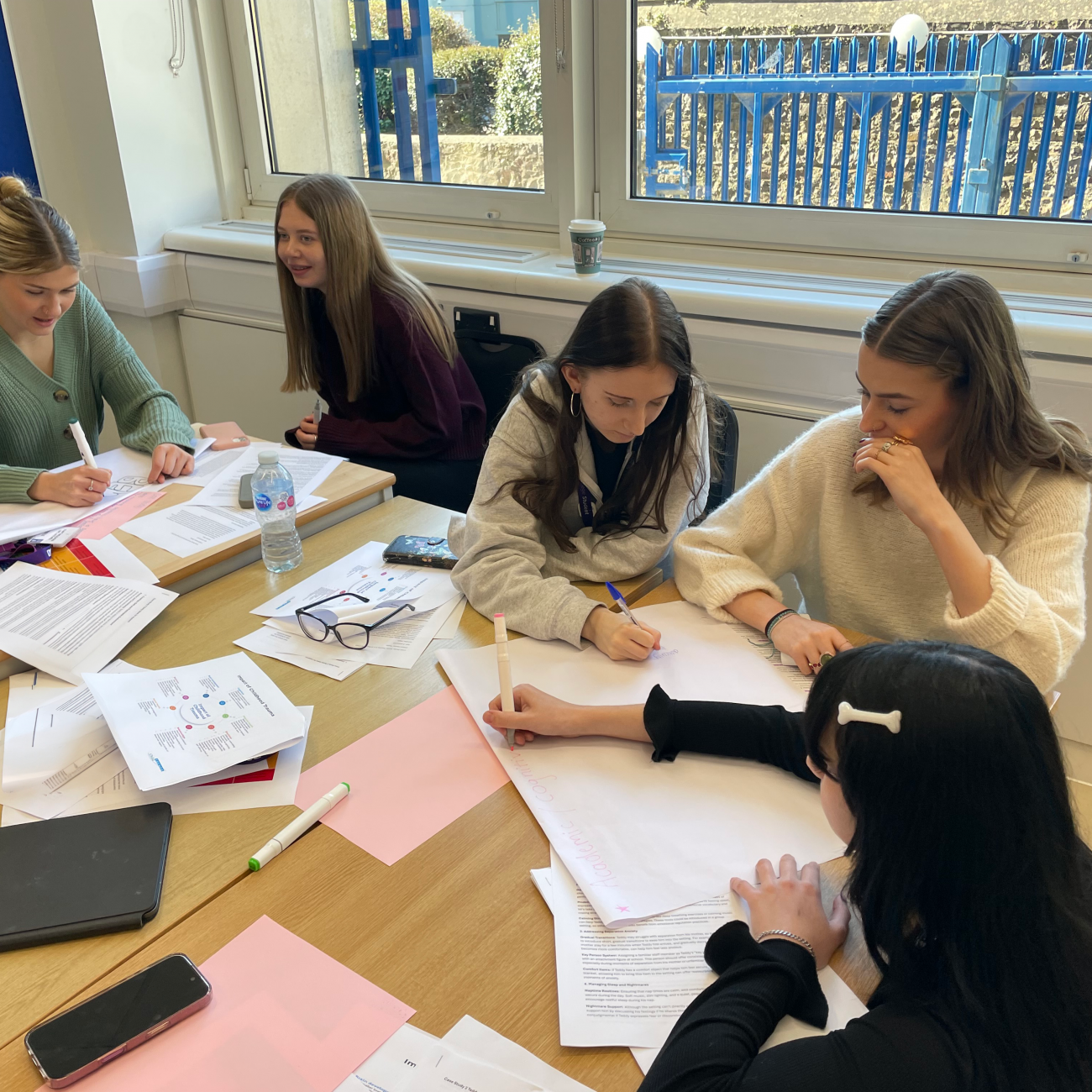
Early Years learners filling out a mindmap

This week, Emma Pattinson and Abi Steven from North Somerset Council Parenting Team visited our Year 2 Early Years T Level learners to discuss the impact that a child’s environment can have on their development.

This workshop focused on Parental Conflict and the impact on children, adolescent brain development, and trauma informed approaches. These are all very important topics for the future generation of early years educators to understand and be aware of.
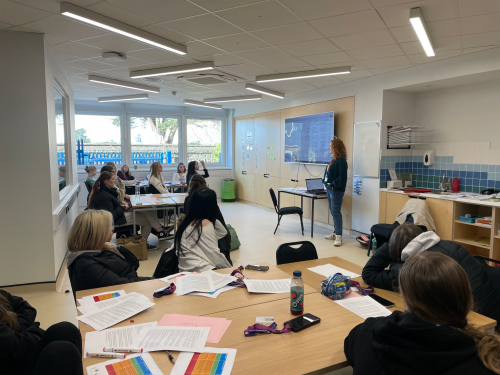
Abi talking to the students

During an Early Years course, students are taught how to approach and talk to students, however they are less likely to be taught about how to interact with parents and families. Abi and Emma helped to build the students confidence with this by answering questions and discussing different home environments.

The session began by looking at the types of childhood trauma and the impact this trauma can have on a child’s development, not just mentally but holistically. Not only this, Abi and Emma also explained how children’s brains develop throughout their adolescence.

It is important for our Early Years students to understand that children need a supported environment, and their brain development can be impacted and have long term effects if they are exposed to an environment with regular conflict and trauma. It is also important to recognise children as individuals and that they are all different, therefore signs of trauma will not be universal and could appear differently depending on the child.

When discussing Parental Conflict, Abi organised her discussion in an engaging True or False format to get the students involved and thinking hard about the questions. The students seemed nervous and apprehensive to begin with but gained confidence in their answers as the session progressed.

They discussed the signs to look for when identifying a child suffering with family conflict as well as the distress and trauma that could accompany this. Abi also brought up statistics regarding parental relationships and the impact this could have on children which surprised some students.

As a final interactive task, Abi and Emma handed out large posters to the students, with the titles Social and Emotional Development, Physical Development, Academic/Cognitive, and Behaviour. The students were asked to fill out these sheets of paper with everything they knew regarding the impact that conflict and trauma could have on these topics. This was a great way to test their knowledge and encourage them to work together to fill in any blanks.

This was a very informative guest lecture as it made the students consider external factors that may explain certain child behaviour. This is a key part of being an early year’s educator as it is important to have a holistic approach to teaching and provide additional support to any children who may be experiencing family conflict or trauma.

Thank you to Emma and Abi from the North Somerset Council Parenting Team for taking the time to visit our students and deliver this impactful guest lecture.

If you are interested in joining one of our Early Years courses in September, click here.
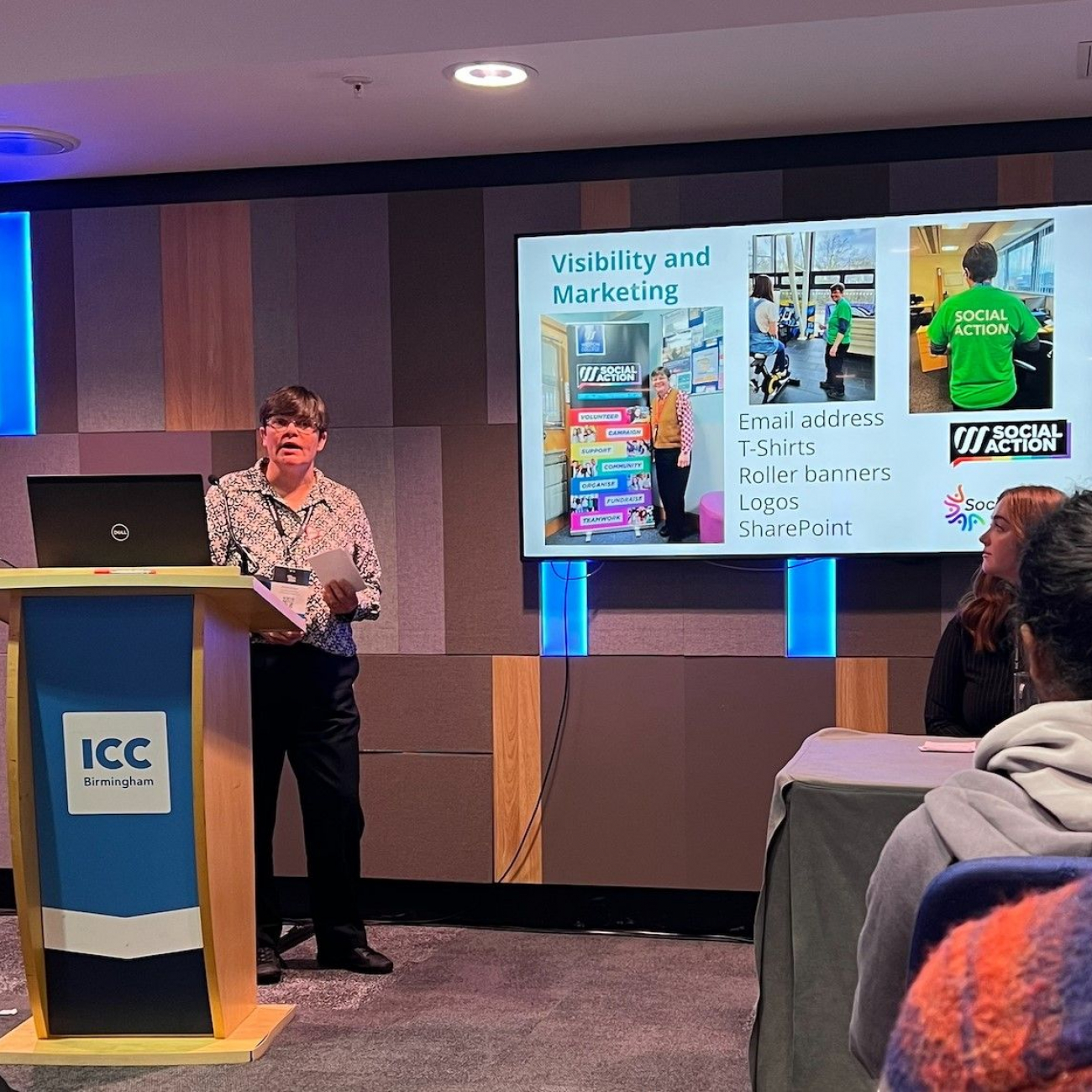
Anne presenting at the AoC Conference

Having started my role as a Youth Social Action apprentice in August 2023, my end point assessment is rapidly approaching and it seems like a good opportunity to look back and reflect but also look to the future.

Going back to the beginning of this role, I had made a life changing decision in my fifties to try and convert my volunteering experience in youth work into a career.

I like to think this was quite a bold move, especially when you consider that in real terms spending on youth services fell by 64% between 2011/12 and 2021/22. There is also a correlation between youth club closures and young people engaging in criminal activity with young people who have lost access to a youth club 14% more likely to engage in criminal activity in the six years following the closure.

Despite this, I think there is room for optimism with research showing the positive impact youth work has for young people. Of course, following the election of a new government it is clear youth work has an important role to play if Labour are to deliver on their mission to Reclaim the Streets. Labour have committed to creating a Young Futures Programme with a network of hubs where young people can engage with youth workers, mental health support workers and careers advisors to help prevent young people being drawn into crime. Our colleges have an important role to play in helping to train the youth workers of the future with the profession having lost 4,500 youth workers since 2011. Without a qualified workforce, the government will not be able to deliver on the promises in their manifesto. In a recent National Youth Agency workforce survey it was found that 47% of the respondents have no recognised youth work qualification.

When I reflect on my own development throughout my apprenticeship, I am confident that the skills and knowledge that I have gained have made me a more effective youth worker, both at work in my colleges and in my voluntary role. I have been able to focus on facilitating youth led projects and have enjoyed immensely seeing the learners pride and satisfaction when they see their ideas become a reality.

This year at Weston College, Avon and Somerset Police invited learners to take part in a Youth Ethics Committee to capture their views around stop and search. They appreciated the chance to have their voices heard. Projects like this that create better community links with the police will be an important way to make our young people part of the solution to reclaiming our streets. In my work as a Youth Social Action apprentice listening to young people, concerns about youth violence and knife crime are a recurring theme. If we are to help our young people navigate this issue and ‘Reclaim our Streets’ qualified youth workers will be essential.

Anne Draper, Youth Social Action apprentice
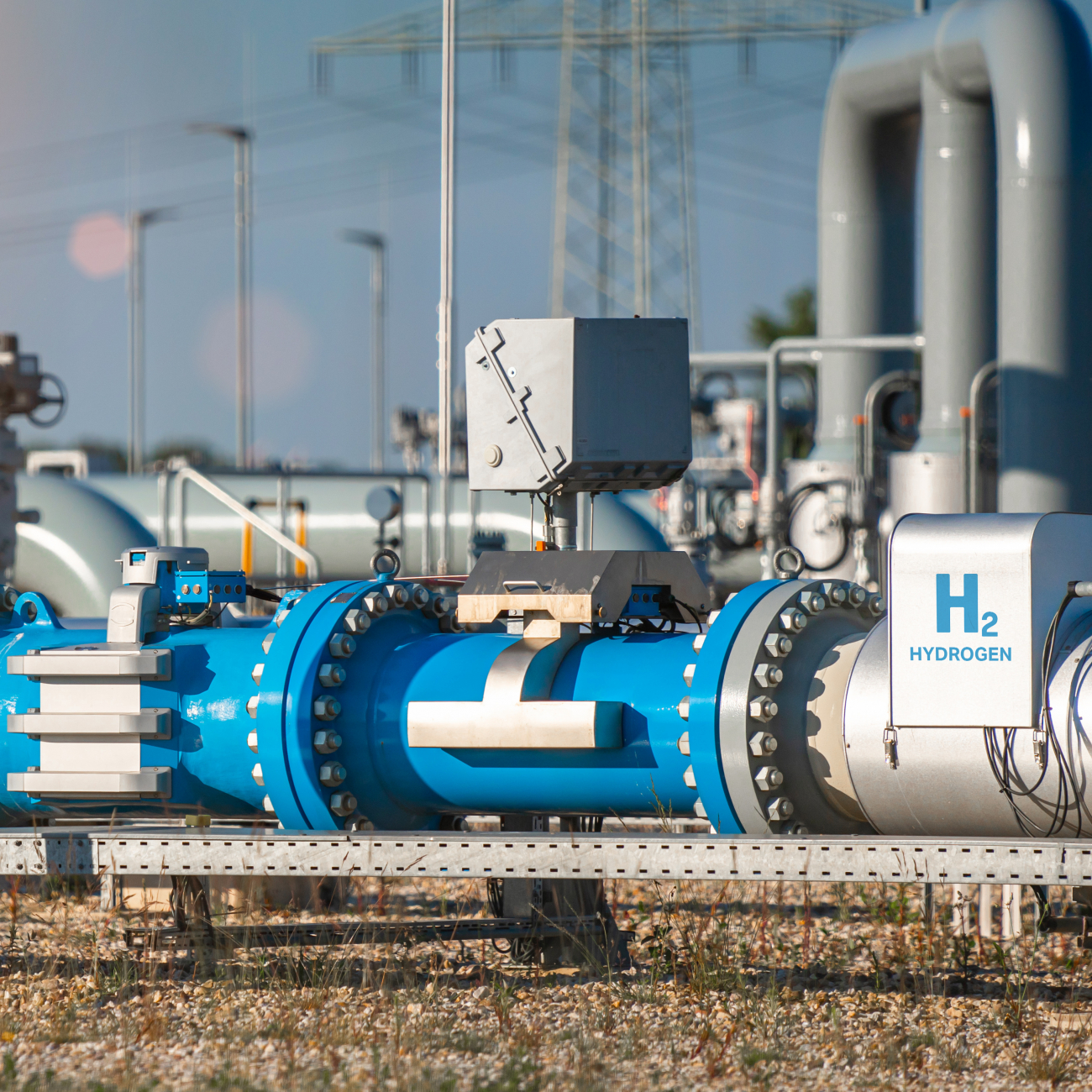
H2 Cannister

As we look towards 2050 and the UK's longer-term ambitions around reducing our carbon footprint and greenhouse emissions, Colleges in the region are stepping up to the challenge by preparing their students for the careers that will be plentiful around green energy and power supply.

The transition to green energy isn’t just a national ambition—it’s an urgent necessity. The South West stands at the forefront of this revolution, with colleges playing a vital role in shaping the workforce that will power the future. With major investments like Hinkley Point C and the rise of EV manufacturing, the region is poised to lead, but only if we equip students and businesses with the right skills.

The South West region has real potential to be a national player in the nation’s energy supply solution. We've already seen the investment in Hinkley Point C, due to go live in the early 2030s, and with the growth in electrification of transportation, the announcement of a new battery factory within the South West is also a positive position for our region. Looking ahead, the mid-2030s could bring flight powered by hydrogen, electrification, and sustainable aviation fuels (SAF). Alongside this, offshore wind can generate substantial electricity, and the development of Small Modular Reactors (SMR) in the North of the region adds to the energy landscape. These are known developments, and our role as college leaders is to prepare students for these future opportunities. We must take this information and prepare our students for the jobs of the future. There is every possibility that a student with the right knowledge skills and behaviours could start their career in battery manufacture then move to offshore wind and then into hydrogen infrastructure within their career lifetime.

So how do we help our students prepare for the future?

Employers are looking for employees who have an inquisitive mind and want to work in that industry. Senior leads report that the desire to be there is more important, as employees can be taught the skills they need if they want to learn them. It is therefore our responsibility to make sure that our students are ready to learn and have the necessary essential and core skills to equip them to embrace a fulfilling job path for the future. Skills such as communication, teamwork, curiosity, and determination are all needed to move through and across job roles and sectors for the future. As part of the early work of the Local Skills Improvement Plans, we trialled the development and delivery of new micro-credentials for the development of the future workforce building on the feedback from employers on the need for these essential skills. We are hopeful that the proposed changes to employer-led qualifications, and the development of Skills England will allow more of the short, focused courses to be developed.

Weston College, one of the West of England Institute of Technology (WEIoT) education partners has implemented a sustainability strategy that includes offering programmes focused on green skills and environmental awareness. Sustainability has been integrated into various vocational courses, from construction to engineering, and offers specialised courses in renewable energy. For example, its University Centre Weston (UCW) offers free modular courses like Level 4 Quantity Surveying and Sustainability, integrating environmental considerations into construction and engineering education.

Sustainability is the imperative, not the nice-to-do

As part of the awareness of sustainability Weston College throughout the year offers different focused events such as an Innovation Sustainability Day where different groups of students are brought together to solve a problem. This helps students see the value of teamwork and communication and focuses them on a particular challenge that needs to be addressed. Weston, along with all Colleges supports the UN sustainable development goals (SDGs) and staff and students are often asked to reflect on the impact of decisions on the 17 SDGs. These are particularly important to consider for the SDGs around clean energy, climate action and life below water strategies as a minimum.

Supporting Adult Learners and the Workforce Transition

It’s not just about young people—the energy sector's transformation requires the upskilling of the current workforce. This is where colleges' responsiveness to their local communities becomes crucial. Through the WEIoT partnership, colleges in the region collaborated to create an electric vehicle upskilling package for local garages. These garages, now servicing EV-powered vehicles previously under main dealer warranties, needed staff trained in safe working practices and technical skills. By shaping and sharing this knowledge across the college network, numerous SME garages have been able to update their staff and meet growing EV servicing demands. As EV demand grows, targeted technical training ensures the region remains competitive, fostering economic growth and creating sustainable jobs.

Another significant development for the region is the use of hydrogen, and there are many different companies from Cornwall to Gloucestershire all working on different solutions on how hydrogen may be produced, moved around the region and used. Whether the outcome is for transportation, heating, power solutions and other possibilities it is an area set for growth in the future. The WEIoT alongside Business West and National Composite Centre (an WEIoT Anchor Partner) invested in early research with businesses that grew into a highly successful Hydrogen South West model. Recognising this growing market both Weston and Yeovil Colleges have delivered training to local businesses, and in the case of Yeovil a significant investment in a Hydrogen test facility that opens this month. It is the collaborative working and shared knowledge of the partnership between colleges that makes investment in collaboration worthwhile and delivers a better solution for the wider region.

Shaping the Future

Still, there is more to do. The WEIoT and its wider partnerships have been fortunate to engage in these industry-led initiatives, ensuring that educational programmes evolve in alignment with cutting-edge research and manufacturing. By linking education with innovation and sustainability, the South West is positioning itself as a leader in the green industrial transition.

In a recent speech unveiling support for Clean Energy jobs, Skills Minister Jacqui Smith emphasised:

“Skills will be a vital part of our Plan for Change and transition to a clean energy future, and I have spoken to many young people who are really keen to break into this booming sector. This initiative is an example of how skills training can support our number one mission to grow the economy whilst helping to meet Britain’s energy needs and support the move towards net zero.”

The South West has all the pieces in place to become a national leader in green energy. But we must act decisively ensuring our education system keeps pace with industry needs, our businesses invest in upskilling, and our students seize these opportunities. Through collaboration, innovation, and education, we can power a greener, more resilient future.

CAREERS NOT COURSES

We know it’s not about the course you take, but the career you’ll start your journey towards. Your study programme is built from the ground up with your future in mind, focussing on employability and developing the skills you need to have a successful career within your chosen industry, making connections and gaining experiences through local and national employers we work with:


NHS logo
rolls royce logo
Armed Forces Covenant
Ministry of defence logo
Thatcher careers logo
Avon Fire and Rescue Service Logo
Occuteach Logo
GKN logo
YMCA logo
ashton gate logo
weston hospicecare logo
airbus logo
cadbury house logo
Lloyds bank logo
puxton park logo
the Bristol Port Company logo
howards motor group logo
mendip house nursery and pre school
taylor wimpy logo
congras cafe logo
yeo valley logo
career excellence hub logo

As a Weston College student, you will become part of one of our exciting new Career Excellence Hubs.

This means our courses aren't just courses... your study programme is built from the ground up with your future in mind, focussing on employability and developing the skills you need to have a successful career within your chosen industry...

LECTURERS WITH REAL INDUSTRY EXPERIENCES

COURSES ENDORSED BY EMPLOYERS

INDUSTRY STANDARD FACILITIES

INCREDIBLE WORK-BASED OPPORTUNITIES

AMAZING GUEST LECTURES

COURSES ENDORSED BY EMPLOYERS
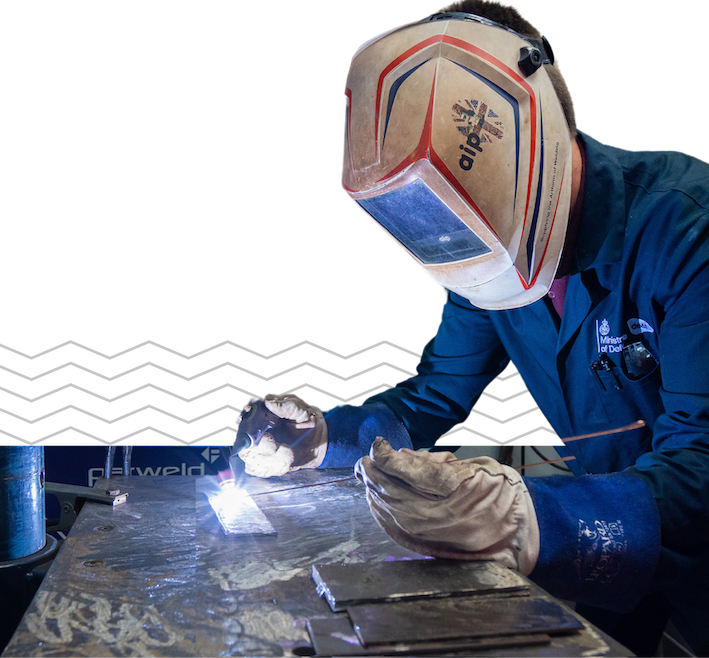
Person wearing a welding helmet and gloves while performing welding on a metal surface.

"The college organised lots of amazing experiences for us with specialist guest lectures on sepsis, home care, nutrition and bee therapy"

Chloe

Health and Social Care, Level 2 & 3

Contact Us

Marketing Permissions

Once we have responded to your initial enquiry we would love to keep you informed of other, similar courses you may be interested in via email. You can unsubscribe at any time by clicking the link in the footer of our emails. For information about our privacy practices, please visit our policy page.

Email

By submitting this form you are consenting to Weston College recording and processing the personal information on this form, for any purposes of the college associated with the provision of advice and guidance to potential students on the range of courses available to them, college facilities and any other associated information. In accordance with the Data Protection Act 2018, the information will only be used for the above mentioned purposes.

You will need to complete a full enrolment form prior to starting your course.

CAPTCHA
This question is for testing whether or not you are a human visitor and to prevent automated spam submissions.

Apply or find out more


Marketing Permissions

We’d love to keep you informed about vacancies, courses, and updates we think you’ll find valuable. You can unsubscribe or opt out at any time.
Your personal information will be handled in accordance with our Privacy Policy.

Please let us know how you’d like to hear from us:

Email

By submitting this form you are consenting to Weston College recording and processing the personal information on this form, for any purposes of the college associated with the provision of advice and guidance to potential students on the range of courses available to them, college facilities and any other associated information. In accordance with the Data Protection Act 2018, the information will only be used for the above mentioned purposes.

You will need to complete a full enrolment form prior to starting your course.

CAPTCHA
This question is for testing whether or not you are a human visitor and to prevent automated spam submissions.

One Message, Different Voices

Take a look at this powerful film made by the staff of Weston College to show how important it is for everyone from different backgrounds to be included. The film shares heartfelt stories and interviews with a diverse group of staff, showing how accepting different identities and backgrounds can make a big difference. Its purpose is to encourage viewers to think about their own biases and work towards making our community more welcoming to all. We invite everyone, regardless of their background, to join us and be a part of our journey toward a more inclusive future.

Halo workplace logo

Our workplace champions the right of staff to embrace all Afro-hairstyles. We acknowledge that Afro-textured hair is an important part of our Black employees’ racial, ethnic, cultural, and religious identities, and requires specific styling for hair health and maintenance. We celebrate Afro-textured hair worn in all styles including, but not limited to, afros, locs, twists, braids, cornrows, fades, hair straightened through the application of heat or chemicals, weaves, wigs, headscarves, and wraps. In this workplace, we recognise and celebrate our colleagues’ identities. We are a community built on an ethos of equality and respect where hair texture and style have no bearing on an employee's ability to succeed.

Early Years learners filling out a mindmap

This week, Emma Pattinson and Abi Steven from North Somerset Council Parenting Team visited our Year 2 Early Years T Level learners to discuss the impact that a child’s environment can have on their development.

This workshop focused on Parental Conflict and the impact on children, adolescent brain development, and trauma informed approaches. These are all very important topics for the future generation of early years educators to understand and be aware of.

Abi talking to the students

During an Early Years course, students are taught how to approach and talk to students, however they are less likely to be taught about how to interact with parents and families. Abi and Emma helped to build the students confidence with this by answering questions and discussing different home environments.

The session began by looking at the types of childhood trauma and the impact this trauma can have on a child’s development, not just mentally but holistically. Not only this, Abi and Emma also explained how children’s brains develop throughout their adolescence.

It is important for our Early Years students to understand that children need a supported environment, and their brain development can be impacted and have long term effects if they are exposed to an environment with regular conflict and trauma. It is also important to recognise children as individuals and that they are all different, therefore signs of trauma will not be universal and could appear differently depending on the child.

When discussing Parental Conflict, Abi organised her discussion in an engaging True or False format to get the students involved and thinking hard about the questions. The students seemed nervous and apprehensive to begin with but gained confidence in their answers as the session progressed.

They discussed the signs to look for when identifying a child suffering with family conflict as well as the distress and trauma that could accompany this. Abi also brought up statistics regarding parental relationships and the impact this could have on children which surprised some students.

As a final interactive task, Abi and Emma handed out large posters to the students, with the titles Social and Emotional Development, Physical Development, Academic/Cognitive, and Behaviour. The students were asked to fill out these sheets of paper with everything they knew regarding the impact that conflict and trauma could have on these topics. This was a great way to test their knowledge and encourage them to work together to fill in any blanks.

This was a very informative guest lecture as it made the students consider external factors that may explain certain child behaviour. This is a key part of being an early year’s educator as it is important to have a holistic approach to teaching and provide additional support to any children who may be experiencing family conflict or trauma.

Thank you to Emma and Abi from the North Somerset Council Parenting Team for taking the time to visit our students and deliver this impactful guest lecture.

If you are interested in joining one of our Early Years courses in September, click here.

Anne presenting at the AoC Conference

Having started my role as a Youth Social Action apprentice in August 2023, my end point assessment is rapidly approaching and it seems like a good opportunity to look back and reflect but also look to the future.

Going back to the beginning of this role, I had made a life changing decision in my fifties to try and convert my volunteering experience in youth work into a career.

I like to think this was quite a bold move, especially when you consider that in real terms spending on youth services fell by 64% between 2011/12 and 2021/22. There is also a correlation between youth club closures and young people engaging in criminal activity with young people who have lost access to a youth club 14% more likely to engage in criminal activity in the six years following the closure.

Despite this, I think there is room for optimism with research showing the positive impact youth work has for young people. Of course, following the election of a new government it is clear youth work has an important role to play if Labour are to deliver on their mission to Reclaim the Streets. Labour have committed to creating a Young Futures Programme with a network of hubs where young people can engage with youth workers, mental health support workers and careers advisors to help prevent young people being drawn into crime. Our colleges have an important role to play in helping to train the youth workers of the future with the profession having lost 4,500 youth workers since 2011. Without a qualified workforce, the government will not be able to deliver on the promises in their manifesto. In a recent National Youth Agency workforce survey it was found that 47% of the respondents have no recognised youth work qualification.

When I reflect on my own development throughout my apprenticeship, I am confident that the skills and knowledge that I have gained have made me a more effective youth worker, both at work in my colleges and in my voluntary role. I have been able to focus on facilitating youth led projects and have enjoyed immensely seeing the learners pride and satisfaction when they see their ideas become a reality.

This year at Weston College, Avon and Somerset Police invited learners to take part in a Youth Ethics Committee to capture their views around stop and search. They appreciated the chance to have their voices heard. Projects like this that create better community links with the police will be an important way to make our young people part of the solution to reclaiming our streets. In my work as a Youth Social Action apprentice listening to young people, concerns about youth violence and knife crime are a recurring theme. If we are to help our young people navigate this issue and ‘Reclaim our Streets’ qualified youth workers will be essential.

Anne Draper, Youth Social Action apprentice

H2 Cannister

As we look towards 2050 and the UK's longer-term ambitions around reducing our carbon footprint and greenhouse emissions, Colleges in the region are stepping up to the challenge by preparing their students for the careers that will be plentiful around green energy and power supply.

The transition to green energy isn’t just a national ambition—it’s an urgent necessity. The South West stands at the forefront of this revolution, with colleges playing a vital role in shaping the workforce that will power the future. With major investments like Hinkley Point C and the rise of EV manufacturing, the region is poised to lead, but only if we equip students and businesses with the right skills.

The South West region has real potential to be a national player in the nation’s energy supply solution. We've already seen the investment in Hinkley Point C, due to go live in the early 2030s, and with the growth in electrification of transportation, the announcement of a new battery factory within the South West is also a positive position for our region. Looking ahead, the mid-2030s could bring flight powered by hydrogen, electrification, and sustainable aviation fuels (SAF). Alongside this, offshore wind can generate substantial electricity, and the development of Small Modular Reactors (SMR) in the North of the region adds to the energy landscape. These are known developments, and our role as college leaders is to prepare students for these future opportunities. We must take this information and prepare our students for the jobs of the future. There is every possibility that a student with the right knowledge skills and behaviours could start their career in battery manufacture then move to offshore wind and then into hydrogen infrastructure within their career lifetime.

So how do we help our students prepare for the future?

Employers are looking for employees who have an inquisitive mind and want to work in that industry. Senior leads report that the desire to be there is more important, as employees can be taught the skills they need if they want to learn them. It is therefore our responsibility to make sure that our students are ready to learn and have the necessary essential and core skills to equip them to embrace a fulfilling job path for the future. Skills such as communication, teamwork, curiosity, and determination are all needed to move through and across job roles and sectors for the future. As part of the early work of the Local Skills Improvement Plans, we trialled the development and delivery of new micro-credentials for the development of the future workforce building on the feedback from employers on the need for these essential skills. We are hopeful that the proposed changes to employer-led qualifications, and the development of Skills England will allow more of the short, focused courses to be developed.

Weston College, one of the West of England Institute of Technology (WEIoT) education partners has implemented a sustainability strategy that includes offering programmes focused on green skills and environmental awareness. Sustainability has been integrated into various vocational courses, from construction to engineering, and offers specialised courses in renewable energy. For example, its University Centre Weston (UCW) offers free modular courses like Level 4 Quantity Surveying and Sustainability, integrating environmental considerations into construction and engineering education.

Sustainability is the imperative, not the nice-to-do

As part of the awareness of sustainability Weston College throughout the year offers different focused events such as an Innovation Sustainability Day where different groups of students are brought together to solve a problem. This helps students see the value of teamwork and communication and focuses them on a particular challenge that needs to be addressed. Weston, along with all Colleges supports the UN sustainable development goals (SDGs) and staff and students are often asked to reflect on the impact of decisions on the 17 SDGs. These are particularly important to consider for the SDGs around clean energy, climate action and life below water strategies as a minimum.

Supporting Adult Learners and the Workforce Transition

It’s not just about young people—the energy sector's transformation requires the upskilling of the current workforce. This is where colleges' responsiveness to their local communities becomes crucial. Through the WEIoT partnership, colleges in the region collaborated to create an electric vehicle upskilling package for local garages. These garages, now servicing EV-powered vehicles previously under main dealer warranties, needed staff trained in safe working practices and technical skills. By shaping and sharing this knowledge across the college network, numerous SME garages have been able to update their staff and meet growing EV servicing demands. As EV demand grows, targeted technical training ensures the region remains competitive, fostering economic growth and creating sustainable jobs.

Another significant development for the region is the use of hydrogen, and there are many different companies from Cornwall to Gloucestershire all working on different solutions on how hydrogen may be produced, moved around the region and used. Whether the outcome is for transportation, heating, power solutions and other possibilities it is an area set for growth in the future. The WEIoT alongside Business West and National Composite Centre (an WEIoT Anchor Partner) invested in early research with businesses that grew into a highly successful Hydrogen South West model. Recognising this growing market both Weston and Yeovil Colleges have delivered training to local businesses, and in the case of Yeovil a significant investment in a Hydrogen test facility that opens this month. It is the collaborative working and shared knowledge of the partnership between colleges that makes investment in collaboration worthwhile and delivers a better solution for the wider region.

Shaping the Future

Still, there is more to do. The WEIoT and its wider partnerships have been fortunate to engage in these industry-led initiatives, ensuring that educational programmes evolve in alignment with cutting-edge research and manufacturing. By linking education with innovation and sustainability, the South West is positioning itself as a leader in the green industrial transition.

In a recent speech unveiling support for Clean Energy jobs, Skills Minister Jacqui Smith emphasised:

“Skills will be a vital part of our Plan for Change and transition to a clean energy future, and I have spoken to many young people who are really keen to break into this booming sector. This initiative is an example of how skills training can support our number one mission to grow the economy whilst helping to meet Britain’s energy needs and support the move towards net zero.”

The South West has all the pieces in place to become a national leader in green energy. But we must act decisively ensuring our education system keeps pace with industry needs, our businesses invest in upskilling, and our students seize these opportunities. Through collaboration, innovation, and education, we can power a greener, more resilient future.