




COURSES FOR SCHOOL LEAVERS
Your Future Starts Here
With hundreds of exciting courses, this is where your journey begins. From day one, you'll be supported, inspired, and on track to a rewarding career.
See SubjectsJoin a Career Excellence Hub and gain real-world skills, experience, and confidence to reach your goals.
Whether you're finishing school, changing direction, or learning English with our ESOL courses – we’ve got you covered.
Get started today – pick a subject and apply online in just 5 minutes!

Find Your Future Path




















QUALIFICATIONS EXPLAINED
A Levels develop the knowledge, skills and study habits to excel at university, as well as the attributes recognised by employers.
Your academic studies will be complemented with enrichment opportunities such as trips, mentoring and work experience, providing the perfect springboard for your future career.
A Levels are assessed through exams at the end of two years of study. Most learners study three subjects - some choose four.
With an apprenticeship you’ll go straight into the workplace and be shown clear routes to progress straight into employment within a specific occupation. You can achieve nationally recognised qualifications, earn a wage, and gain skills that will see you get ahead. On average you will spend 20% of your learning time in the college and 80% within the workplace
Professional and technical qualifications are designed to provide you with the knowledge, skills and behaviours needed to gain employment within specific industries or occupations. They provide a balance between theory and practical skills development. They are suited to those who want to get hands-on experience within a particular vocational area. These programmes include work placements. Assessment is more varied and will include exams, coursework and practical work.
T Levels give you the chance to learn what a real career is like while you continue your studies. T Levels have been designed with leading businesses and employers to give you the knowledge and skills you need, including a minimum of 45 days on an industry placement – this means you will spend 80% of your learning time in College and 20% within the workplace.
LATEST NEWS
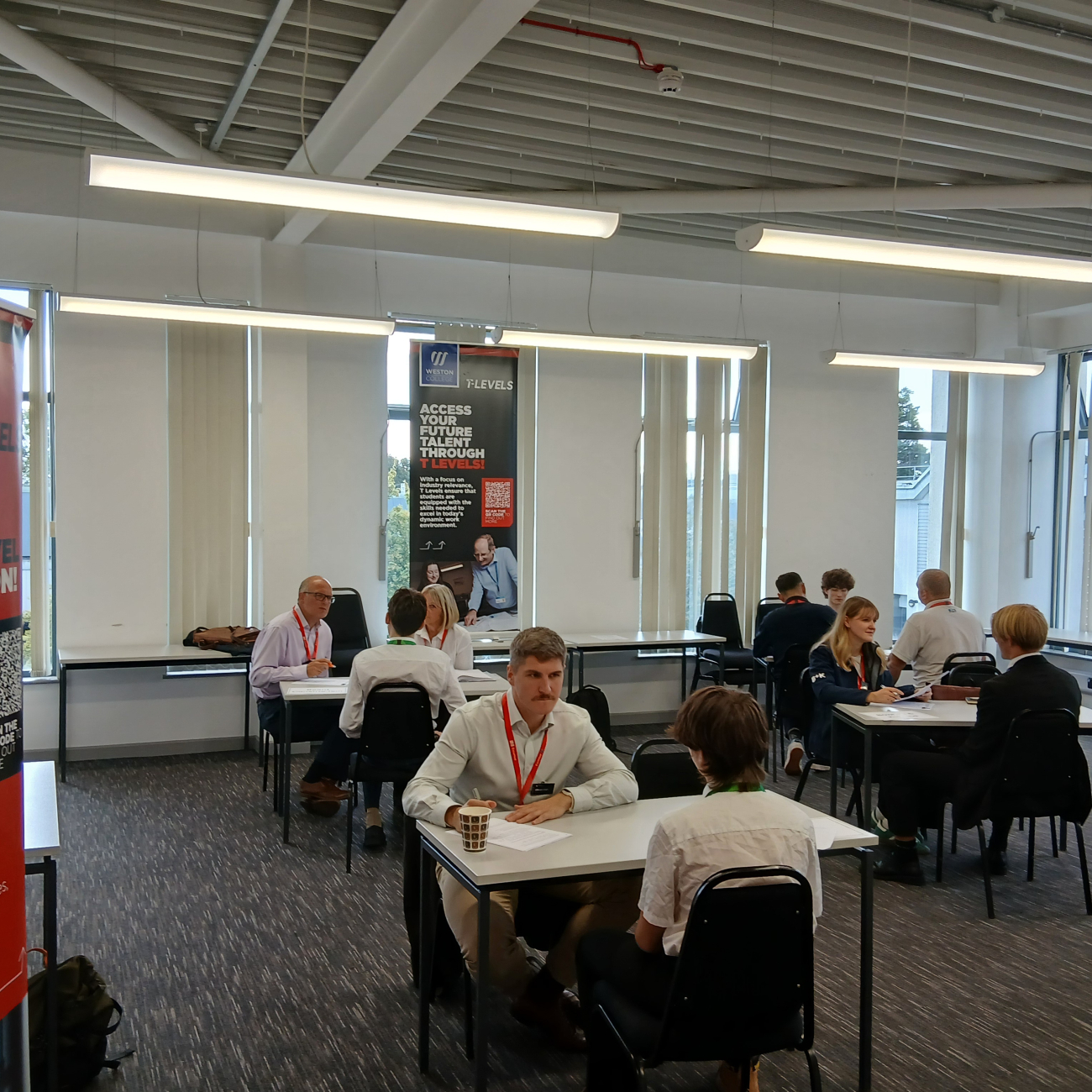
Last week, our T Level Design, Surveying and Planning for Construction learners took part in a Speed Interview Day, meeting with a range of construction employers and gaining an insight into the different opportunities available to them through their T Level industry placement.
The day began with each employer giving a 10-minute presentation to the learners and fellow employers, introducing their organisation, the types of projects they work on and the opportunities they could offer to T Level placement students.
Following the presentations, learners were asked to identify their top three employers that they would be most interested in working with. This gave them the opportunity to consider the different companies, projects and career pathways they had heard about before selecting the organisations that best matched their interests and aspirations.
Learners then took part in 10-minute speed interviews with their chosen employers. The interviews gave them the chance to put their skills into practice in a relaxed informal environment, answer typical interview questions and demonstrate why they would be a good fit for an industry placement.
The day provided a valuable opportunity for learners to explore the different types of organisations within the construction industry and gain a better understanding of the work they could be involved in. It also helped them consider what type of company and working environment they might want to pursue a career with, while giving them a chance to connect directly with potential placement providers.
A big thank you to all of the employers who joined us and gave our learners such a valuable experience. Their time and support are helping our learners take an important step towards securing their T Level industry placement and gaining valuable insight into the wide range of opportunities available across the construction industry.
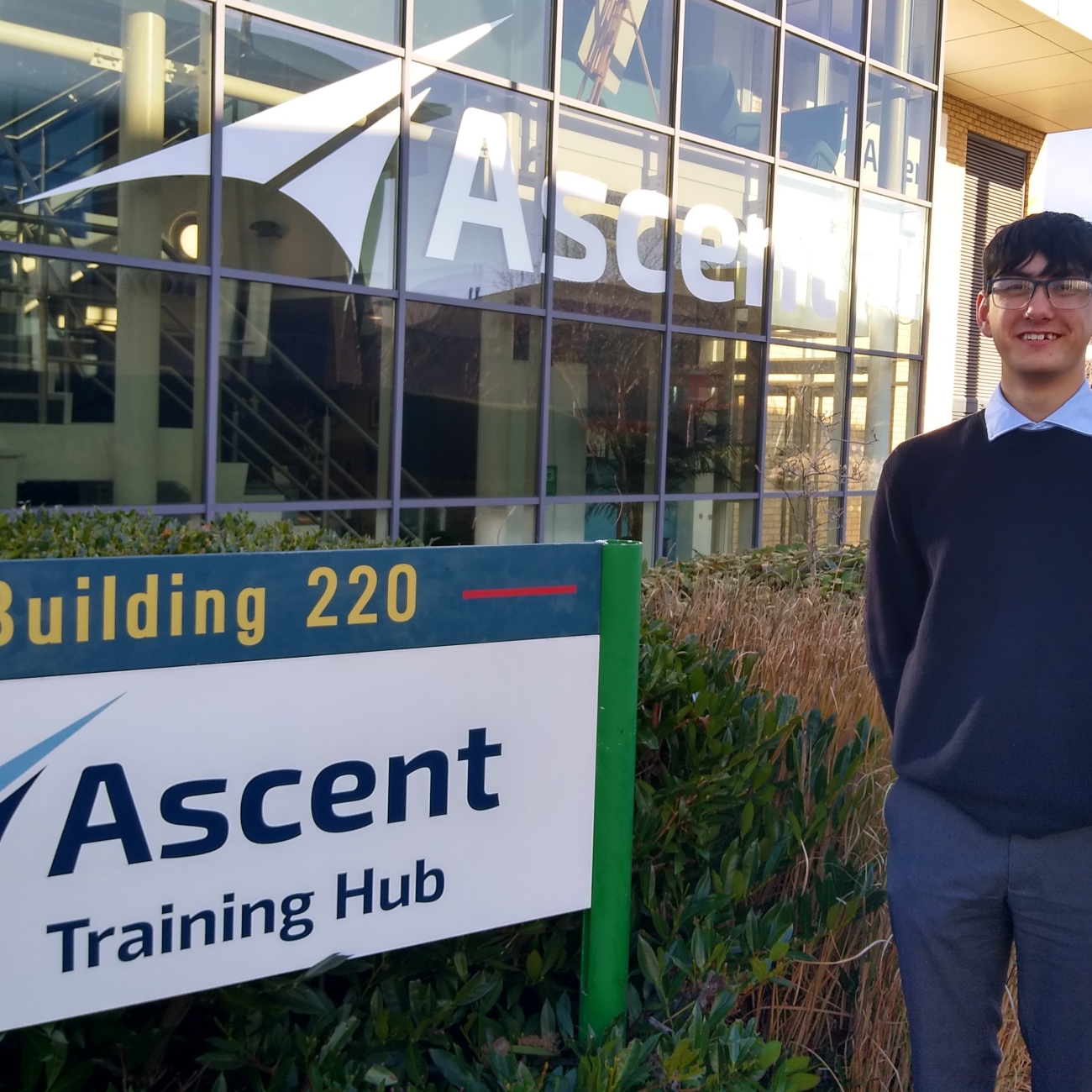
Weston College and UCW Degree Apprentice Aiden has been gaining valuable hands-on experience in IT and cyber security during his time with Ascent Flight Training.
Aiden joined Ascent’s IT team in September 2025 as a Cyber Security Apprentice, completing his degree apprenticeship alongside his role at the organisation. Ascent provides training for RAF, Royal Navy and Army aircrew at six sites across the UK, with Aiden based at its Training Hub in Bristol.
Having originally considered going to university, Aiden decided to explore alternative routes into his chosen career and discovered apprenticeships through the government website. He was particularly interested in the opportunity to work in cyber security while gaining experience within an organisation working closely with the armed forces and major industry partners.
He said: “I was really interested in the cyber security project that Ascent offered and interested in working with the armed forces. Additionally, I liked the fact that we are constantly working with large companies, such as Babcock and Lockheed Martin. This allows me to have so many different experiences from so many different people.”
Throughout his apprenticeship, Aiden has had the opportunity to get involved in a variety of projects across Ascent’s ICT and Cyber Security teams, allowing him to put the knowledge gained through his degree into practice.
One of his projects has involved improving IT knowledge and training resources across the business. This has included reviewing and updating internal documentation, training materials and learning platform content, testing links, checking information was accurate and working with colleagues to improve the user experience.
Through this work, Aiden has developed his documentation, problem-solving and stakeholder communication skills, while helping to create a more effective learning experience for employees across Ascent.
Alongside his ICT responsibilities, Aiden has also supported a range of cyber security initiatives. These have included investigating security alerts, assisting with vulnerability management, reviewing user access permissions and helping to promote cyber security awareness among colleagues.
These opportunities have helped Aiden strengthen his understanding of cyber security operations and risk management, while giving him the chance to apply his degree learning in a real-world environment.
For Aiden, one of the biggest benefits of an apprenticeship is being able to combine academic study with practical experience. He said: “Learning and working inside industry can provide skills and experiences not found elsewhere.
“The benefits are that you gain real-world experience with the same accreditation as a university degree. You can meet and work with people who have vast experiences and are experts in their field and you can learn physical skills, not found in a classroom.”
Aiden spends one day a week at Weston College alongside his full-time role at Ascent, giving him the opportunity to develop academically while continuing to build his professional experience.
Since joining Ascent, Aiden has continued to grow in confidence and capability, becoming an increasingly valued member of the IT team.
Ascent’s Head of IT, Edward Anderson, said: “Aiden has become a fully integrated and valued member of the team during his first year at Ascent. His confidence has grown considerably, and he now makes a meaningful contribution across the business, bringing fresh thinking, innovative ideas and practical support, particularly through the use of AI-driven automation.
“It has been a pleasure to see his development and the positive impact he continues to make.”
Aiden’s manager, IT Operations Manager, Ed Morgan, said: “By investing in apprenticeships, Ascent aims to build a strong learning culture that promotes mentorship and leadership development. It will support community and open opportunities to people from varied backgrounds, and strengthens our reputation as an employer that attracts high quality talent and partners, while helping close the Digital divide.
“Setting up and managing an apprenticeship requires some upfront planning and ongoing guidance, but once the structure is in place it becomes a manageable part of daily operations, as the apprentice grows in capability and contributes more to the team. Anything that has value requires effort, we spend half a day per week in support as minimum.”
For Aiden, his apprenticeship is providing a strong foundation for his future career, with plans to continue developing his skills across IT, cyber security and AI.
His experience highlights the opportunities available through degree apprenticeships at Weston College, combining higher-level study with valuable industry experience and the chance to develop skills within a real working environment.

Our new Year 1 T Level Design, Surveying and Planning in Construction learners have had a great start to the year with a team-building visit to Farm Foundations.
After a short coach journey, learners spent the day outdoors meeting a range of animals, including tortoises, runner ducks, horses, sheep, chickens and pigs, while learning about the farm's role in supporting the local community.
Learners helped measure and set out new pig enclosures being built for a pair of teenage pigs, complete with their very own luxury paddling pool. The practical activity provided an excellent opportunity to apply surveying and setting-out skills in a real-world environment while developing teamwork and communication skills.
The day was full of teamwork, problem-solving and plenty of laughs. Learners built campfires, toasted marshmallows and enjoyed a picnic lunch in the sunshine. Not everything went entirely to plan, however, with two learners ending up with melted marshmallow on their knees and one unlucky learner's hoodie attracting the attention of a curious horse, which decided it looked like a tasty snack.
Learners also learned about the structure of the farm's Community Interest Company (CIC) and the positive impact it has on young people and the wider community.
The visit provided a fantastic opportunity for learners to get to know one another, develop confidence, and experience practical activities that reflect the collaborative nature of the construction sector.
One learner commented, "It was great to see all the animals and have the opportunity to use equipment on site. It was a really good experience."
Another learner said, "The day was really enjoyable and was a good way to apply our skills in a real-life setting."
Weston College would like to thank everyone at Farm Foundations, particularly Maxine, Charlotte and Mark, for making the visit such a memorable start to the learners' T Level journey.
The college looks forward to continuing its relationship with Farm Foundations and providing learners with further opportunities to develop their skills through meaningful community-based projects.
This curriculum trip forms part of the Construction Careers Excellence Hub. Weston College's Career Excellence Hubs are designed to be the launching pad for our learners' careers. In a world where connections and relevant skills matter more than ever, these hubs offer a holistic approach that prepares learners to thrive in their chosen industries. With the support of these hubs, our learners are well-equipped to make a significant impact in their professional journeys.
Progress to the next level in Construction! At University Centre Weston (UCW) our students give us impressive feedback, with our latest National Student Survey results putting us above average in all nine areas! Find out more about our exceptional teaching, wellbeing services and learning resources by visiting our website. Click here!
If you are passionate about education and are looking for an opportunity to join the staff team at a leading college, then look at the latest job vacancies available at Weston College here. You can find all the latest job opportunities that Weston College has to offer, with a commitment to providing quality education for learners and a focus on continuous professional development for staff, Weston College is an excellent place to work and grow in your career.
WHICH LEVEL IS RIGHT FOR ME?