


News and events
We aim to keep you up-to-date with the very latest Weston College news and events. Take a look below at what's going on at the College!
Got news you want to share with us? Email marketing@weston.ac.uk
Got news you want to share with us? Email marketing@weston.ac.uk
Take a look at this powerful film made by the staff of Weston College to show how important it is for everyone from different backgrounds to be included. The film shares heartfelt stories and interviews with a diverse group of staff, showing how accepting different identities and backgrounds can make a big difference. Its purpose is to encourage viewers to think about their own biases and work towards making our community more welcoming to all. We invite everyone, regardless of their background, to join us and be a part of our journey toward a more inclusive future.

Our workplace champions the right of staff to embrace all Afro-hairstyles. We acknowledge that Afro-textured hair is an important part of our Black employees’ racial, ethnic, cultural, and religious identities, and requires specific styling for hair health and maintenance. We celebrate Afro-textured hair worn in all styles including, but not limited to, afros, locs, twists, braids, cornrows, fades, hair straightened through the application of heat or chemicals, weaves, wigs, headscarves, and wraps. In this workplace, we recognise and celebrate our colleagues’ identities. We are a community built on an ethos of equality and respect where hair texture and style have no bearing on an employee's ability to succeed.
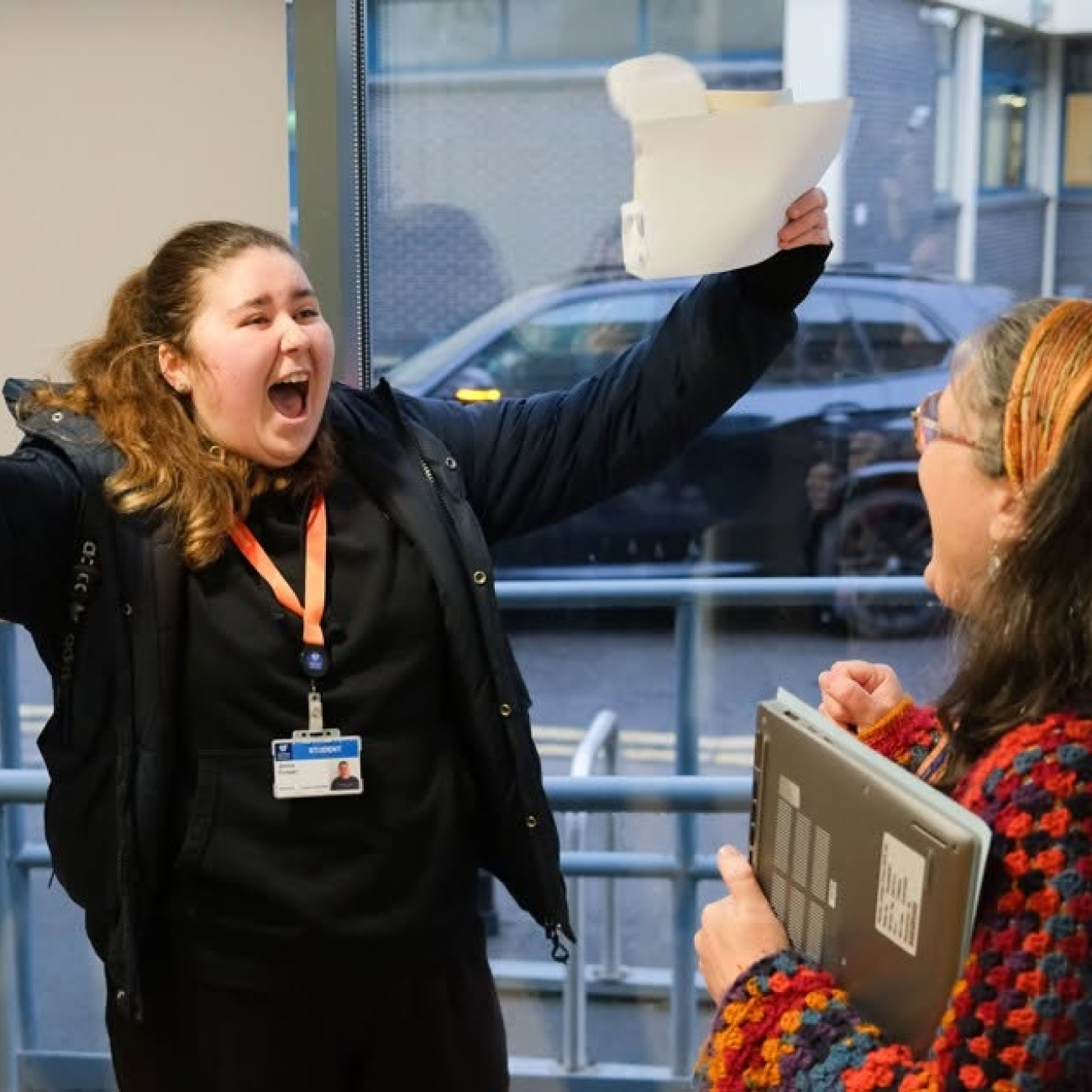
Tomorrow (Thursday 20 August) is GCSE Results Day, and we’re looking forward to welcoming our Level 2 students to the South West Skills Campus to collect their results, celebrate their achievements and find out what comes next.
The Results Day will run from 8:30am to 12:00pm, with students welcomed to the campus from 9:00am via Main Reception. The event is open to students studying GCSE, Vocational, UAL, Level 2 BTEC and NCFE programmes, with our teams on hand to celebrate their achievements and offer advice and guidance.
Parents and carers are also warmly encouraged to attend and share the occasion with their young person.
Students should bring their Student ID card when collecting their results.
Results will also be available through MyWeston from 8:30am.
If you’re unable to attend in person, someone can collect your results on your behalf. They will need to bring:
Any results not collected by 2:00pm will be posted to the address we have on record. Please note that results cannot be provided by telephone or email.
If you’re a school leaver and feel unsure about what your GCSE results mean for your next steps, our GCSE Results Guidance Surgeries will be available at South West Skills Campus:
Whether you’re worried about how your results could affect your offer, have changed your mind about your chosen subject or course, or simply need advice about the options available to you, our friendly team will be on hand to provide personalised guidance and support.
We can help you:
There’s no need to navigate your next steps alone. Come and speak to our advisors, who can help you understand your options and make informed decisions about your future.
Whatever your results, we’re here to support you. Good luck to everyone receiving their results – we look forward to welcoming you and helping you take your next step with confidence!
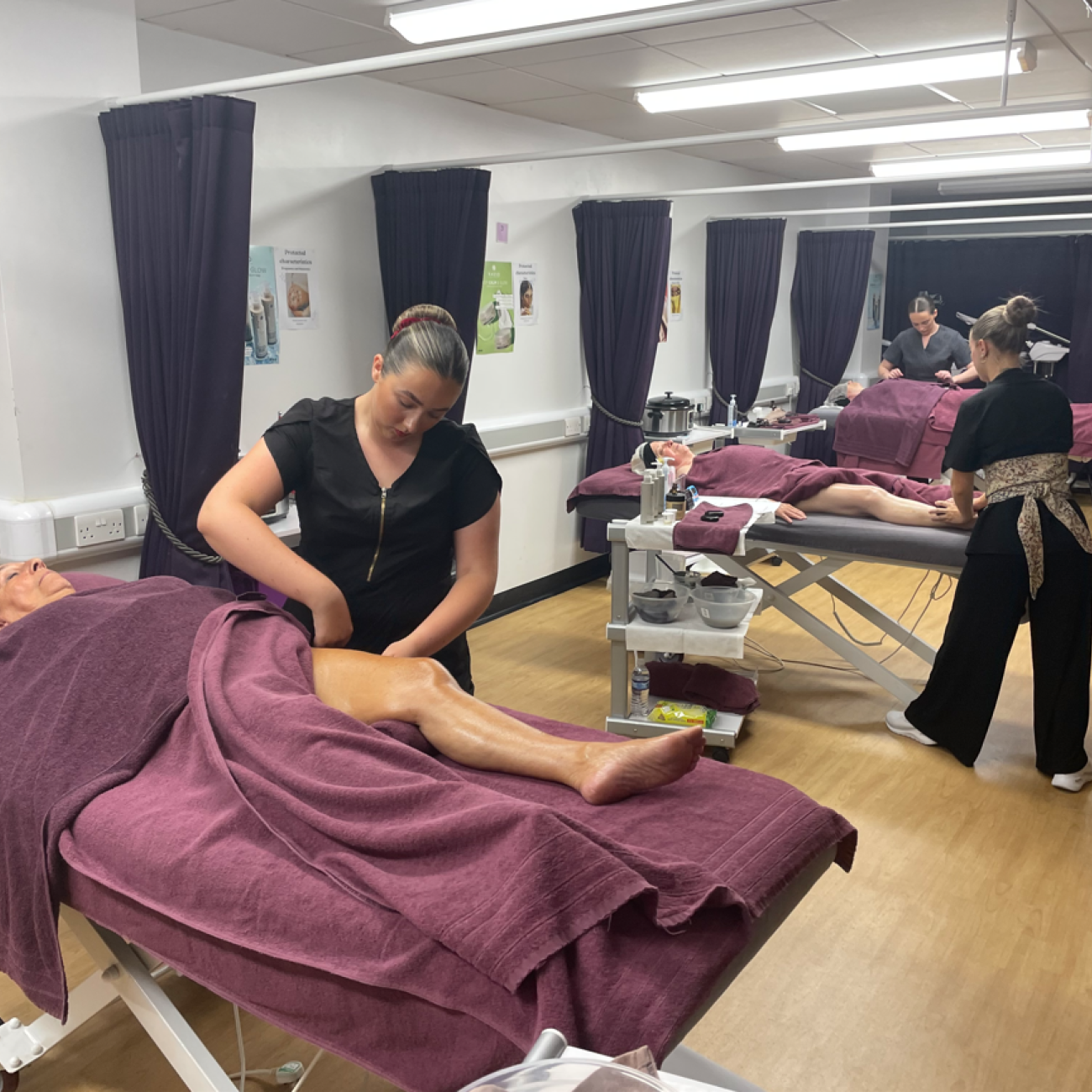
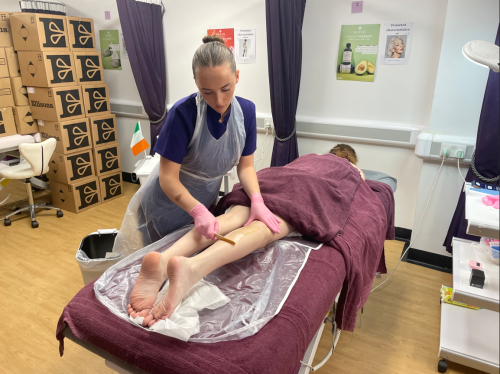
Last week, Weston College hosted a Beauty Therapy WorldSkills International Pressure Test ahead of the upcoming WorldSkills Shanghai competition, welcoming competitors from Team UK, Northern Ireland, and Spain. The event provided a valuable opportunity for competitors to test themselves in a high-pressure but supported environment while offering staff and peers a unique insight into the different techniques, approaches and professional standards demonstrated across countries.
Over four days, competitors completed a series of Beauty Therapy practical assessments designed to replicate the intensity of the WorldSkills competitions. These included full body masks, hot stone massages, facials, leg and underarm waxing, lash lift and tint, brow lamination and tint, manicure and pedicure, and creative makeovers. Each task challenged participants to demonstrate exceptional technical ability, precision, organisation, adaptability and time management under strict competition conditions.
Experiences like these help raise the aspirations of our current learners, provide valuable insight into the opportunities available through skills competitions, and encourage them to pursue challenges like this which will enhance their abilities. They also strengthen links with industry and international partners, creating networking opportunities and reinforcing Weston College's reputation as a high-achieving Careers Excellence Hub.
Hosting competitions like these provide Weston College with a fantastic opportunity to welcome international competitors and raise the profile of our learners and the college. Not only this, students, staff, and competitors are able to observe industry-leading professionals in action, gaining first-hand exposure to the standards, techniques and professionalism expected at the highest level of the beauty industry.
The treatments carried out during the Pressure Test were offered to Weston College staff, allowing competitors to perform on real clients in a realistic competition setting. Staff not only supported the competitors throughout the event but also experienced the exceptional standard of treatments being delivered, helping to create a realistic environment that closely reflected the requirements of an international competition.
Jenna Ratcliffe, Head of Service Industries at Weston College, said, “Being able to host Pressure Tests like this and welcome international competitors is a fantastic opportunity for Weston College and provides excellent networking opportunities for our students. It highlights our high-quality facilities whilst demonstrating the standards of talent and support that our current learners receive when studying at Weston College. We encourage as many enrichment opportunities and experiences as possible to ensure our students have a wide skillset and are prepared for the expectations and careers available to them within the Beauty Therapy industry.”
Good luck to all the competitors competing in WorldSkills Shanghai next month!
This visit forms part of the Beauty Therapy Careers Excellence Hub. Weston College's Career Excellence Hubs are designed to be the launching pad for our learners' careers. In a world where connections and relevant skills matter more than ever, these hubs offer a holistic approach that prepares learners to thrive in their chosen industries. With the support of these hubs, our learners are well-equipped to make a significant impact in their professional journeys.
If you are passionate about education and are looking for an opportunity to join the staff team at a leading college, then look at the latest job vacancies available at Weston College here. You can find all the latest job opportunities that Weston College has to offer, with a commitment to providing quality education for learners and a focus on continuous professional development for staff, Weston College is an excellent place to work and grow in your career.
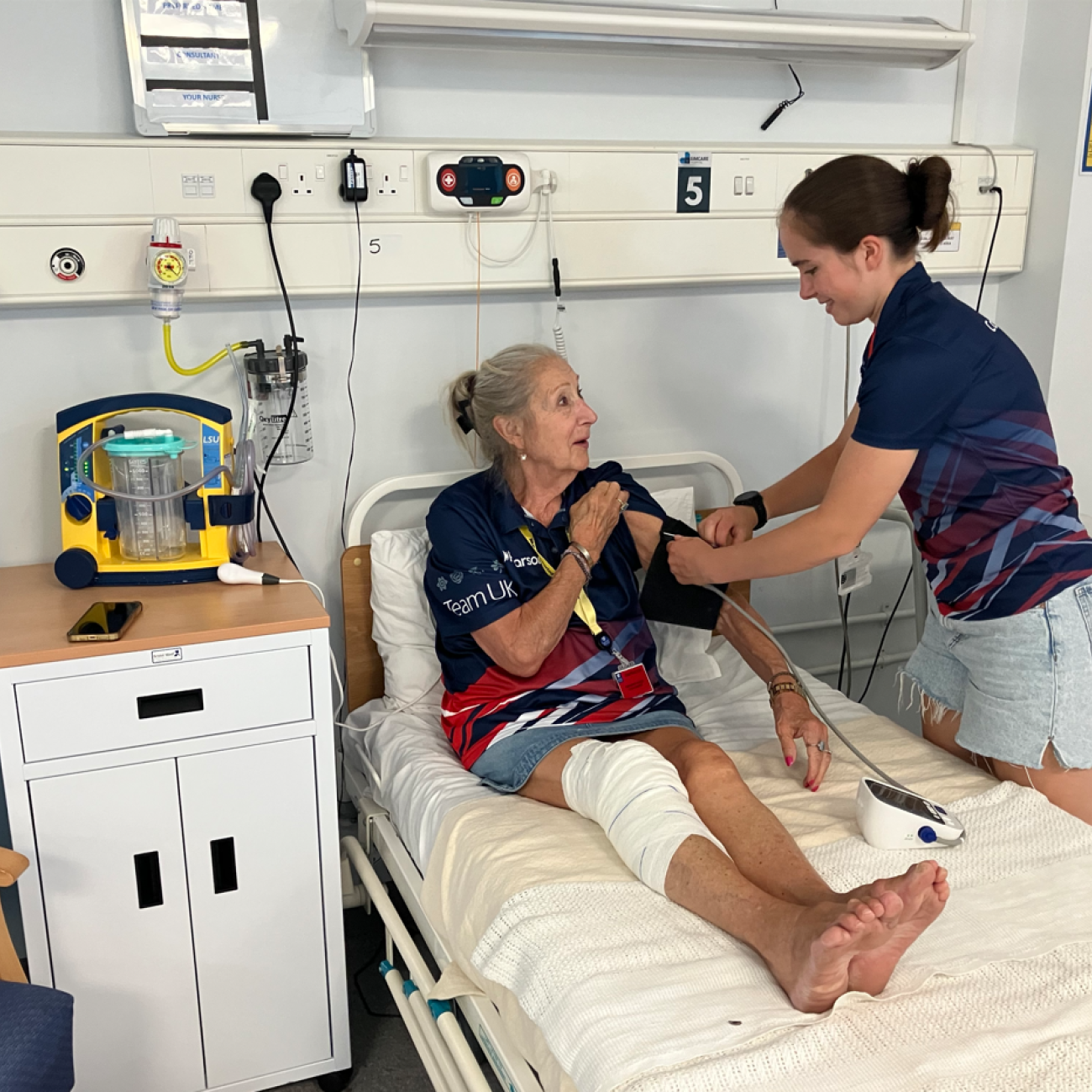
Last week, Weston College welcomed members of WorldSkills Health and Social Care Team UK for training preparation ahead of the WorldSkills Shanghai competition, taking place in September 2026. The training provided competitors with a valuable opportunity to practice and refine their skills in preparation for the global competition.
The WorldSkills Competition is an international event that brings together talented students and young professionals from across the world to compete in a range of vocational and technical skills. Competitors are challenged to demonstrate their knowledge, technical ability and professionalism to the highest possible standard.
As part of the WorldSkills Health and Social Care competition, contestants complete simulated real-world scenarios involving standardised patients, testing their abilities across six key competencies: communication, assessment, planning, implementation, education and improvement.
Using Weston College’s Health and Social Care simulation room, Team UK were able to replicate realistic care scenarios using high-quality equipment and simulation dummies as patients. This provided competitors with an authentic environment in which to practice their skills, while also showcasing Weston College’s outstanding facilities to external organisations and industry professionals.
Hosting a professional team such as WorldSkills Team UK provides Weston College with a fantastic opportunity to raise the profile of the College and demonstrate the quality of its facilities and learning environments. It also gives our students and staff the chance to observe industry-leading professionals in action, providing first-hand insight into the standards, techniques and professionalism expected within the Health and Social Care sector.
Opportunities such as this strengthen Weston College’s links with industry and showcase how our facilities can support high-level professional training, while inspiring our learners to see the opportunities available to them within their chosen careers.
Good luck to all the competitors competing in WorldSkills Shanghai next month!
This visit forms part of the Health and Social Care Careers Excellence Hub. Weston College's Career Excellence Hubs are designed to be the launching pad for our learners' careers. In a world where connections and relevant skills matter more than ever, these hubs offer a holistic approach that prepares learners to thrive in their chosen industries. With the support of these hubs, our learners are well-equipped to make a significant impact in their professional journeys.
Progress to the next level in Healthcare! At University Centre Weston (UCW) our students give us impressive feedback, with our latest National Student Survey results putting us above average in all nine areas! Find out more about our exceptional teaching, wellbeing services and learning resources by visiting our website. Click here!
If you are passionate about education and are looking for an opportunity to join the staff team at a leading college, then look at the latest job vacancies available at Weston College here. You can find all the latest job opportunities that Weston College has to offer, with a commitment to providing quality education for learners and a focus on continuous professional development for staff, Weston College is an excellent place to work and grow in your career.