




COURSES FOR SCHOOL LEAVERS
Your Future Starts Here
With hundreds of exciting courses, this is where your journey begins. From day one, you'll be supported, inspired, and on track to a rewarding career.
See SubjectsJoin a Career Excellence Hub and gain real-world skills, experience, and confidence to reach your goals.
Whether you're finishing school, changing direction, or learning English with our ESOL courses – we’ve got you covered.
Get started today – pick a subject and apply online in just 5 minutes!

Find Your Future Path
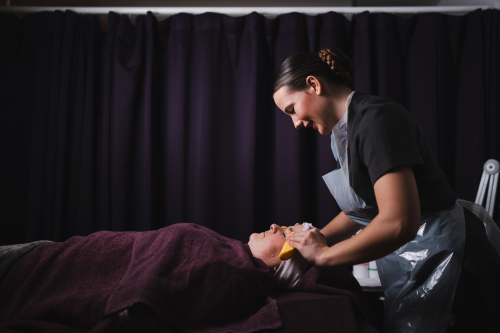











QUALIFICATIONS EXPLAINED
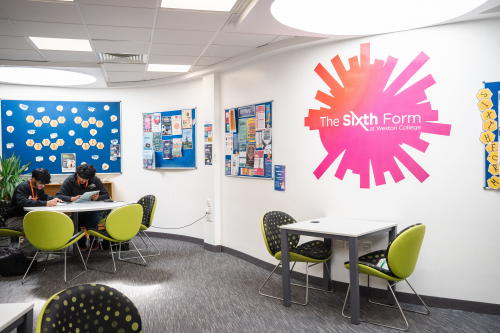
A Levels develop the knowledge, skills and study habits to excel at university, as well as the attributes recognised by employers.
Your academic studies will be complemented with enrichment opportunities such as trips, mentoring and work experience, providing the perfect springboard for your future career.
A Levels are assessed through exams at the end of two years of study. Most learners study three subjects - some choose four.
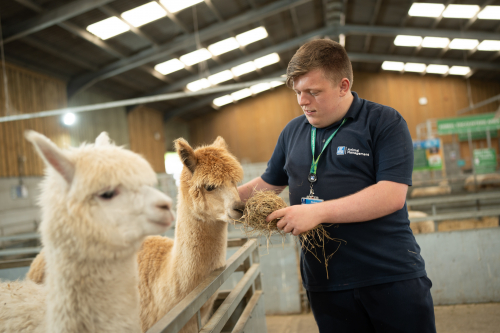
With an apprenticeship you’ll go straight into the workplace and be shown clear routes to progress straight into employment within a specific occupation. You can achieve nationally recognised qualifications, earn a wage, and gain skills that will see you get ahead. On average you will spend 20% of your learning time in the college and 80% within the workplace
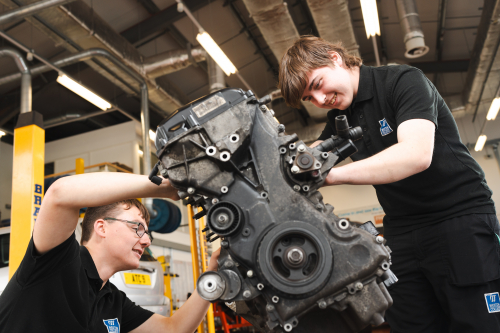
Professional and technical qualifications are designed to provide you with the knowledge, skills and behaviours needed to gain employment within specific industries or occupations. They provide a balance between theory and practical skills development. They are suited to those who want to get hands-on experience within a particular vocational area. These programmes include work placements. Assessment is more varied and will include exams, coursework and practical work.
T Levels give you the chance to learn what a real career is like while you continue your studies. T Levels have been designed with leading businesses and employers to give you the knowledge and skills you need, including a minimum of 45 days on an industry placement – this means you will spend 80% of your learning time in College and 20% within the workplace.
LATEST NEWS
A former Weston College student is to become one of the youngest people in the country to be awarded a doctorate, after her work with local charity Integrate Bristol successfully raised the awareness of Muslim women’s rights issues.
Fahma Mohamed, 19, who studied Access to Higher Education at Weston College, is to be awarded an honorary Doctorate in Laws by the University of Bristol on Friday (15th July).
She gained prominence after her successful campaign to raise awareness of female genital mutilation (FGM) gained the attention of the former Secretary of State for Education, Michael Gove.
The petition led to training to help teachers, doctors and social workers identify and assist girls at risk of FGM.
Sarah McLaughlin, Lecturer and Study Skills Tutor for Access to HE, congratulated her by saying: “We are extremely proud of Fahma and are delighted that her dedication to raise awareness of such an important issue has been recognised.
“She has worked diligently to achieve her Access to Higher Education diploma and her commitment to her charity work prior to and during her studies, is commendable.”
Access to Higher Education is a course designed to give adult learners the qualifications they need to get into university.
Fahma studied the Medical Sciences pathway, successfully completing the course in June this year. She will progress to study Biomedical Science at Kings College London this September.

Weston College students had a chance to meet Michael Gove, Lord Chancellor and Secretary of State for Justice, and local MP John Penrose, last week at an event hosted by Weston-super-Mare Conservative Association.
The students, who are currently studying A Level Government and Politics at Weston College’s Sixth Form Centre, were invited to the Royal Hotel for a three course meal followed by a speech from Mr Gove, who last week was voted out of the Conservative Party leadership election.
Kori, 17, said: “I found the evening thoroughly interesting. It’s cool to see politicians in the flesh because it shows us that the things we learnt in class are more than just theory or history.
“Meeting the politicians brings the concept of politics back to reality.”
Mardi McLay, Lecturer in Government and Politics at Weston College, said: “This was a unique experience providing the students with an opportunity to see first-hand, politics in action.”
Eve Mason, Weston College’s Curriculum Lead in Humanities, Legal and Social Studies, said: “Mr Gove was an interesting and entertaining speaker, who spoke on a range of contemporary matters.
“The students gained a valuable insight into the political process, talking at length to one of Mr Gove’s advisors to find out how he got into politics and what it’s like working for an MP.”
During his speech, Mr Gove paid special tribute to the students, saying: “It’s good to see the amazing young people from Weston College here this evening.
“Everyone in the town should feel proud of the College, and it deserves congratulations for everything it has achieved.”
Mr Gove has previously commended the College for its work in the offender learning sector, where it delivers education in nine prisons across the South West of England.
As the scaffolding goes up at the Winter Gardens site, we take a look at the real impact that Weston College’s refurbishment and redevelopment of the historic seafront pavilion will have on Weston-super-Mare.
The initial investment in creating new facilities and refurbishing the existing ballroom will see £11 million injected into the local economy, with Bristol-based contractors Midas Group employing people from the local area, and using supplies from local traders and merchants.
The people employed on site will spend their working days in Weston, spending money in the town centre on a daily basis. Whether it’s food, drink, clothes, or other goods or services they’re buying in the town, over the course of the development this figure will add up to a substantial sum of money.
After the University Centre is opened, 250 new higher education students, 35 new university lecturers and a handful of other jobs will be brought into the building, and they too will be spending their working days in Weston.
The average spending power of university students is £11,000 per year. Despite university tuition fees rising, the total spending power of students in the UK has increased by over £655 million over the last decade.
Bringing 250 new Higher Education students into the heart of Weston-super-Mare has the potential to inject an extra £2.75 million per year into the local economy.
This extra cash flow promotes job growth, fuels investment, and could potentially lead to a much-needed increase in variety in the town centre, as it has done in many other university towns across the country.
The Winter Gardens is in need of a serious amount of investment in order to bring the building up to date, carry out repairs and transform it into a more manageable venue that meets the needs of the community and is realistic about the range of events it can hold.
The College is committed to the Winter Gardens’ continued community use, with a large portion of the building being made available to the public including the ballroom, a restaurant/bar and a café.
WHICH LEVEL IS RIGHT FOR ME?