




COURSES FOR SCHOOL LEAVERS
Your Future Starts Here
With hundreds of exciting courses, this is where your journey begins. From day one, you'll be supported, inspired, and on track to a rewarding career.
See SubjectsJoin a Career Excellence Hub and gain real-world skills, experience, and confidence to reach your goals.
Whether you're finishing school, changing direction, or learning English with our ESOL courses – we’ve got you covered.
Get started today – pick a subject and apply online in just 5 minutes!

Find Your Future Path









QUALIFICATIONS EXPLAINED
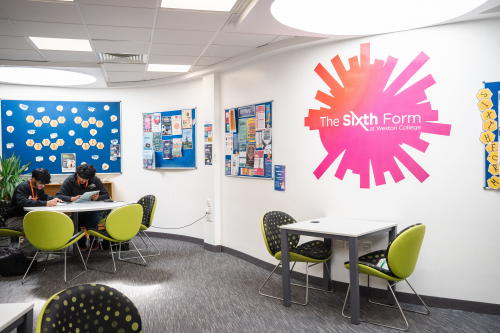
A Levels develop the knowledge, skills and study habits to excel at university, as well as the attributes recognised by employers.
Your academic studies will be complemented with enrichment opportunities such as trips, mentoring and work experience, providing the perfect springboard for your future career.
A Levels are assessed through exams at the end of two years of study. Most learners study three subjects - some choose four.
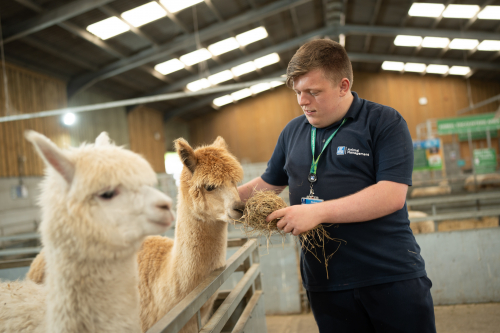
With an apprenticeship you’ll go straight into the workplace and be shown clear routes to progress straight into employment within a specific occupation. You can achieve nationally recognised qualifications, earn a wage, and gain skills that will see you get ahead. On average you will spend 20% of your learning time in the college and 80% within the workplace
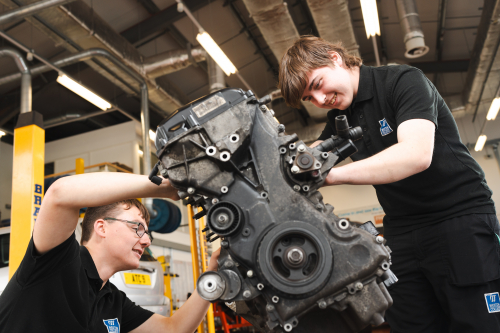
Professional and technical qualifications are designed to provide you with the knowledge, skills and behaviours needed to gain employment within specific industries or occupations. They provide a balance between theory and practical skills development. They are suited to those who want to get hands-on experience within a particular vocational area. These programmes include work placements. Assessment is more varied and will include exams, coursework and practical work.
T Levels give you the chance to learn what a real career is like while you continue your studies. T Levels have been designed with leading businesses and employers to give you the knowledge and skills you need, including a minimum of 45 days on an industry placement – this means you will spend 80% of your learning time in College and 20% within the workplace.
LATEST NEWS
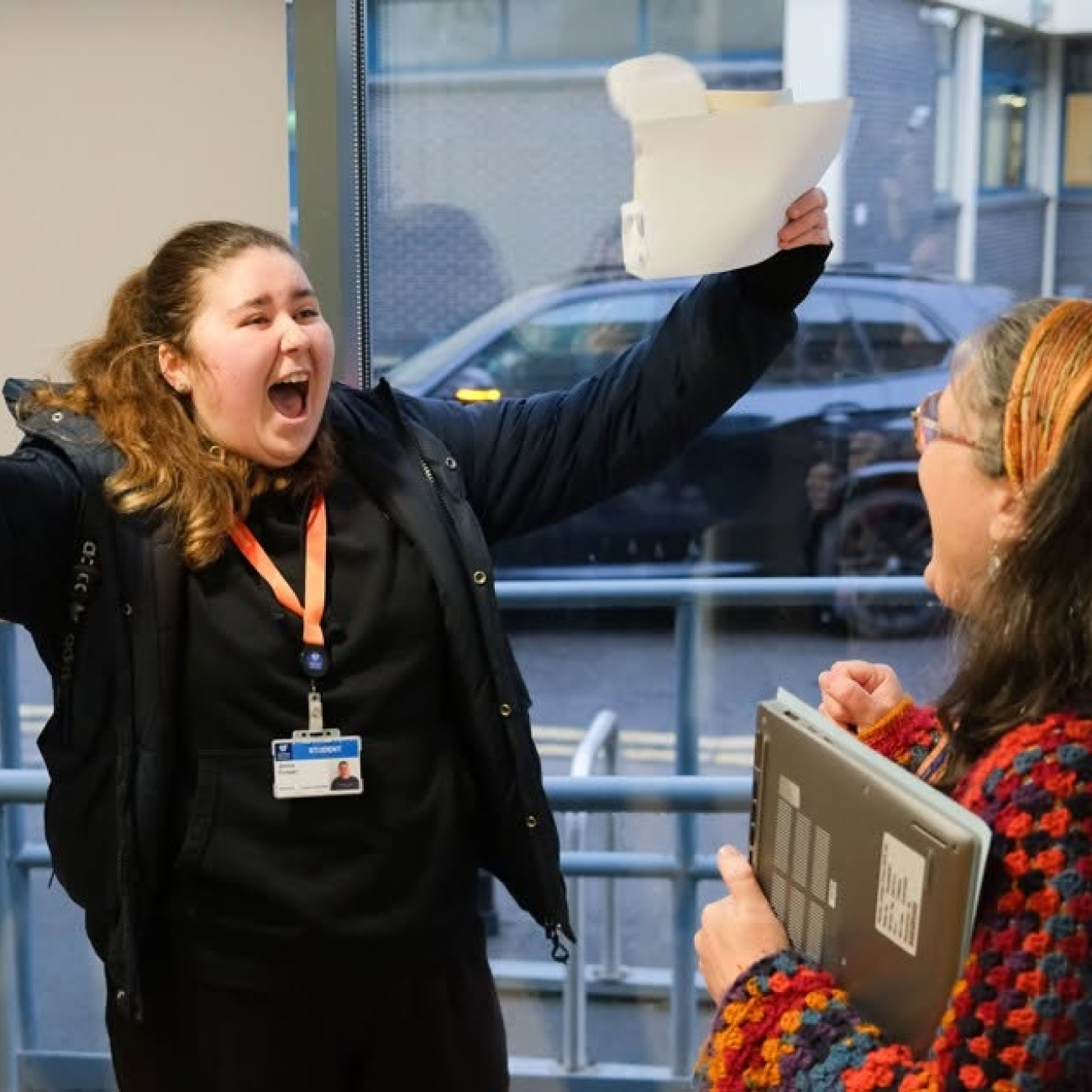
Tomorrow (Thursday 20 August) is GCSE Results Day, and we’re looking forward to welcoming our Level 2 students to the South West Skills Campus to collect their results, celebrate their achievements and find out what comes next.
The Results Day will run from 8:30am to 12:00pm, with students welcomed to the campus from 9:00am via Main Reception. The event is open to students studying GCSE, Vocational, UAL, Level 2 BTEC and NCFE programmes, with our teams on hand to celebrate their achievements and offer advice and guidance.
Parents and carers are also warmly encouraged to attend and share the occasion with their young person.
Important information for students
Students should bring their Student ID card when collecting their results.
Results will also be available through MyWeston from 8:30am.
If you’re unable to attend in person, someone can collect your results on your behalf. They will need to bring:
- Your Student ID card
- A signed letter of permission from you
- Their own photographic identification
Any results not collected by 2:00pm will be posted to the address we have on record. Please note that results cannot be provided by telephone or email.
Got questions about your GCSE results? We’re here to help!
If you’re a school leaver and feel unsure about what your GCSE results mean for your next steps, our GCSE Results Guidance Surgeries will be available at South West Skills Campus:
- Thursday 20 August, 11:00am–4:00pm
- Friday 21 August, 9:00am–3:30pm
Whether you’re worried about how your results could affect your offer, have changed your mind about your chosen subject or course, or simply need advice about the options available to you, our friendly team will be on hand to provide personalised guidance and support.
We can help you:
- Understand how your results may affect your course offer
- Explore alternative courses and pathways
- Discuss changing your subject choice
- Find the right option if your plans have changed
There’s no need to navigate your next steps alone. Come and speak to our advisors, who can help you understand your options and make informed decisions about your future.
Whatever your results, we’re here to support you. Good luck to everyone receiving their results – we look forward to welcoming you and helping you take your next step with confidence!
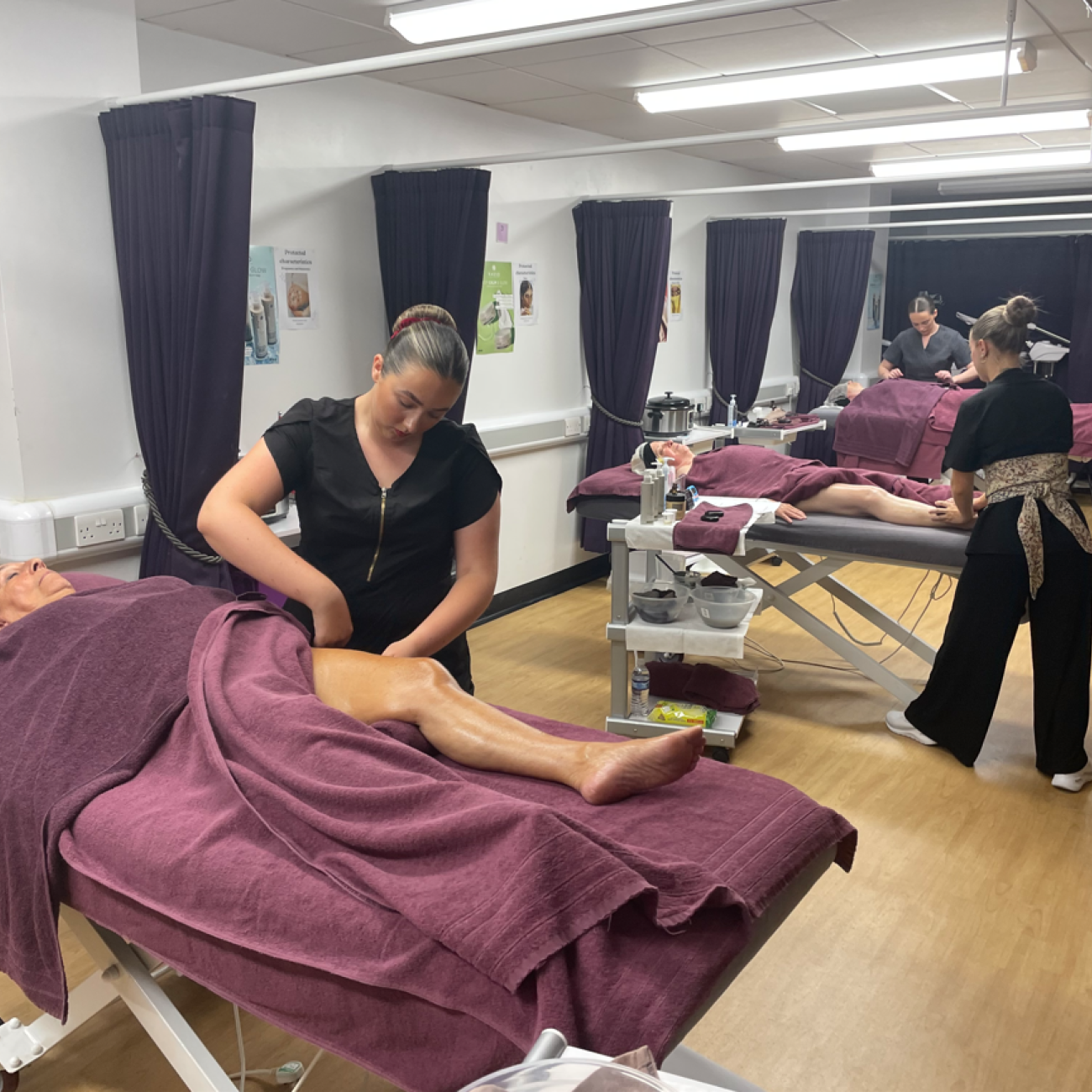
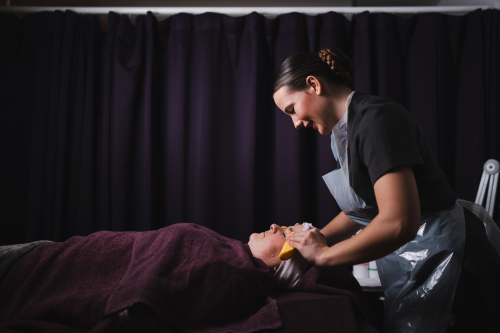
Last week, Weston College hosted a Beauty Therapy WorldSkills International Pressure Test ahead of the upcoming WorldSkills Shanghai competition, welcoming competitors from Team UK, Northern Ireland, and Spain. The event provided a valuable opportunity for competitors to test themselves in a high-pressure but supported environment while offering staff and peers a unique insight into the different techniques, approaches and professional standards demonstrated across countries.
Over four days, competitors completed a series of Beauty Therapy practical assessments designed to replicate the intensity of the WorldSkills competitions. These included full body masks, hot stone massages, facials, leg and underarm waxing, lash lift and tint, brow lamination and tint, manicure and pedicure, and creative makeovers. Each task challenged participants to demonstrate exceptional technical ability, precision, organisation, adaptability and time management under strict competition conditions.
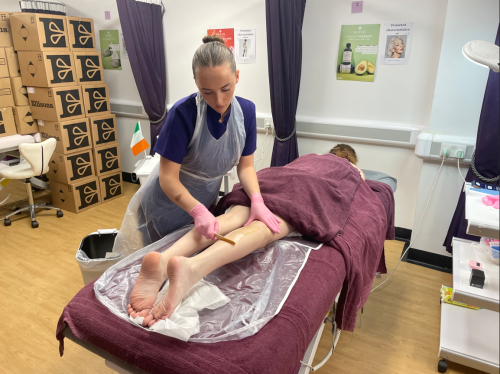
Experiences like these help raise the aspirations of our current learners, provide valuable insight into the opportunities available through skills competitions, and encourage them to pursue challenges like this which will enhance their abilities. They also strengthen links with industry and international partners, creating networking opportunities and reinforcing Weston College's reputation as a high-achieving Careers Excellence Hub.
Hosting competitions like these provide Weston College with a fantastic opportunity to welcome international competitors and raise the profile of our learners and the college. Not only this, students, staff, and competitors are able to observe industry-leading professionals in action, gaining first-hand exposure to the standards, techniques and professionalism expected at the highest level of the beauty industry.
The treatments carried out during the Pressure Test were offered to Weston College staff, allowing competitors to perform on real clients in a realistic competition setting. Staff not only supported the competitors throughout the event but also experienced the exceptional standard of treatments being delivered, helping to create a realistic environment that closely reflected the requirements of an international competition.
Jenna Ratcliffe, Head of Service Industries at Weston College, said, “Being able to host Pressure Tests like this and welcome international competitors is a fantastic opportunity for Weston College and provides excellent networking opportunities for our students. It highlights our high-quality facilities whilst demonstrating the standards of talent and support that our current learners receive when studying at Weston College. We encourage as many enrichment opportunities and experiences as possible to ensure our students have a wide skillset and are prepared for the expectations and careers available to them within the Beauty Therapy industry.”
Good luck to all the competitors competing in WorldSkills Shanghai next month!
This visit forms part of the Beauty Therapy Careers Excellence Hub. Weston College's Career Excellence Hubs are designed to be the launching pad for our learners' careers. In a world where connections and relevant skills matter more than ever, these hubs offer a holistic approach that prepares learners to thrive in their chosen industries. With the support of these hubs, our learners are well-equipped to make a significant impact in their professional journeys.
If you are passionate about education and are looking for an opportunity to join the staff team at a leading college, then look at the latest job vacancies available at Weston College here. You can find all the latest job opportunities that Weston College has to offer, with a commitment to providing quality education for learners and a focus on continuous professional development for staff, Weston College is an excellent place to work and grow in your career.
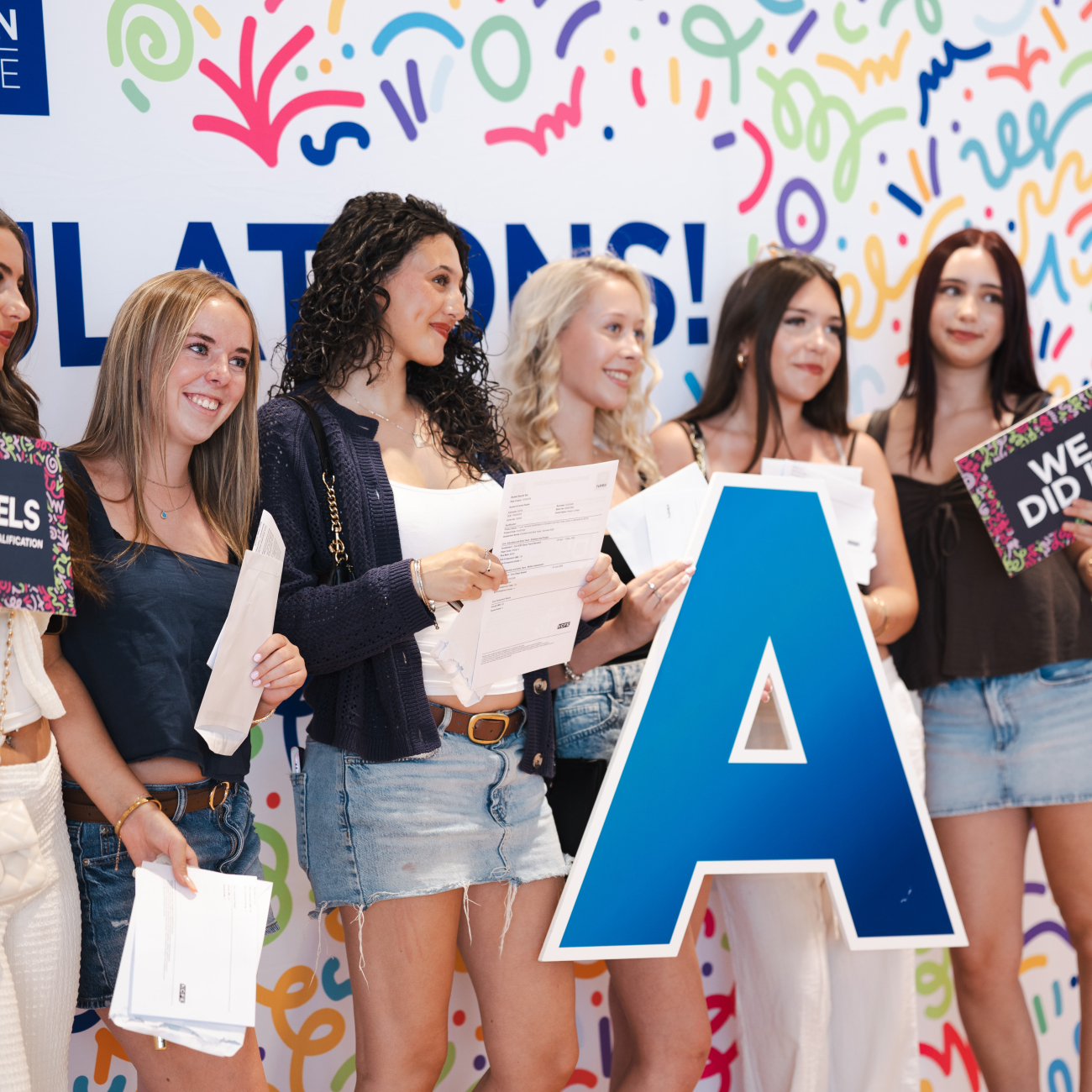
Weston College Learners Excel Across A Levels, T Levels and Vocational Qualifications
Today, learners from across Weston College studying A Levels, T Levels, BTECs and University Arts London (UAL) qualifications came together to celebrate exceptional achievements on Results Day 2026.
This year's results demonstrate significant progress across the College, with improvements in high grades, increased pass rates and an impressive number of subjects achieving 100% pass rates. The achievements reflect the dedication, resilience and ambition of learners, supported by the expertise and commitment of college staff.
A Level Success Continues to Rise
A Level students achieved an impressive 95.0% overall pass rate, with high grades (A-B*) increasing by 4.1 percentage points compared with 2025. 14 out of 23 subjects achieved a 100% pass rate, highlighting the strength of teaching and learning across a broad range of academic disciplines.
Across the wider Sixth Form provision, which includes A Levels, the Diploma in Criminology, BTEC Sport and Exercise Science and the Extended Project Qualification, 95.2% of learners successfully achieved their qualifications.
Strong Outcomes for T Level Learners
Students studying T Levels achieved a 91.2% pass rate, with particularly impressive growth in high grades. The proportion of learners achieving the top Distinction and Distinction* grades increased by almost 10 percentage points, rising by 9.9% compared with 2025.
A remarkable seven out of nine T Level subject areas achieved a 100% pass rate.
T Levels combine classroom learning with substantial industry placements, enabling learners to develop valuable workplace experience alongside their studies and preparing them for highly skilled careers.
Vocational Excellence in BTEC Programmes
BTEC learners achieved outstanding results across a wide range of vocational subject areas, with an overall pass rate of 97.7%, up 2.3 percentage points on the previous year.
High grades increased by an impressive 9.1 percentage points, with particularly strong improvements in learners achieving the very highest outcomes.
Students excelled across a wide range of sectors including Animal Management, Business, Construction, Education and Early Years, Hair and Beauty, Health and Social Care, Hospitality and Catering, Motor Vehicle, Protective Services, Travel and Tourism, and Sport.
Creative and Performing Arts Achieve 100% Pass Rate
Creative and Performing Arts learners studying UAL qualifications celebrated exceptional success, with 100% of students achieving their qualification, an increase on the previous year.
The results spanned 13 different subject areas, while the number of learners achieving the highest grades increased by 4.1 percentage points.
UCAS Success
Many of our Level 3 learners collecting their results today have successfully secured places at university, representing a 6.7 percentage point increase on 2025 and more than double the national rate of increase. Of those progressing to higher education, an impressive 95.2% have been accepted by their first-choice university.
We are also delighted to see a more than 30% increase in the number of learners who, as of Results Day, have secured places at Russell Group universities, including two Sixth Form students who will be progressing to the University of Oxford.
For learners still considering their next steps, our Careers and Employability Team is available to provide support and guidance through Clearing, both in person and online.
Among this year's success stories are:
Kornelia, a former Priory school student is celebrating exceptional A Level results after achieving an A* in Further Maths and an A in Chemistry, these results add to last years A* and A, meaning Kornelia will now progress to Oxford University to study Biochemistry.
Kornelia said: "I'm happy with my results and excited to be heading to Oxford University to study Biochemistry. It's been a lot of hard work, so seeing it all payoff is a good feeling. I achieved an A in Chemistry and an A* in Further Mathematics this year. The support from the Sixth Form has been good. The extra sessions they provided were valuable, and I always felt I could ask questions and leave with a clear understanding of the subject.”
Alfie studied his T-Level Early Years & Education at the College and collected a Merit today.
Alfie said: “I'm really pleased with my results and excited to be progressing to the University of Gloucestershire to study Early Childhood Studies. I'd like to say a huge thank you to my tutors, Rachael, Kayleigh and Lisa. They have been amazing throughout my time at Weston College and have always been there to support and encourage me. They are genuinely the best tutors and lecturers I could have asked for. My advice to anyone starting college this year would be to put the effort in, stay focused and try not to overthink everything. Make the most of your time here, get involved and enjoy the experience because you'll definitely have fun along the way."
Beck a learner who travels in from Nailsea, is celebrating achieving a Merit on her UAL Media Level 3 course and will now progress to a Media degree at University Centre Weston.
"I am really impressed with my results. I did have some struggles in my final year, but I really pushed myself to the limit and I got the grade I wanted. I'm now moving onto the Media degree at University Centre Weston. I'd like to thank all my tutors, especially Tom. He has been so supportive and helpful throughout my time at Weston College and was always rooting for me to succeed.”
Michael, a former Priory School student, is celebrating after achieving a Distinction in his Level 3 Uniformed Public Services course. He is now one step closer to achieving his ambition of becoming a Police Officer.
"I’m really pleased with my result and was excited to collect it today. Achieving a Distinction is a great feeling and reflects all the hard work I’ve put in throughout the course. To celebrate, I think I'll be treating myself to a takeaway tonight, probably fish and chips! I'd like to thank all my lecturers, Dave, Nicola, Aaron and Steve, for their support and guidance throughout my time at Weston College. They have helped me develop the skills and confidence I need to take the next step towards my goal of becoming a Police Officer."
Weston College's Principal and Chief Executive, Pat Jones, said:
"This year's results are a tremendous achievement and demonstrate the exceptional talent, determination and ambition of our learners.
We are particularly pleased to see significant increases in high grades across A Levels, T Levels and BTEC programmes, alongside an outstanding number of subject areas achieving 100% pass rates. These results show that our students are not only succeeding but excelling.
“Behind every result is a story of hard work and perseverance. I would like to thank our dedicated staff, employer partners and families who have played such an important role in helping our learners achieve their goals.
"Whether progressing to university, apprenticeships or employment, our students leave Weston College with the skills and confidence needed to succeed. We are particularly proud to see learners progressing onto a wide range of exciting destinations, including Russell Group universities, Medicine and Veterinary Science degree programmes, apprenticeships and skilled careers.
“Congratulations to the Class of 2026. We are incredibly proud of everything you have achieved and look forward to seeing what you accomplish next."
Weston-super Mare’s MP Dan Aldridge was also on site this morning to meet students and staff to congratulate them all on their achievements, Dan said:
“Results Day is a huge moment for everyone involved and today is a chance to celebrate all that hard work. Whatever the results, I hope every student feels proud of what they’ve achieved and excited about what comes next. I know how hard students have worked to reach this day, but I also want to recognise the incredible dedication of the teachers and college staff who have supported them every step of the way.”
There is still time for prospective students to secure a place at Weston College for September 2026. Whether you're interested in A Levels, T Levels, vocational courses, apprenticeships or higher education, our team is on hand to help you find the right pathway. Visit www.weston.ac.uk to explore your options and apply online, or pop into one of our receptions where our staff will be happy to answer any questions and support you with your application.
If you are passionate about education and are looking for an opportunity to join the staff team at a leading college, visit our careers page to view the latest vacancies and discover how you can help transform lives through education.
WHICH LEVEL IS RIGHT FOR ME?