




COURSES FOR SCHOOL LEAVERS
Your Future Starts Here
With hundreds of exciting courses, this is where your journey begins. From day one, you'll be supported, inspired, and on track to a rewarding career.
See SubjectsJoin a Career Excellence Hub and gain real-world skills, experience, and confidence to reach your goals.
Whether you're finishing school, changing direction, or learning English with our ESOL courses – we’ve got you covered.
Get started today – pick a subject and apply online in just 5 minutes!

Find Your Future Path












QUALIFICATIONS EXPLAINED
A Levels develop the knowledge, skills and study habits to excel at university, as well as the attributes recognised by employers.
Your academic studies will be complemented with enrichment opportunities such as trips, mentoring and work experience, providing the perfect springboard for your future career.
A Levels are assessed through exams at the end of two years of study. Most learners study three subjects - some choose four.
With an apprenticeship you’ll go straight into the workplace and be shown clear routes to progress straight into employment within a specific occupation. You can achieve nationally recognised qualifications, earn a wage, and gain skills that will see you get ahead. On average you will spend 20% of your learning time in the college and 80% within the workplace
Professional and technical qualifications are designed to provide you with the knowledge, skills and behaviours needed to gain employment within specific industries or occupations. They provide a balance between theory and practical skills development. They are suited to those who want to get hands-on experience within a particular vocational area. These programmes include work placements. Assessment is more varied and will include exams, coursework and practical work.
T Levels give you the chance to learn what a real career is like while you continue your studies. T Levels have been designed with leading businesses and employers to give you the knowledge and skills you need, including a minimum of 45 days on an industry placement – this means you will spend 80% of your learning time in College and 20% within the workplace.
LATEST NEWS
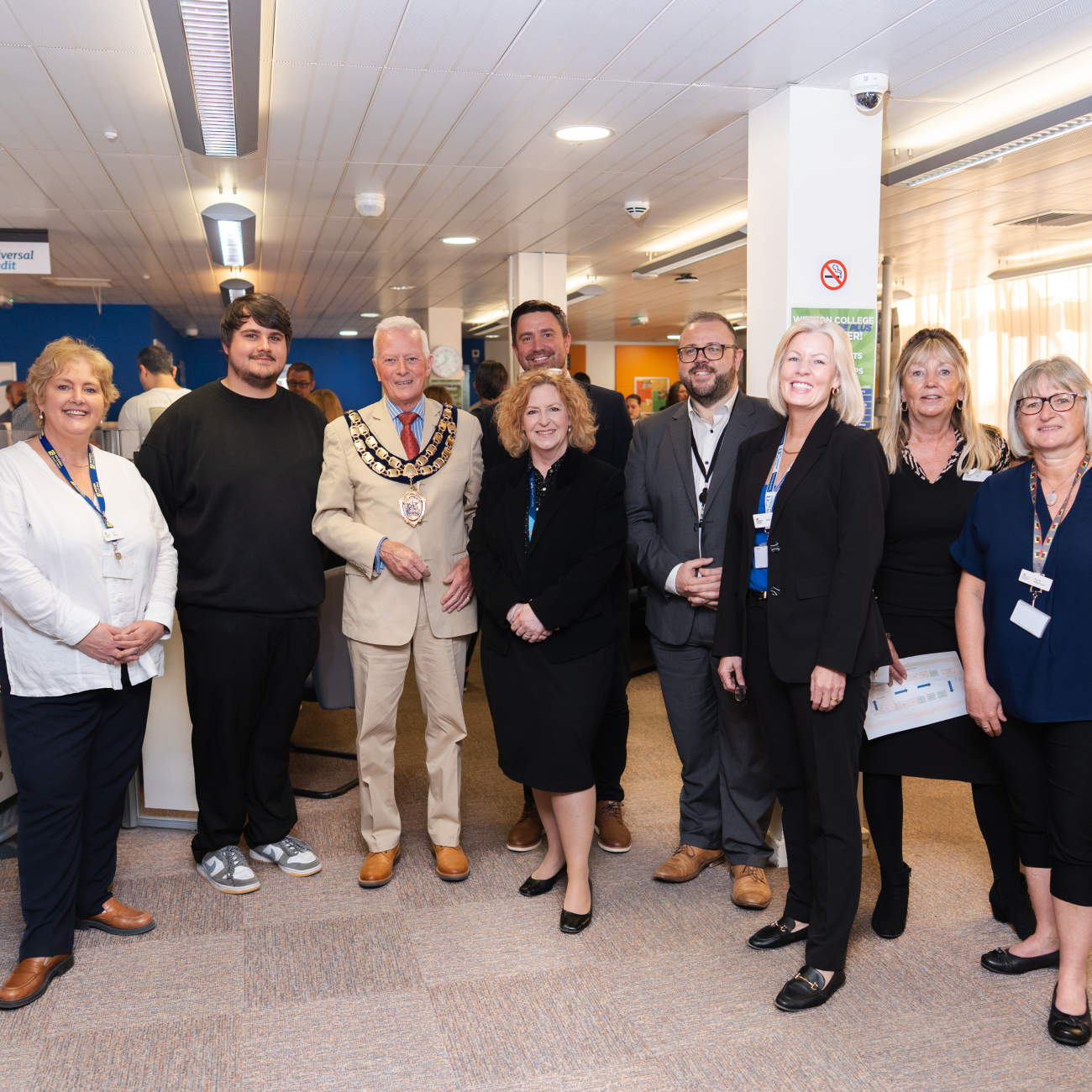
On Tuesday, 2nd April, Weston College took over the Job Centre in Weston-super-Mare, for a day dedicated to supporting adults in their journey towards new training and employment opportunities.
The event was designed to showcase the extensive range of courses and support available to job seekers, helping them gain new skills and qualifications to improve their career prospects.
The event was well attended, with over 150 job seekers, as well as visitors including Jane Murch, Chief of Staff for Weston-super-Mare’s MP Dan Aldridge, Mayor John Crockford-Hawley, and Weston College’s Principal and Chief Executive, Pat Jones.
Their presence highlighted the importance of collaborative efforts between educational institutions, local government, and employment services in tackling skills gaps and unemployment.
The College’s team set up engaging stations filled with information about courses, training opportunities, and career support.
Attendees had the chance to speak directly with advisors, discuss their aspirations, and even register their interest in courses tailored to their needs. There was even the opportunity to get their hair cut, by the Hair and Barbering team from Weston College.
Mike Hudson, Director of Student Recruitment and Customer Operations at Weston College, said: “It was great to host our third Weston College Takeover Day at Weston Job Centre, and to see so many people wanting to engage with education.
“This event reflects our ongoing commitment to empowering individuals through education. We are proud to support adult learners in accessing the training they need to take their next career step.
“A big thank you to the Department for Work and Pensions and the incredible staff at Weston Job Centre and Weston College who went above and beyond to make this event so impactful, our continued partnership is supporting with creating brighter futures for all.”

Weston College have recently held an inter college competition for the South West Skills Challenge for Hair and Beauty – a competition which has been set up by colleges in the South West to support learners in their preparations for WorldSkills competitions.
At our Knightstone campus, we hosted Bath College, City of Bristol College, Yeovil College, New College Swindon, Gloucester College, and Bridgwater and Taunton College. The day consisted of various hair, foundation hair, beauty therapist and beauty practitioner competitions all judged by industry professionals, VTCT, AHT and WorldSkills judges.
The students that came in the top 3 of each competition were awarded prizes that were kindly donated by Dennis Williams, Ellisons, Capital, VTCT Skills, Wella.
Our Weston College learners came on top for the Foundation Hair and Beauty Practitioner awards, as well as coming second for the Beauty Therapist award! A big congratulations to the 30 talented competitors across all 7 colleges who pushed themselves outside their comfort zones, showcasing their amazing skills and creativity. The level of talent was truly inspiring!
We’d like to extend a huge thank you to Ellisons Hair and Beauty , VTCT Skills , Dennis Williams, and Wella UK for providing fantastic prizes, as well as a special shout-out to our fantastic panel of judges: David Bassett, Mark Rayment, Chloe Williams and Hayley Huxtable who helped make the competition run smoothly and provided valuable feedback for the competitors.
Below are the results of each of the competitions:
Foundation Hair:
🥇Weston College
🥈Bridgwater & Taunton College
🥉Bridgwater & Taunton College
Hair:
🥇Gloucestershire College
🥈Gloucestershire College
🥉New College Swindon
Beauty Practitioner:
🥇Weston College
🥈New College Swindon
Beauty Therapist:
🥇Yeovil College
🥈Weston College
🥉Yeovil College
Jenna Ratcliffe, Head of Service Sectors at Weston College, said, “Weston College are super proud to have hosted the South West Skills – Hair and Beauty Competition, and we are delighted with the outcomes of our Weston College learners! They have all put considerable amounts of dedication into their work, which was evident during the competition.
“Hosting events like these gives learners across colleges the opportunity to gain real industry experience which will help them immensely with their transition from college into employment, and it is important that we continue to give these opportunities to our learners throughout their time at college.”
If you would like to find out more about our Beauty courses, click here.
If you would like to find out more about our Hairdressing courses, click here.

Welcome to the Weston College Careers & Employability Team Monthly Blog!
Dear Parents and Carers,
We’re excited to bring you the latest edition of our Careers & Employability Team Monthly Blog! Each month, we’ll provide updates on events, celebrate successes and how we offer support for all our learners at Weston College. You will also find key dates for upcoming events for you and your young person to get involved in. You can get in touch with the team on cet@weston.ac.uk for all Careers & Employability and T Level Industry Placement support.
The Careers & Employability Team

Last month, we celebrated our very first STEPS Month! Throughout March, we dedicated our time to personal development with a packed schedule of exciting activities aimed at enhancing skills, expanding knowledge, and offering new experiences.
As part of STEPS Month, the Careers Team led the way during National Careers Week, delivering a range of valuable opportunities for our learners. This year’s NCW was packed with engaging activities, guest workshops, and tailored lessons, all designed to inspire and inform. Over 150 learners from seven different subject areas took part in special workshops to learn more about gap years, giving them valuable insights into how they could broaden their horizons before stepping into employment or further education.
Additionally, our Maths and English departments incorporated career-related lessons, helping learners see the real-world applications of their studies and how they can connect to future opportunities.
To celebrate International Women’s Day, which coincided with National Careers Week, we were delighted to welcome Georgia Thomson, former Chairperson for Women in Property. Georgia shared her experiences and valuable insights into the construction industry, inspiring our learners with her journey and expertise.
We really enjoyed hosting career drop-in sessions at our careers stands across campuses! It was fantastic to engage in meaningful conversations with learners about their ideas and goals. As part of the careers stand, we encouraged learners to write a pledge for National Careers Week – a commitment to take action and start preparing for their next steps.
Check out some of their pledges here:
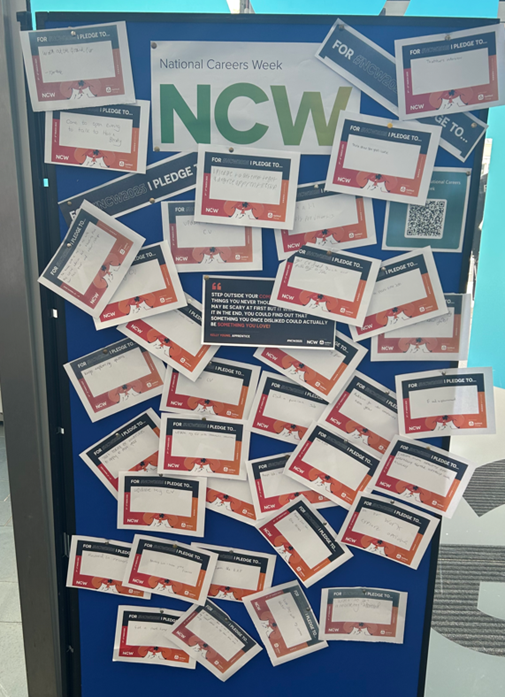
The week was a great success, with learners actively engaging in career discussions, discovering new possibilities, and taking steps towards shaping their futures. Feedback from the week highlighted the impact of our sessions. One learner described their guest speaker experience with Secret World Wildlife as "informative and useful for my work experience”. Another learner commented on the Apprenticeship Guide talk, noting that it provided valuable information to consider when planning their future progression. Curious to learn more about what we’ve been up to during National Careers Week? Keep reading!
Kilroy Guest Speaker
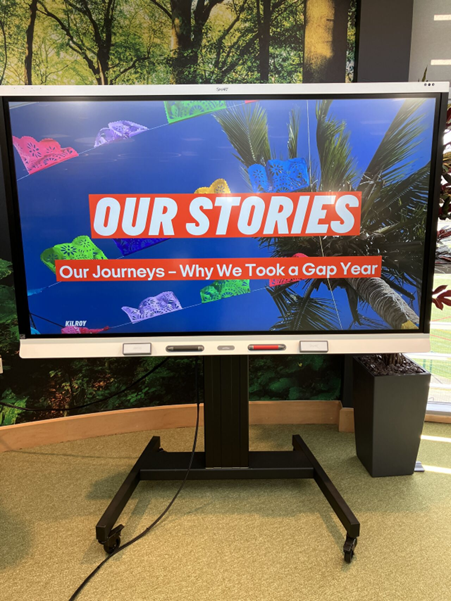
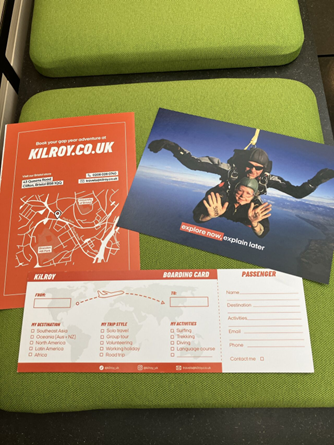
Kilroy is a gap year organisation who support young people in embark on life-defining adventures all over the world. They support young people to plan gap years, organise volunteering and much more! During National Careers Week Eliza and Rhea delivered informative sessions to nearly 200 learners from eight different faculty areas across three sessions over two days. With learners from Loxton campus engaging in a targeted workshop with bespoke conversations. Learners at Knightstone using the Conference Centre to hear great stories about the support Kilroy can offer, and Early Years receiving their own bespoke session!
National Career's Week - Puxton Park Guest Speakers
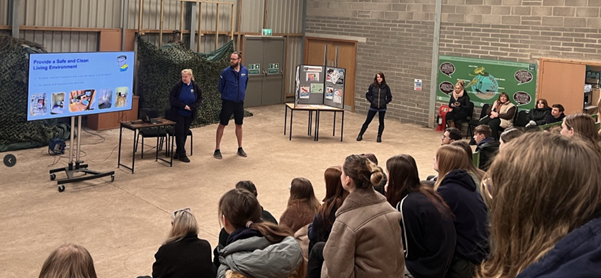
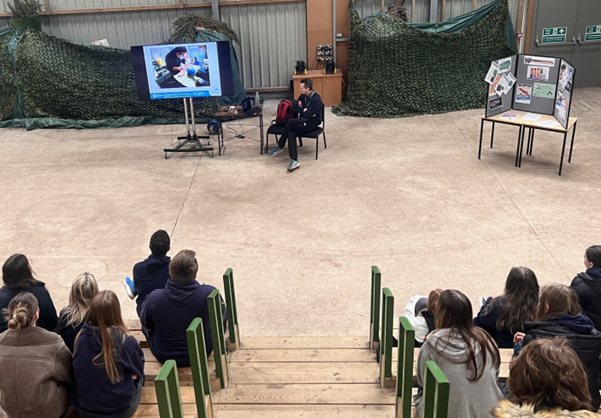
National Careers Week at Puxton Park was a fantastic opportunity for our Animal Management students to gain valuable insights into the animal industry. We were thrilled to welcome two guest speakers who shared their experiences, knowledge, and passion for their work.
Meet Our Guest Speakers
We were privileged to have George Bethell, Head of Education and Public Relations at Secret World Wildlife Rescue, who gave an insightful talk on the incredible work they do. George highlighted their core mission: RESCUE - REHABILITATE - RELEASE. He emphasised that:
- Animal welfare is at the heart of what they do.
- Secret World Wildlife Rescue is a place of safety for wildlife.
- They are there for British wildlife, no matter what the species, to give expert care and rehabilitation.
George's presentation provided a deep dive into the operations at Secret World Wildlife Rescue, showcasing their dedication to providing expert care and rehabilitation for British wildlife. His talk inspired students to consider careers in wildlife rescue and rehabilitation.
We were also delighted to welcome Ceri-Anne Verrinder and Andy from the RSPCA North Somerset Branch. They provided an insightful look into the role of the RSPCA, emphasising their commitment to rescue, rehabilitation, and rehoming a wide variety of animals. They shared stories of dogs and cats rescued from cruelty and neglect, and how their rehabilitation and care at the centre allowed them to be rehomed eventually. Their dedication to animal welfare and the comprehensive care they provide was truly inspiring for our students.
Insights and Inspiration
Both speakers provided invaluable insights into their respective fields, inspiring our students to explore the many career opportunities in the animal industry. They discussed the skills and qualifications needed for various roles, the importance of volunteer work and the potential for making a difference in the lives of animals.
A Bright Future Ahead
National Careers Week at Puxton Park was a resounding success, thanks to the contributions of our guest speakers. Their presentations not only educated but also motivated our Animal Management students to pursue their dreams and make a meaningful impact in the animal industry.

This month, our T Level Health Year 2 students had the incredible opportunity to complete their 3rd block placement at University Hospitals Bristol and Weston, as well as with Sirona Health and Care. The placements took place across a variety of wards, including Dermatology, Cardiology, General Medicine, and more. Additionally, one of our learners had the chance to work in a District Nursing role with Sirona, gaining invaluable experience in community healthcare.
Throughout the placements, our learners were able to apply their classroom knowledge to real-world settings, developing practical skills while gaining insight into careers within the NHS. They had the chance to practice essential healthcare skills such as wound care, ECGs, and providing holistic care, including personal care and manual handling. Our Cardiology learner had the opportunity to observe pacemaker insertions, while other learners gained experience in specialised services such as Ear, Nose, and Throat, as well as Rheumatology.
One of the highlights of their experience was building rapport with patients, which allowed them to demonstrate effective communication in healthcare settings. It was great to hear from placement mentors who praised the learners' skills, initiative, and growing confidence. One mentor even mentioned they would be happy to employ the learner, highlighting their excellent communication and compassion when interacting with patients.
Such positive feedback is a testament to the hard work and dedication of our T Level Health students as they continue to grow and develop in their healthcare careers!
T Level learner Sophie said:
"During my time on Kewstoke at Weston General Hospital, I had a fabulous time, while it was my first time on this ward, I learned many things that come with caring for patients over 75. It is very eye opening to care for people who have gone through so many different times than us. I cared mainly for patients who have Dementia as well as Parkinsons. I would provide personal care and manual handling. It can be difficult to care for people emotionally as they are going through tough times themselves.
"The staff were amazing and very supportive as I learnt what a Health Care Support Worker does for 8 hours a day.
"Overall, I've had a lovely time on the ward and cannot wait to go back in June for my last two weeks on clinical placement."

- Engineering Fast Track Apprenticeship Interviews- Thursday 3rd April 2025
- Post 18 Parents Information Evening – this is open to Level 3 year 1 students and their parents - Wednesday 30th April 2025
- Construction Fast Track Apprenticeship Interviews- Tuesday 29th April 2025
- University Centre Weston Open Day- Saturday 7th June 2025
WHICH LEVEL IS RIGHT FOR ME?