




COURSES FOR SCHOOL LEAVERS
Your Future Starts Here
With hundreds of exciting courses, this is where your journey begins. From day one, you'll be supported, inspired, and on track to a rewarding career.
See SubjectsJoin a Career Excellence Hub and gain real-world skills, experience, and confidence to reach your goals.
Whether you're finishing school, changing direction, or learning English with our ESOL courses – we’ve got you covered.
Get started today – pick a subject and apply online in just 5 minutes!

Find Your Future Path

















QUALIFICATIONS EXPLAINED
A Levels develop the knowledge, skills and study habits to excel at university, as well as the attributes recognised by employers.
Your academic studies will be complemented with enrichment opportunities such as trips, mentoring and work experience, providing the perfect springboard for your future career.
A Levels are assessed through exams at the end of two years of study. Most learners study three subjects - some choose four.
With an apprenticeship you’ll go straight into the workplace and be shown clear routes to progress straight into employment within a specific occupation. You can achieve nationally recognised qualifications, earn a wage, and gain skills that will see you get ahead. On average you will spend 20% of your learning time in the college and 80% within the workplace
Professional and technical qualifications are designed to provide you with the knowledge, skills and behaviours needed to gain employment within specific industries or occupations. They provide a balance between theory and practical skills development. They are suited to those who want to get hands-on experience within a particular vocational area. These programmes include work placements. Assessment is more varied and will include exams, coursework and practical work.
T Levels give you the chance to learn what a real career is like while you continue your studies. T Levels have been designed with leading businesses and employers to give you the knowledge and skills you need, including a minimum of 45 days on an industry placement – this means you will spend 80% of your learning time in College and 20% within the workplace.
LATEST NEWS

Weston College is launching its Career Excellence Hubs as a unique mechanism to align its curriculum to the ethos of the White Paper Skills for jobs: lifelong learning for opportunity and growth.
Following months of strategic work on the ground, an innovative ten-point Career Excellence Hub Charter (click here to view the Charter) ensuring that each faculty is committed to aligning its curriculum to the needs of employers, (there are fourteen collective sector hubs all signed up to the Charter), it also offers the very best support in well-being, inclusive practice/SEND and digital with an ambitious vison linking to WorldSkills UK - to raise aspirations of learners regardless of their starting point in life.
Weston College Principal and Chief Executive Dr Paul Phillips CBE commented:
“We are really proud of our Careers Excellence Hub model which is designed to elevate our already established ethos of ‘real world learning’. The work represents a holistic approach, that has been very much done in consultation with employers.
“I am determined to raise career aspirations post pandemic for all our learners, and the challenge for all Colleges in relation to the White Paper, is to ensure consistency of approach across all their provision and at all levels. We feel that our Careers Excellence Hub Charter will not only cement our vision with employers, it will also cement our inclusive values for our learners - making aspirational careers a reality for all our learners regardless of their starting point in life.”
The Charter represents a ten-point plan that is designed to bring all Weston College staff together on an ambitious journey for global teaching excellence.
It has been designed to connect all of the College’s values, including those as one of three National Centres for Excellence in Special Educational Needs and Disabilities (SEND), plus impressive progress to create an education based mental health support model. The Charter also embeds the College’s digital innovation as a Microsoft Showcase College and links to their aspirational work as the West of England Institute of Technology (IoT) lead, in bridging the higher skills technical skills gaps to the region. The ethos of the Charter will also transcend across the College’s work as a lead prison educator.
Dr Phillips commented further:
“We believe our Careers Excellence Hub model offers significant progress against the White Paper and offers a chance to seamlessly link with the AoC Career Hub resources developed in partnership with the Careers & Enterprise Company - providing a strong College/Community ‘anchor’ model that all Colleges can aspire to in terms of linking into localised Career Hubs and driving careers best practice across the UK.”
Andrew Webster Education Sector Manager at the Careers & Enterprise Company added:
“It has been inspiring to work with the team at Weston College – they are at the forefront of innovation in career education, advice and guidance. The development of their Careers Excellence Hubs is just one shining example of how they are supporting their students to take their best next step out of education and into the wider world.
“The team at Weston College don’t just work on one off projects about careers and the world of work, they work strategically, embedding information and examples about careers into so much of what they do. All of this means their young people are as well prepared as possible to take on the future.”
To view the launch video click here.

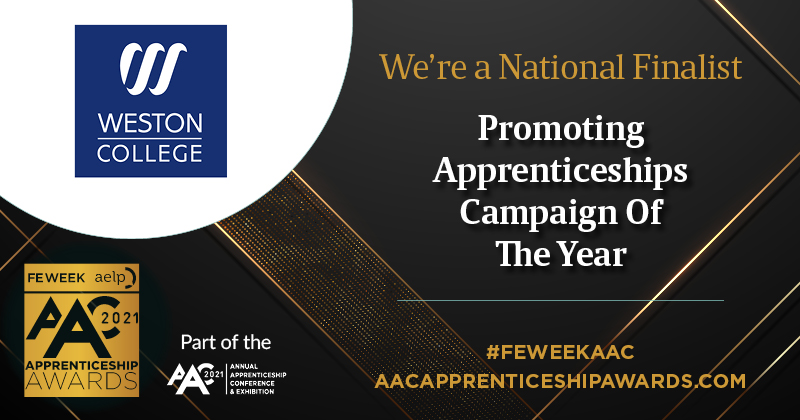
On Thursday, Weston College was announced as finalist in the Promoting Apprenticeship Campaign of the Year category, at the 2021 AAC Apprenticeship Awards.
The AAC Apprenticeship Awards is supported by FE Week and AELP, and celebrates apprenticeships across the UK.
Weston College was commended for its partnership with the FA and AoC Sport, to create and promote the FA Women’s Football Apprenticeship Programme, which has the aim of increasing female participation in football.
With apprenticeship vacancies going live in August, it proved popular, with 146 applications, for just 10 vacancies. The apprenticeship itself has had some fantastic backing, with football clubs across the UK endorsing the programme, to encourage more females to get involved with football.
The ever-popular awards received over 350 nominations for the 21 categories this year, with the judges praising the innovation and tenacity of apprenticeship providers.
The award ceremony is taking place at a gala dinner in Birmingham, on the 8th July.
If you're interested in becoming an apprentice, you can discover our current vacancies, here.
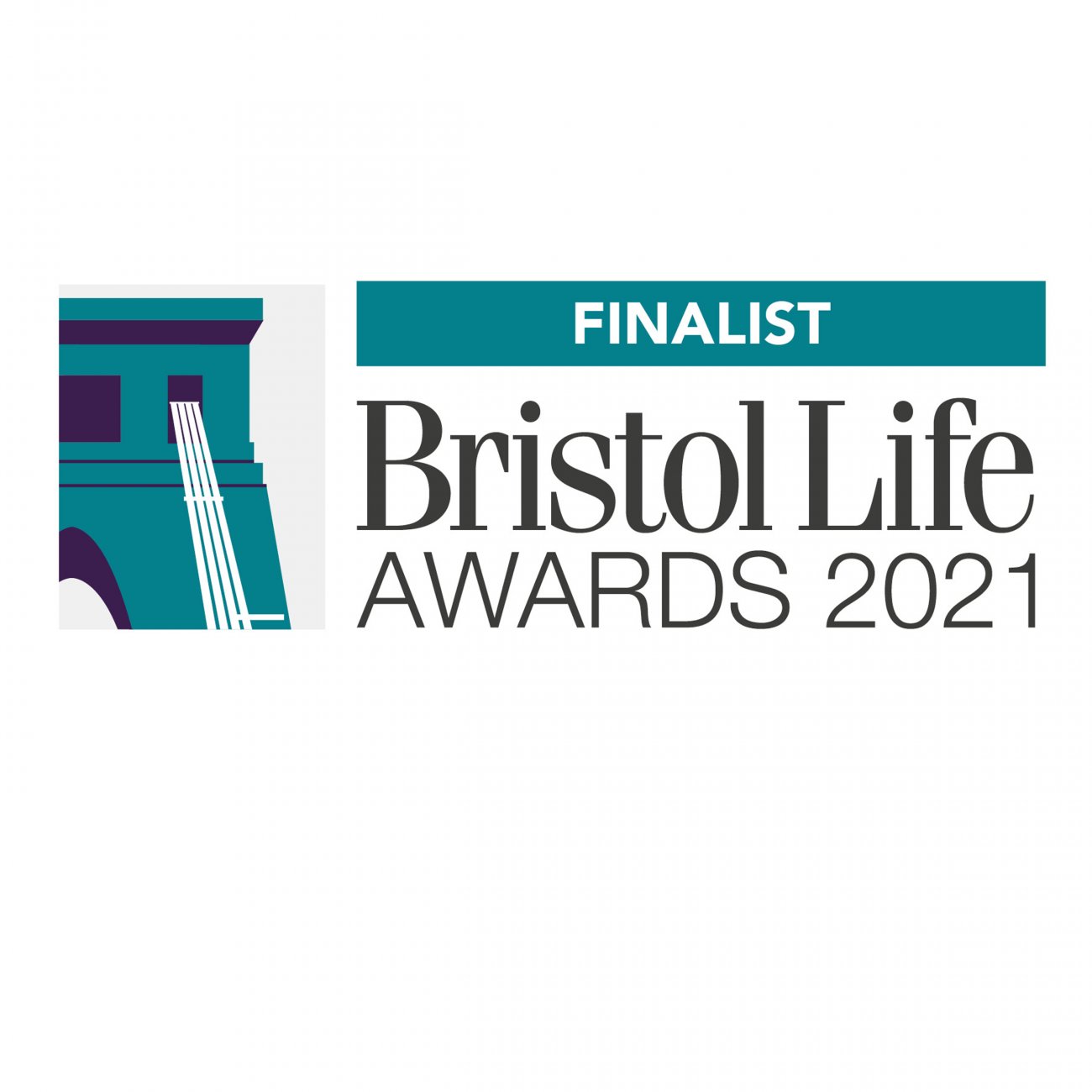
Weston College has been shortlisted for an Education award, at the Bristol Life Awards.
The Bristol Life Awards is one of the highlights of the city calendar, with an array of awards, celebrating success from across industries.
Making the shortlist for the fourth year in a row, Weston College has been commended for being at the heart of the community, and having a positive impact across the region during the pandemic.
We deliver training across Bristol, supporting individuals and employers through apprenticeships, traineeships, bespoke training and pre-employment/adult courses.
The event itself is taking place on the 16th September 2021, in Bristol, where we will find out if we have been successful.
WHICH LEVEL IS RIGHT FOR ME?