




COURSES FOR SCHOOL LEAVERS
Your Future Starts Here
With hundreds of exciting courses, this is where your journey begins. From day one, you'll be supported, inspired, and on track to a rewarding career.
See SubjectsJoin a Career Excellence Hub and gain real-world skills, experience, and confidence to reach your goals.
Whether you're finishing school, changing direction, or learning English with our ESOL courses – we’ve got you covered.
Get started today – pick a subject and apply online in just 5 minutes!

Find Your Future Path








QUALIFICATIONS EXPLAINED
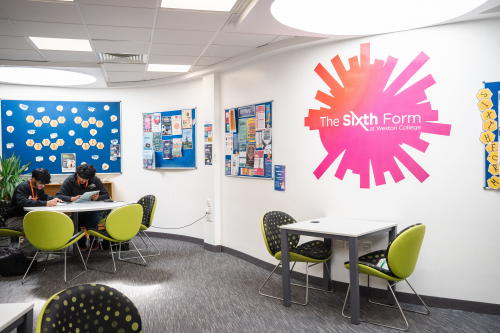
A Levels develop the knowledge, skills and study habits to excel at university, as well as the attributes recognised by employers.
Your academic studies will be complemented with enrichment opportunities such as trips, mentoring and work experience, providing the perfect springboard for your future career.
A Levels are assessed through exams at the end of two years of study. Most learners study three subjects - some choose four.
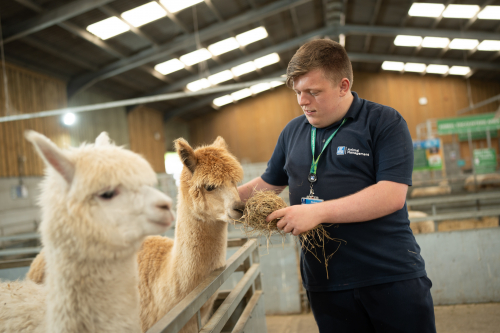
With an apprenticeship you’ll go straight into the workplace and be shown clear routes to progress straight into employment within a specific occupation. You can achieve nationally recognised qualifications, earn a wage, and gain skills that will see you get ahead. On average you will spend 20% of your learning time in the college and 80% within the workplace
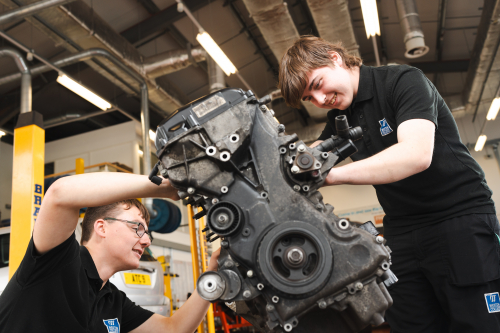
Professional and technical qualifications are designed to provide you with the knowledge, skills and behaviours needed to gain employment within specific industries or occupations. They provide a balance between theory and practical skills development. They are suited to those who want to get hands-on experience within a particular vocational area. These programmes include work placements. Assessment is more varied and will include exams, coursework and practical work.
T Levels give you the chance to learn what a real career is like while you continue your studies. T Levels have been designed with leading businesses and employers to give you the knowledge and skills you need, including a minimum of 45 days on an industry placement – this means you will spend 80% of your learning time in College and 20% within the workplace.
LATEST NEWS

University Centre Weston (UCW) graduate Anna Palmer, a 30-year-old, who lives in Clevedon was a finalist for the Return to Learning Award at yesterday's national Festival of Learning Awards 2020. The awards celebrate learning and showcase the wide-ranging impacts adult learning has on individuals and their families.
Anna was nominated for this award as she turned her life around following her marriage breakdown, when she decided to return to learning at Weston College.
Anna commented; “I’ve always had a love for creativity and being able to make someone feel good about themselves but following unhealthy relationships and a lack of support with my son who has additional needs, I suffered from low self-esteem, depression and anxiety.
“After my marriage separation I found the strength, with the help of my friends, to enrol on an adult course. The Level 2 Hair and Media course was an adult course at Weston College. It consisted of 3-days a week in college, so I could comfortably work part-time and be a hands-on mum with my 2 children. I absolutely loved this course and after completing it I immediately enrolled on a Level 3 Theatrical Hair and Make-up course which was also timetabled over 3-days a week so worked well for me.
“With the support of Weston College and my tutors believing that I had the potential to complete a university course, I decided to start the BA (Hons) degree in Hair, Make-up and Prosthetics for Production at UCW, and alongside this I started my own hair and make-up business called Anna Palmer's Hair/ SFX Make-up & Prosthetics.
“The thought of going to university had never crossed my mind before my journey at the College, however I have now completed a BA Honours degree! “My friends and family are so proud of me. They’ve seen me in my darkest place and have watched me grow in determination, confidence and maturity.
“My studies at Weston College and UCW have helped me to show my children you really can achieve anything you want even when you feel you're not good enough and just want to give up. Even though it’s been hard for us all, to me this is one of the greatest things I could have ever proved to them.
“I finally feel happy and excited for the future. I’ve always wanted to have a qualification and career that I enjoy and take pride in. I am now in an industry I am passionate about, earning my own money and enjoying life to the full, with my children and the people I love.
“I really do want to thank all my friends, family and my tutors at Weston College and UCW for believing in me”.
Sandy Day, UCW's Programme Coordinator for Hair Make-up and Prosthetics for Production, said: "The Festival of Learning Awards is such a great initiative and as soon as I found out about it I thought of Anna and started writing her nomination right there and then! I've taught Anna throughout her time at Weston College and UCW, and I'm so proud of the professional and personal journey she's been on and all of her wonderful achievements along the way."
Principal and Chief Executive, Dr Paul Phillips CBE said, “Anna is a phoenix rising from the ashes. She is determined to have a brighter future for herself and her children and her level of commitment has been a shining example to her family, friends, and other students. Congratulations Anna, you’re a true inspiration.”
If Anna’s story inspires you to take the next step:
- Browse our range of part-time adult course
- See UCW higher education courses
- Find out about forthcoming events
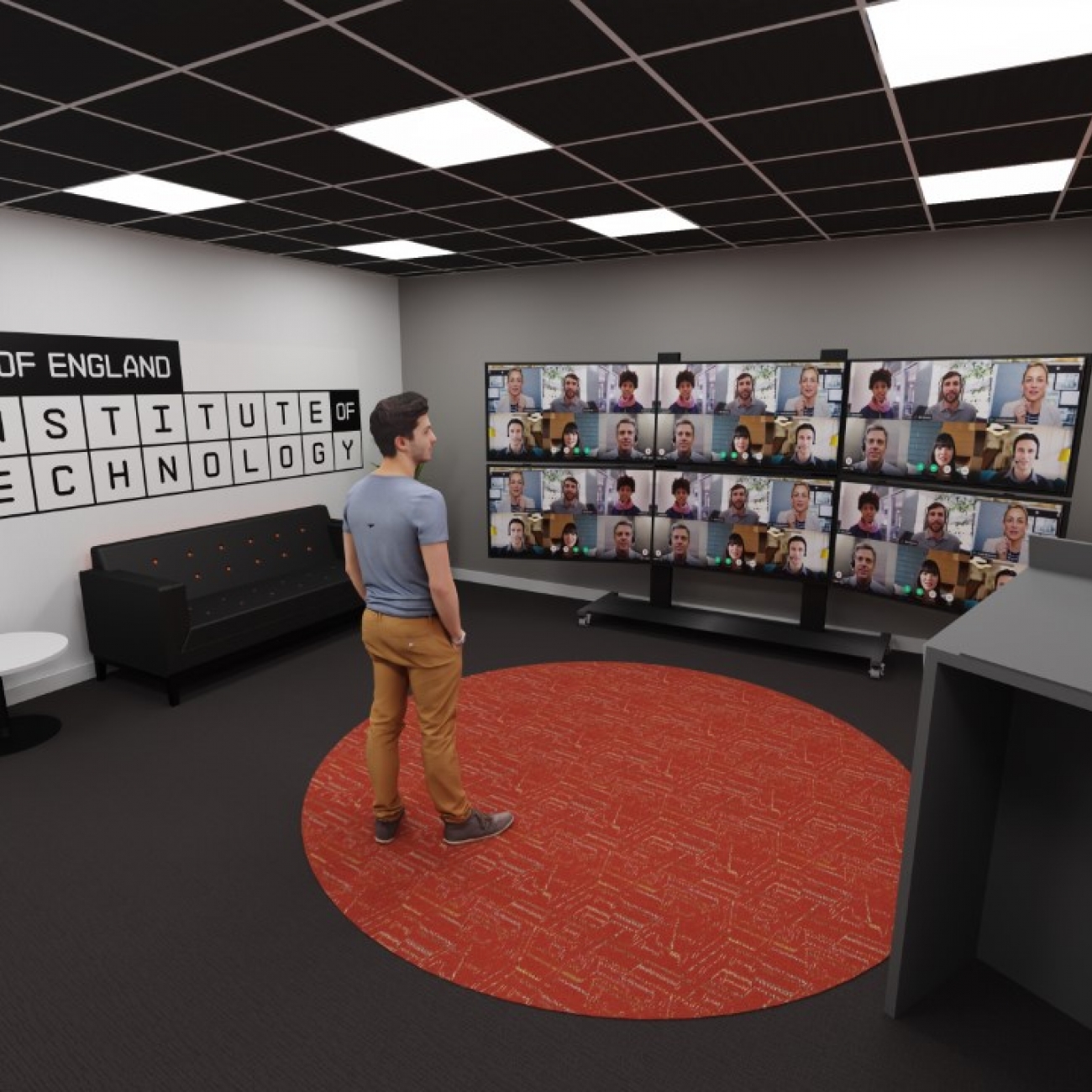
Weston College has partnered with Jisc and Barco to build trailblazing ‘virtual classroom’ to support West of England Institute of Technology.
Weston College, the lead organisation for the West of England Institute of Technology (IoT), has launched a virtual classroom in a first for further education (FE) in the UK.
The project, developed with support from Jisc and technology supplier Barco, includes innovations such as mobile extending cameras, and provides the opportunity for enhanced remote-access education.
Jon Hofgartner, director of education technology at Weston College, says: “Using digital technology to amplify ‘the human factor’ in teaching might seem counter-intuitive, but using tech in the right way can break down barriers and help educators facilitate learning.
“It’s all in the design and implementation. We’ve tried to make our virtual classroom as straightforward as possible, so nobody needs a technical degree to work it.”
The classroom includes a bank of six 55-inch screens with cameras and Barco virtual classroom software, to allow an integrated experience for both teacher and students. It utilises the superfast and secure Janet Network connection from Jisc to support the infrastructure.
Simon Farr, director of innovation at Jisc, says: “Over the last six months, video technology has evolved and become much more the norm for delivery of teaching and learning.
“The virtual classroom at Weston College allows students and staff to fully engage with one another in real time, while in different locations with an almost in-classroom experience.”
Apprenticeships minister Gillian Keegan officially opened the West of England IoT on October 8th in a virtual ceremony. Ahead of her visit, she said: “IoTs will be the pinnacle of technical training, offering higher technical STEM education and training in key sectors.”
“[Digital education] will be even more important as we build back better from the pandemic.
“By collaborating with businesses, IoTs can deliver the technical knowledge and practical workplace skills employers are demanding – like nowhere else.”
For more information about the West of England Institute of Technology, please click here.

Anxiety can be a good thing; it generally means you care about the event you feel nervous about.
If things fall outside of what we can control, it’s easy to become anxious/fearful about them.
Exams are challenging because there is no way of us knowing the outcome. Our brains love predictability, but of course, this can’t be the case here.
Exams measure a snapshot in time of our academic journey, inevitably this makes us nervous and worried that we may not get our knowledge across in the allotted time period. These feelings are normal.
Watch this short video and find out how to manage exam anxiety:
Useful resources:
- TogetherAll
- Let's Chat workshops - visit the student zone to find out more and book your place
WHICH LEVEL IS RIGHT FOR ME?