




COURSES FOR SCHOOL LEAVERS
Your Future Starts Here
With hundreds of exciting courses, this is where your journey begins. From day one, you'll be supported, inspired, and on track to a rewarding career.
See SubjectsJoin a Career Excellence Hub and gain real-world skills, experience, and confidence to reach your goals.
Whether you're finishing school, changing direction, or learning English with our ESOL courses – we’ve got you covered.
Get started today – pick a subject and apply online in just 5 minutes!

Find Your Future Path




















QUALIFICATIONS EXPLAINED
A Levels develop the knowledge, skills and study habits to excel at university, as well as the attributes recognised by employers.
Your academic studies will be complemented with enrichment opportunities such as trips, mentoring and work experience, providing the perfect springboard for your future career.
A Levels are assessed through exams at the end of two years of study. Most learners study three subjects - some choose four.
With an apprenticeship you’ll go straight into the workplace and be shown clear routes to progress straight into employment within a specific occupation. You can achieve nationally recognised qualifications, earn a wage, and gain skills that will see you get ahead. On average you will spend 20% of your learning time in the college and 80% within the workplace
Professional and technical qualifications are designed to provide you with the knowledge, skills and behaviours needed to gain employment within specific industries or occupations. They provide a balance between theory and practical skills development. They are suited to those who want to get hands-on experience within a particular vocational area. These programmes include work placements. Assessment is more varied and will include exams, coursework and practical work.
T Levels give you the chance to learn what a real career is like while you continue your studies. T Levels have been designed with leading businesses and employers to give you the knowledge and skills you need, including a minimum of 45 days on an industry placement – this means you will spend 80% of your learning time in College and 20% within the workplace.
LATEST NEWS
As the scaffolding goes up at the Winter Gardens site, we take a look at the real impact that Weston College’s refurbishment and redevelopment of the historic seafront pavilion will have on Weston-super-Mare.
The initial investment in creating new facilities and refurbishing the existing ballroom will see £11 million injected into the local economy, with Bristol-based contractors Midas Group employing people from the local area, and using supplies from local traders and merchants.
The people employed on site will spend their working days in Weston, spending money in the town centre on a daily basis. Whether it’s food, drink, clothes, or other goods or services they’re buying in the town, over the course of the development this figure will add up to a substantial sum of money.
After the University Centre is opened, 250 new higher education students, 35 new university lecturers and a handful of other jobs will be brought into the building, and they too will be spending their working days in Weston.
The average spending power of university students is £11,000 per year. Despite university tuition fees rising, the total spending power of students in the UK has increased by over £655 million over the last decade.
Bringing 250 new Higher Education students into the heart of Weston-super-Mare has the potential to inject an extra £2.75 million per year into the local economy.
This extra cash flow promotes job growth, fuels investment, and could potentially lead to a much-needed increase in variety in the town centre, as it has done in many other university towns across the country.
The Winter Gardens is in need of a serious amount of investment in order to bring the building up to date, carry out repairs and transform it into a more manageable venue that meets the needs of the community and is realistic about the range of events it can hold.
The College is committed to the Winter Gardens’ continued community use, with a large portion of the building being made available to the public including the ballroom, a restaurant/bar and a café.
Weston College has set up an advice service for employers to help guide them through the new apprenticeship levy, due to be introduced in April 2017.
Last Friday (12th August) the government published proposals for a new funding model for apprenticeships and further details on the apprenticeship levy. The funding will support people of all ages to gain high-quality skills and experience and help employers to offer more training opportunities and build a skilled workforce.
The key points are:
- The start date for accessing the new funding system will be 1st May 2017
- The system applies to both levy and non-levy paying employers
- Starts prior to 1st May will be funded for the duration of the apprenticeship under current funding terms and conditions in place at start of programme
- Non-levy paying employers will not use the Digital Apprenticeship Service (DAS) until at least 2018
- 15 funding bands have been proposed, with the upper limit of these bands ranging from £1,500 to £27,000. All existing and new apprenticeship frameworks and standards will be placed within one of these funding bands
- Co-investment is a requirement of the new system for non-levy paying employers or employers who have used up their levy and it is proposed that employers co-invest 5 per cent of the costs, with government paying the remaining 95 per cent
- For employers with less than 50 employees it is proposed to waive the co-investment element if these employers take on a 16 to 18-year-old apprentice
- English and maths functional skills funding will not require an employer contribution nor will it be taken from levy paying employer’s accounts; it will continue to be paid directly to the provider
- Re-training – it is proposed that eligible learners will be able to undertake apprenticeships at a lower level than their current education level ‘to acquire substantive new skills’.
The levy was first introduced in the 2015 autumn statement and in response to a number of enquiries Weston College has set up a Levy Solution Service.
Liz Redwood, Executive Director of Apprenticeships and Commercial Strategy, said: “Weston College is able to support you through this process whether you are a levy paying employer or non-levy paying employer.
“We can help you begin to plan how to make the most of the new system, so please contact the Apprenticeships Team on 01934 411 594 or email us on business.enterprise.centre@weston.ac.uk to book a free advice and guidance session."
University Centre Weston (UCW) students approve of how the institution delivers higher education, according to the results of this year’s National Student Survey.
Students awarded UCW a score of 88 per cent in the category of ‘overall satisfaction’; above the average of 86 per cent for all of the university-level education providers in Britain.
The figure represents the third year in a row that UCW, which delivers its degrees in partnership with Bath Spa University and UWE Bristol, has improved its score in this key benchmark.
UCW is also in the top 25 per cent of higher education institutions in Britain for its ratings in the categories of ‘assessment and feedback’, ‘academic support’ and ‘personal development’.
Its Applied Computing, Business with Management, Early Years, Music Production and Musical Theatre foundation degrees received overall satisfaction scores of 100 per cent.
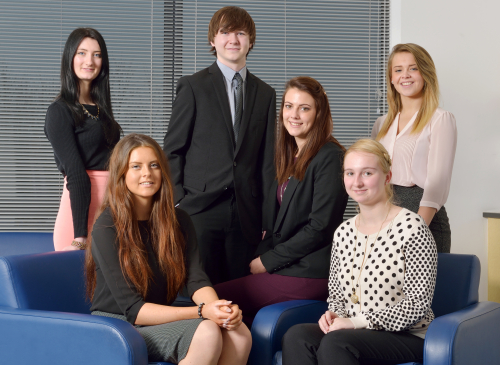
UCW student Becca Arlington, pictured, said: “I am not surprised that University Centre Weston's National Student Survey results are so high as I have loved my time here and have seen UCW go from strength to strength.
“The ethos of constant enhancement has been evident throughout my three years of study, and I am certainly very proud to have been a part of this phase of growth at UCW.”
More than 300,000 final-year UK undergraduates responded to this year’s National Student Survey, which is conducted by independent research company Ipsos MORI.
UCW still has a limited number of places available on its more than 35 foundation and top-up degrees starting this September.
WHICH LEVEL IS RIGHT FOR ME?