




COURSES FOR SCHOOL LEAVERS
Your Future Starts Here
With hundreds of exciting courses, this is where your journey begins. From day one, you'll be supported, inspired, and on track to a rewarding career.
See SubjectsJoin a Career Excellence Hub and gain real-world skills, experience, and confidence to reach your goals.
Whether you're finishing school, changing direction, or learning English with our ESOL courses – we’ve got you covered.
Get started today – pick a subject and apply online in just 5 minutes!

Find Your Future Path

















QUALIFICATIONS EXPLAINED
A Levels develop the knowledge, skills and study habits to excel at university, as well as the attributes recognised by employers.
Your academic studies will be complemented with enrichment opportunities such as trips, mentoring and work experience, providing the perfect springboard for your future career.
A Levels are assessed through exams at the end of two years of study. Most learners study three subjects - some choose four.
With an apprenticeship you’ll go straight into the workplace and be shown clear routes to progress straight into employment within a specific occupation. You can achieve nationally recognised qualifications, earn a wage, and gain skills that will see you get ahead. On average you will spend 20% of your learning time in the college and 80% within the workplace
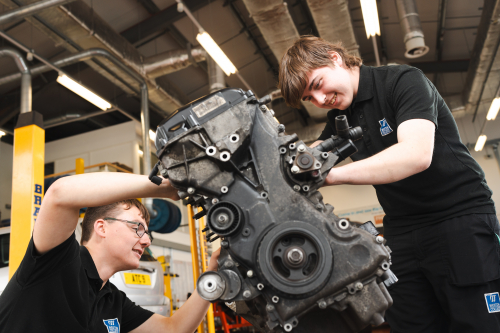
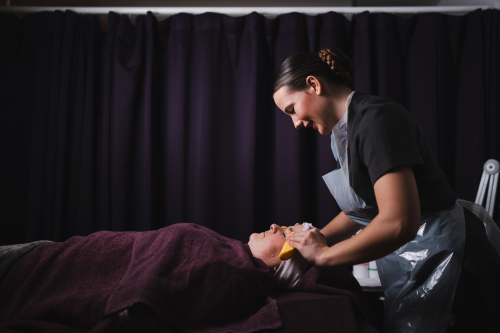
Professional and technical qualifications are designed to provide you with the knowledge, skills and behaviours needed to gain employment within specific industries or occupations. They provide a balance between theory and practical skills development. They are suited to those who want to get hands-on experience within a particular vocational area. These programmes include work placements. Assessment is more varied and will include exams, coursework and practical work.
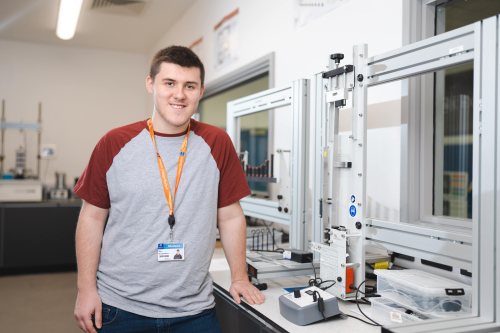
T Levels give you the chance to learn what a real career is like while you continue your studies. T Levels have been designed with leading businesses and employers to give you the knowledge and skills you need, including a minimum of 45 days on an industry placement – this means you will spend 80% of your learning time in College and 20% within the workplace.
LATEST NEWS
Weston College student Libby Bunker, 16, has qualified to compete in a national gymnastic acrobatics and tumbling competition in May.
Libby, who studies Business at Weston College and is a member of its Academy of Sport, attended the South West preliminary completion for national finals earlier this month where she achieved first place in tumbling.
The finals, organised by the British Schools Gymnastics Association, are happening in Stoke-on-Trent on 30th April-1st May where Libby will be representing the College in tumbling.
Libby said: “This is a great opportunity to represent the College in a sport that I am passionate about and have been doing for so long.
“I feel like all my hard work is starting to pay off.”
Paul Taylor, Sports Development and Performance Manager at the College, said: “It is great to see hard work and commitment paying off. It is very challenging combining an elite athletic and academic programme.
“We are really proud of Libby’s achievements.”
The Weston College Academy of Sport provides students with outstanding coaching, training and support.
The programme is aimed to develop the skills that the students already have within a professional and structured environment.
What is the first thing you do if you want to find out about someone you don't know?
Chances are, you answered that question with ‘Google them’ or even ‘Facebook them’. Practically everyone has an account on one of the many social media networks out there, and search engines like Google can pull up vast amounts of information that people have shared online.
Everything you share on the internet should be treated as a permanent record of who you are as a person. Even if you delete pictures and posts they might have been screenshotted and shared by your friends, and could still be accessible using an internet archive search such as Wayback Machine. Many celebrities have paid hundreds of thousands of pounds to try to remove images from the internet to no avail.
A lot of employers will use the internet to find out about the kind of person they’re employing, and when you start working for a company many people will check out your Facebook profile to learn more about their new colleague.
Big companies use social media monitoring software to protect their reputation and can easily find posts which mention them; so if you’re going to talk about your employer online make sure that your privacy setting reflect the amount of information you want them to see!
Don’t let your social media profiles have a negative impact on your reputation and employability – follow our useful guidelines:
- Don’t share anything online that you would not be comfortable with everybody knowing
- Ensure your public photos are employer-friendly – they are often the first impression
- If you are unsure about a post, be cautious and don’t post it – or post it privately
- Be thoughtful and polite when commenting on a public page
- Don’t post confidential information about yourself or others
- Report anything you see that might result in someone causing harm to themselves or others
- Create a LinkedIn profile so that you can easily control your professional image.
Our ASPECT team is on hand for further guidance on social media and employability...
With the looming UCAS deadline (15th January) many students are confused and wondering what is best to do…
If you’re still undecided on where to go or what to study, check out this short guide to picking the best university and course for you.
What courses are you passionate about?
If you find a course that you’re interested in then it will make your time at university fly by. If you love the course then those all-nighters in the library will not feel quite so bad and your grades will be represented by the extra work you put in.
Read the course details
It would be a bit of a pain if you turn up at university and one of your modules isn’t right for you. Make sure you check (and double check) the course details to find the course best suited to you and your future aspirations.
Employment routes
The job market is very competitive, searching for a university with a good reputation when it comes to getting graduates into work should certainly be a strong consideration. Some universities include work experience as part of their course and you can even get a year’s internship in industry which will help you stand out from the crowd when applying for your first graduate position.
Do you want to stay at home?
If you like your home comforts then you certainly would not be alone in not wanting to move to halls. Many students live at home and commute to university, so if you think you’re not ready to leave just yet - look at your options close to home. After your first year you might then feel ready to flee the nest, and you can choose exactly who you’re going to live with. We have a fantastic university centre on our doorstep, which delivers a range of high-quality degrees in partnership with Bath Spa and the University of the West of England in Bristol.
Do you want to leave home?
If you’re the opposite and can’t wait to leave then it is worth considering the distance. You might surprise yourself when you move away and want to visit home more regularly than you originally planned so it’s worth considering transport options. After all a four hour train journey is a bit far to get your washing done.
Money
Becoming a student is not cheap, you will receive a student loan but it is worth researching the cost of living in the area your top choice universities are based. Some areas of the country are very expensive and being able to afford to live has to be a top consideration as you will be there for at least three years.
Go with your gut
Finally, it is definitely worth going with your gut. You are most likely getting told to go different places by different people and these might not be universities that you would normally consider. It is best to go with what you feel personally is best and suits you, and this should make settling in a lot easier.
Don’t stress too much about this deadline, there is always the opportunity to go through clearing if necessary once you have received your grades. If you need any guidance on your application then contact UCAS lead Hamish Gilpin on hamish.gilpin@weston.ac.uk, or call on 01934 422742.
WHICH LEVEL IS RIGHT FOR ME?