




COURSES FOR SCHOOL LEAVERS
Your Future Starts Here
With hundreds of exciting courses, this is where your journey begins. From day one, you'll be supported, inspired, and on track to a rewarding career.
See SubjectsJoin a Career Excellence Hub and gain real-world skills, experience, and confidence to reach your goals.
Whether you're finishing school, changing direction, or learning English with our ESOL courses – we’ve got you covered.
Get started today – pick a subject and apply online in just 5 minutes!

Find Your Future Path



















QUALIFICATIONS EXPLAINED
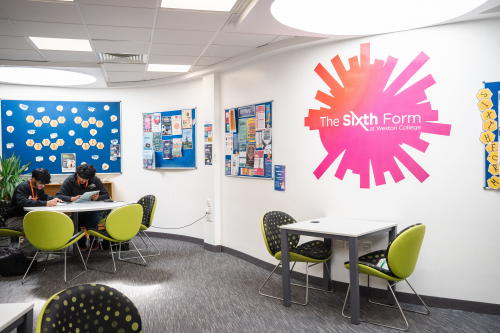
A Levels develop the knowledge, skills and study habits to excel at university, as well as the attributes recognised by employers.
Your academic studies will be complemented with enrichment opportunities such as trips, mentoring and work experience, providing the perfect springboard for your future career.
A Levels are assessed through exams at the end of two years of study. Most learners study three subjects - some choose four.
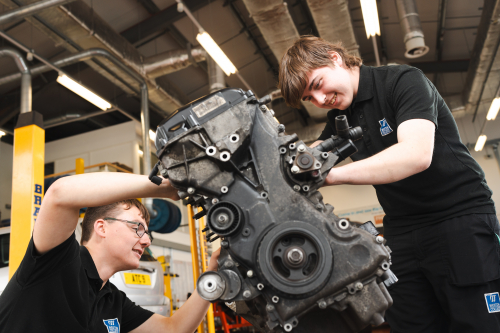
With an apprenticeship you’ll go straight into the workplace and be shown clear routes to progress straight into employment within a specific occupation. You can achieve nationally recognised qualifications, earn a wage, and gain skills that will see you get ahead. On average you will spend 20% of your learning time in the college and 80% within the workplace
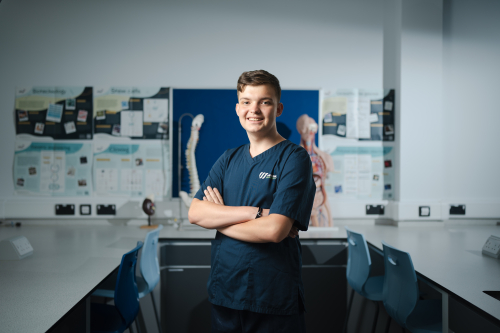
Professional and technical qualifications are designed to provide you with the knowledge, skills and behaviours needed to gain employment within specific industries or occupations. They provide a balance between theory and practical skills development. They are suited to those who want to get hands-on experience within a particular vocational area. These programmes include work placements. Assessment is more varied and will include exams, coursework and practical work.
T Levels give you the chance to learn what a real career is like while you continue your studies. T Levels have been designed with leading businesses and employers to give you the knowledge and skills you need, including a minimum of 45 days on an industry placement – this means you will spend 80% of your learning time in College and 20% within the workplace.
LATEST NEWS
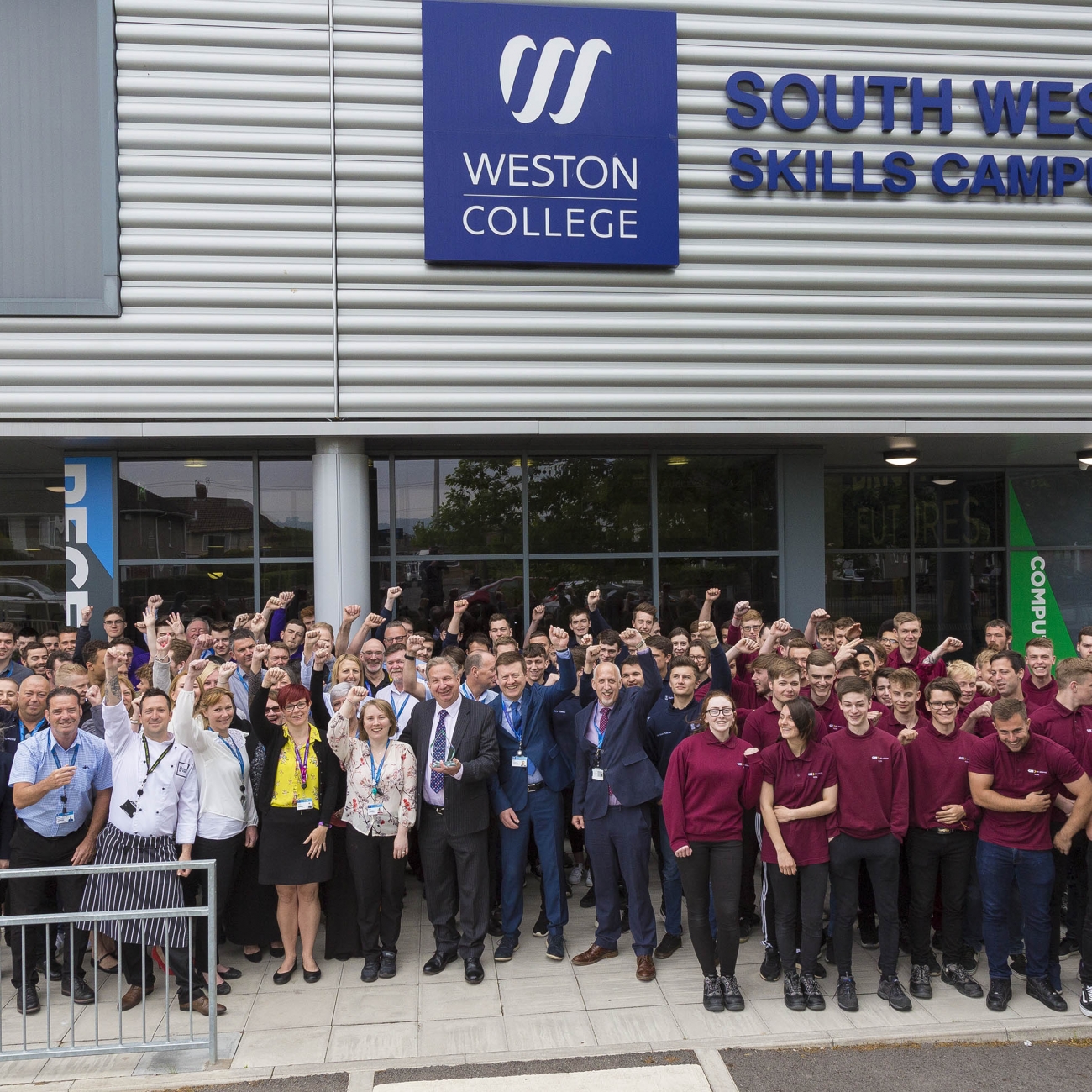
Weston College has been awarded a prestigious accreditation after a comprehensive evaluation of staff satisfaction.
‘Best Companies’, who compile ‘The Sunday Times Best Companies to Work For’ lists gave the College a two-star accreditation after carrying out an exhaustive survey of staff.
The survey is a set of 70 academically designed questions based on eight ‘factors of workplace engagement’. The questions are confidential, so respondents are free to be completely honest.
When the survey’s complete, organisations receive a Best Companies Index (BCI) score – which is Best Companies’ unique measure of workplace engagement.
To earn its rating, the College had to show evidence of ‘outstanding’ commitment to workplace engagement. The accreditation tells clients, partners, investors and employees that the organisation understands the importance of workplace engagement and genuinely values its people.
Dr Paul Phillips CBE, Weston College’s Principal and CEO, said: “Best Companies are the experts in gauging the multitude of factors that separate good employers from the rest.
“To achieve the two-star accreditation is a significant achievement and speaks volumes of what our staff think about working for the College. We are one of the top-performing colleges in the UK and my staff are key to that success.
“It’s no secret that FE providers across the country are feeling the pinch from repeated and prolonged budget cuts. But, nonetheless, we're continually investing in our staff.
"We understand the importance of remunerating staff who perform well, and making them feel valued – or you run the risk of losing them, to the detriment of your learners.”
Alongside this accolade the College has also been awarded the Investors in People (IIP) Gold Standard, which is held by less than 2% of UK businesses and demonstrates commitment to invest in staff to improve performance. The College is also an Investors in People ‘Champion’ – a prestigious award given to IIP role models.

Art students at Weston College have produced a dazzling centrepiece for a local store’s Christmas marketing campaign.
All Level 2 Art and Design students were asked to design Proper Job’s Christmas ‘Shed of Wonder’, which is used to sell trees at the Devonshire Road hardware store.
This ‘real-life’ brief involved researching the store’s customer base and producing relevant designs for the shed.
A winning design – produced by Erin Popham – was then chosen, and students worked in shifts over two weeks to bring it to life, on-site at the Proper Job warehouse.
Art and Design Lecturer Ben Thomas-Taylor said: “Work experience, such as this, is a compulsory part of the Level 2 course. It provides many benefits for our students, giving them relevant skills and experience to help them stand out to potential employers, whilst helping them to choose the right sector to work in.
“For the past two years we’ve collaborated with Proper Job, designing and painting their 'Shed of Wonder', as part of their Christmas marketing campaign.
“Every student worked hard bringing to life the winning design and did a fantastic job. The company were very pleased and told us it would appeal perfectly to their customer base.”

Offsite Solutions, the UK’s leading bathroom pod manufacturer, in partnership with Weston College has launched an apprenticeship scheme to attract new talent into offsite manufacturing.
Offsite Solutions is an important employer in the South West and recently won the Manufacturer of the Year Award at the Business Leader Awards. The company was also a finalist in the Made in the UK Awards in the Manufacturer of the Year category.
Working with its training partner Weston College, the company is looking to employ up to six apprentices who will train to be plumbers, electricians and bathroom fitters at its bathroom pod factory in Highbridge, Somerset.
The company will also be giving up to 10 existing production staff the opportunity to join a new apprenticeship scheme for team leadership and to train as electricians and plumbers. This will give them additional skills and valuable career progression.
Commenting on the new scheme, Steve Dancer, Factory Manager at Offsite Solutions, said, “Apprentices are constantly learning new techniques and bring fresh ideas and enthusiasm into a business which they pass onto their colleagues. This approach fits really well into our commitment to encouraging innovation through offsite manufacturing, to help reinforce our position as the UK’s market leader in factory-built bathrooms.”
“Our aim is for the apprenticeship scheme to provide us with a pool of talented individuals who will benefit from first-hand experience within our manufacturing operations and gain relevant qualifications to help their personal development and maximise their potential. The quality of our workforce is fundamental to the long-term success of our business and our trainees will play a vital role in ensuring we continue to achieve our ambitious plans for growth.”
Ian Porter, Associate Business Development Officer at Weston College, said, “Apprenticeships deliver for businesses, individuals and the economy. They enable young people to gain the skills and knowledge they need to succeed and for businesses, this is a productive and effective way for them to grow their own talent by developing a motivated, skilled and qualified workforce.”
Vacancies are coming soon! Sign up to our Apprenticeship Vacancy Mailing list here, to be the first to hear on available vacancies.
WHICH LEVEL IS RIGHT FOR ME?