




COURSES FOR SCHOOL LEAVERS
Your Future Starts Here
With hundreds of exciting courses, this is where your journey begins. From day one, you'll be supported, inspired, and on track to a rewarding career.
See SubjectsJoin a Career Excellence Hub and gain real-world skills, experience, and confidence to reach your goals.
Whether you're finishing school, changing direction, or learning English with our ESOL courses – we’ve got you covered.
Get started today – pick a subject and apply online in just 5 minutes!
Find Your Future Path




















QUALIFICATIONS EXPLAINED
A Levels develop the knowledge, skills and study habits to excel at university, as well as the attributes recognised by employers.
Your academic studies will be complemented with enrichment opportunities such as trips, mentoring and work experience, providing the perfect springboard for your future career.
A Levels are assessed through exams at the end of two years of study. Most learners study three subjects - some choose four.
With an apprenticeship you’ll go straight into the workplace and be shown clear routes to progress straight into employment within a specific occupation. You can achieve nationally recognised qualifications, earn a wage, and gain skills that will see you get ahead. On average you will spend 20% of your learning time in the college and 80% within the workplace
Professional and technical qualifications are designed to provide you with the knowledge, skills and behaviours needed to gain employment within specific industries or occupations. They provide a balance between theory and practical skills development. They are suited to those who want to get hands-on experience within a particular vocational area. These programmes include work placements. Assessment is more varied and will include exams, coursework and practical work.
T Levels give you the chance to learn what a real career is like while you continue your studies. T Levels have been designed with leading businesses and employers to give you the knowledge and skills you need, including a minimum of 45 days on an industry placement – this means you will spend 80% of your learning time in College and 20% within the workplace.
LATEST NEWS
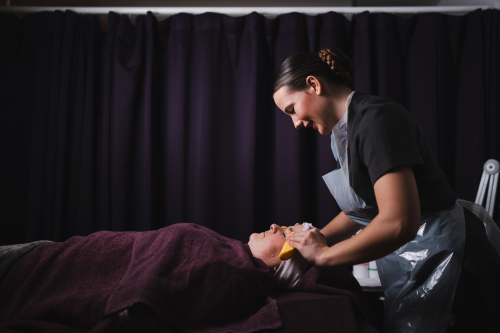
At Weston College we get a lot of questions from members of the public who want to improve their hair and beauty knowledge. In the first of a two-part hair and beauty advice special we ask Jessica Stagg, former Weston College student and owner of Essential Beauty and Aesthetics, for answers to some of the most frequently beauty questions…
How can I tell when makeup expires?
Many people don’t know this essential beauty tip, and the answer is more simple than a lot of people think!
Almost every product you use has an expiry date, and using the product when it has gone off can damage your skin or affect results. Look for a symbol on the back of the makeup which looks like an open jar. In it, there should be a number which indicates how long the product will last after it has been opened.
How do I remove gel nail polish?
Removing gel nails is easy, all you need is acetone, cotton balls, a high-grit buffer, a nail file, and aluminium foil cut into squares big enough to wrap around your fingertips.
First, use the file to break the seal of the gel polish, making sure that you don’t file too deep as this could damage your nail. Cut the foil into 10 three-centimetre wide squares.
Next, soak a cotton ball in acetone and place it on your fingernail and wrap the foil around your fingertip to hold the cotton ball in place. Wait 15 minutes and the gel nail should flake off easily. Use a buffer on your nails to remove any residue.
You could become an expert in gel nails as little as three months with one of Weston College's nail technology part-time courses. Click here to find out more!
How should I clean makeup brushes?
To properly clean your makeup brushes you’ll need a shallow bowl, gentle shampoo, a sink and a lint-free cloth. Begin by running your brushes under lukewarm tap water to remove any remaining makeup. Focus on cleansing the bristles but try to avoid the handle as the heat of the water may loosen the glue over time.
Fill the bowl with lukewarm water and put a small amount of shampoo in it. Swirl the tip of your brush in the water and then swirl the brush in the palm of your hand to work up a lather. Rinse the brush under running water when you’re satisfied that the brush is clean, and then leave to dry!
How can I earn money with my beauty skills?
If you’re talented in makeup, nail art or massage you could earn money in the beauty industry as a beauty technician. Getting qualified and learning new skills is important, and I started my career by taking a beauty therapy qualification at Weston College. I then worked in salons for five years, and opened my first salon Essential Beauty and Aesthetics in Weston-super-Mare in 2016.
Weston College has courses for all ages and abilities, including part-time courses designed to fit around your schedule.
There are nearly 20,000 people employed in the beauty industry in the Bristol and Somerset area. The average starting salary in this sector is £15,000, however more qualified and specialist beauty therapists can earn over £20,000 per year.

A Formula Ford champion from Langley has been working with Weston College students to coach them for a national competition.
Roger Orgee Jr gave the students an exclusive session on carting, teaching them the driving techniques that they hope will see them through to the national karting finals.
The top three student drivers will represent the college in an exciting national karting competition next year.
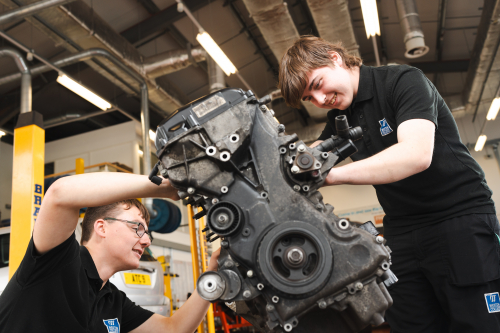
As part of Weston College's sponsorship of the local Roger Orgee Racing team, the College’s motorsport study programme provides students with the opportunity to work with Formula Ford race mechanics in the College workshops and out on track on the local racing circuit.
Next year Roger is moving up to the National Formula Ford championship and is planned to involve Weston College motorsport degree students at the race meetings as part of their work experience.

Easter's the perfect time for baking, and traditional Easter snacks are easy and fun to make, as well as being delicious to eat...
Hot Cross Buns are the second most common Easter treat (after chocolate eggs, of course!) and are traditionally eaten on Good Friday. The tradition dates back as far as the 14th century.
Here's our catering students' recipe for the Perfect Hot Cross Buns!
WHICH LEVEL IS RIGHT FOR ME?