





COURSES FOR SCHOOL LEAVERS
Your Future Starts Here
With hundreds of exciting courses, this is where your journey begins. From day one, you'll be supported, inspired, and on track to a rewarding career.
See SubjectsJoin a Career Excellence Hub and gain real-world skills, experience, and confidence to reach your goals.
Whether you're finishing school, changing direction, or learning English with our ESOL courses – we’ve got you covered.
Get started today – pick a subject and apply online in just 5 minutes!

Find Your Future Path


















QUALIFICATIONS EXPLAINED
A Levels develop the knowledge, skills and study habits to excel at university, as well as the attributes recognised by employers.
Your academic studies will be complemented with enrichment opportunities such as trips, mentoring and work experience, providing the perfect springboard for your future career.
A Levels are assessed through exams at the end of two years of study. Most learners study three subjects - some choose four.
With an apprenticeship you’ll go straight into the workplace and be shown clear routes to progress straight into employment within a specific occupation. You can achieve nationally recognised qualifications, earn a wage, and gain skills that will see you get ahead. On average you will spend 20% of your learning time in the college and 80% within the workplace
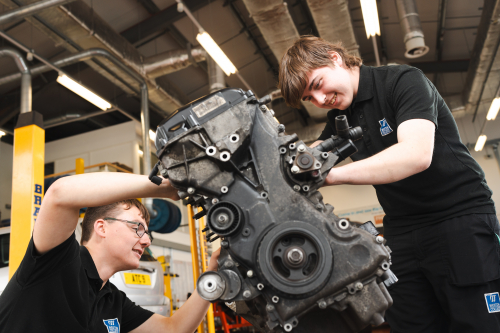
Professional and technical qualifications are designed to provide you with the knowledge, skills and behaviours needed to gain employment within specific industries or occupations. They provide a balance between theory and practical skills development. They are suited to those who want to get hands-on experience within a particular vocational area. These programmes include work placements. Assessment is more varied and will include exams, coursework and practical work.
T Levels give you the chance to learn what a real career is like while you continue your studies. T Levels have been designed with leading businesses and employers to give you the knowledge and skills you need, including a minimum of 45 days on an industry placement – this means you will spend 80% of your learning time in College and 20% within the workplace.
LATEST NEWS

Construction is a vital contributor to the regional economy.
And it’s set to increase in importance with a number of projects either in development or planned.
The Hinkley Point C nuclear power station in Somerset is the largest construction project in Europe. Four thousand businesses in the south west are registered to work on the project and, by 2020, there will be £200m of spending each year in the local economy.
Public housing is another key area of regional growth, with the south west set to buck the UK trend and grow at 3.7% to 2021. Plus, the government’s pledge to build 300,000 new homes a year by the mid-2020s, will also impact the region.
However, these developments – and issues such as Brexit – have highlighted a significant problem: demand is outstripping supply of skilled workers. In fact, a shortage of construction workers faced by small and medium-sized businesses has hit its worst level on record.
With over 20,000 new jobs being created in the region up to 2021, action is needed.
At Weston College, we’re taking the bull by the horns by developing a purpose-built Construction Training Centre This £3.8m project, which adds to our already comprehensive range of construction training courses, is based just off Junction 21 of the M5, and is due to open in spring 2019.
It addresses the shortage of infrastructure construction skills, and targets three areas where the shortage is at its most acute – plant operations, scaffolding, and groundworks.
But what makes this centre unique is that it’s geared towards fulfilling genuine commercial need and to providing training on demand.
Over the last decade, we’ve built strong relationships with employers to develop our apprenticeship provision. And it’s become increasingly apparent that commercial organisations want training at the point of need – not just for school leavers during the academic year.
Once the new centre is up and running, employers can come to us at any time for short courses, top-up courses, and to up-skill staff who are taking on new roles. We’ll also provide apprenticeships in these new areas when they’re required.
School leavers are able to take advantage of the available training at Weston College at our existing centre at South West Skills Campus on Locking Road. The new Construction Training Centre will also allow us to provide bespoke training at short notice, and react to the realities of the commercial world.
What’s more, construction employers, trade organisations and the West of England Local Enterprise Partnership (LEP), who match-funded the project with some £3.3m through the Local Growth Fund, administered by the West of England Combined Authority, have all been fully engaged in informing the building design and offer.
But, as with any project of this nature, much of its success relies on the strategic partnerships it involves and we’re extremely fortunate to be working with highly professional, market-leading organisations.
We have a long-running relationship with Midas Construction, who are commissioned to build the centre. They understand the College, our priorities and how to provide the learning environment that students need. Midas are also a key member of the employers’ forum that drives the content of the new centre’s curriculum.
We’re also working closely with Simian Risk to deliver scaffolding training. We worked hard to identify a strategic partner for the centre and are delighted to be working with Simian, who are national leaders in the field of scaffolding safety, training and assessment.
For more information on the Construction Training Centre, please click here.
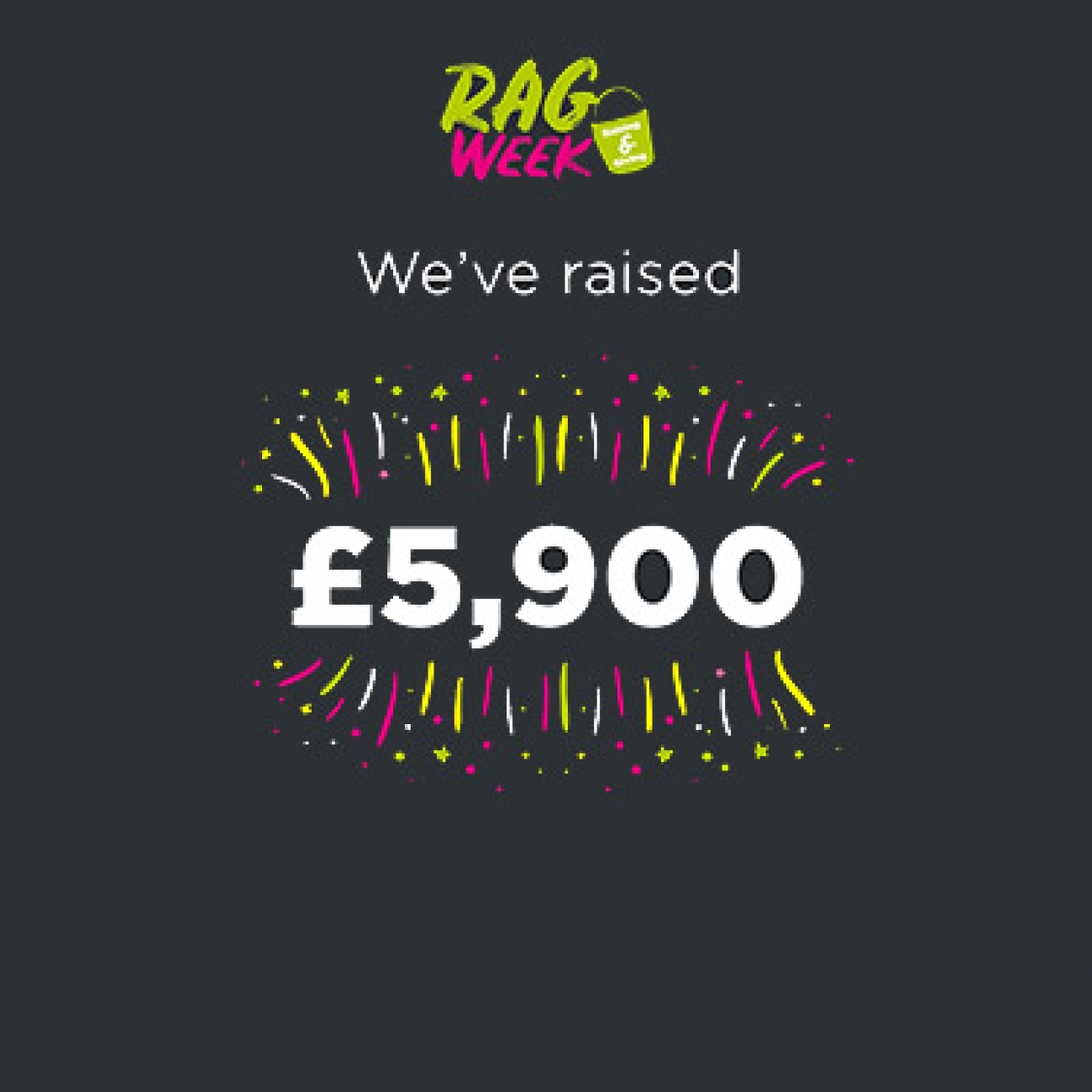
Students and staff at Weston College have been busy raising money for chosen charities as part of their annual Raising and Giving (RAG) week.
Compared to 2018’s total of £3,600, the combined effort managed to raise an incredible £5,900 for mental health charity Young Minds and local organisation Weston Hospicecare.
Across the week, money was raised through a number of different ways including talent shows, cake sales and an entire day of fancy dress. From sponsored silences to Gecko inspired haircuts, each department also arranged a fundraising event for students and staff to get involved with.
Uniformed Public Services students rowed the equivalent distance of the 24 highest mountains in the world and Inclusive practice students managed to travel 475km (the distance from London to Paris) by walking, running and rowing throughout the week. The Computing department managed exciting events such as Beat Sabre on the VR, a Golf chip challenge and a Nerf gun firing range, raising a total of £1,400 as a department.
Weston College Principal and Chief Executive, Dr Paul Phillips CBE commented: “The atmosphere across campus is always vibrant and full of positivity during RAG Week. This annual fundraising event is a fantastic opportunity for our learners to contribute to our community and raise aspirations by helping others. Yet again our staff and learners went above and beyond and, as ever, bucked the trend.”
After receiving a cheque from Dr Paul, Simon Angear from Weston Hospicecare added:
“Weston Hospicecare is once again enormously grateful to all staff and students at Weston College for their fabulous efforts on our behalf during RAG Week.
“We love hearing about all the different activities held to raise money, and were bowled over by some of the creativity displayed in some of this year’s events.
“Community support is vital to the hospice, and this wonderful donation from Weston College will play a big part in helping us continue to care for our patients across Weston-super-Mare and beyond.”
A massive thank-you goes to all of the staff and students for their generosity and dedication to raise such an amazing amount for some brilliant causes.
Please see below the list of winners for the RAG week awards 2019.
Most Innovative Fundraising Idea
Dungeon and Dragons Escape Room Challenge - Will Price and Jon Barnett (Engineering and Computing)
Best Use of Digital
Sponsored Silence Communication Through Assistive Technology – Zoe Benton, Paul Kelly, Lorna Whitford (Extension Studies)
Most Money Raised by a Staff Member
'£891.16 - Cameron Lyes (Engineering and Computing)
Most Money Raised by a Student
Super Smash Bros Tournament £126 – Tom Jory (AEC Faculty)
Most Money Raised by a Faculty
£1,400 - Faculty of Engineering and Computing
Outstanding Commitment to RAG
Gecko Inspired hair cut - Rob Heaton (Sixth Form)
Best Dressed Faculty
101 Dalmatians – Management Information Systems
Best Challenge
Mountain Rowing Challenge - Uniformed Public Services
Best Event
Extension Studies Talent Show – Faculty of Inclusive Practice

The treatment of further education (FE) is nothing short of shocking and the recent Augar report is a condemnation of what has happened to the ‘poor relation’ in the educational sector.
As a practitioner who has had the opportunity to work in the school/academy, FE and HE sectors, I am amazed at the lack of investment by Government for what I passionately regard as the key driver of skills and aspirations for our economy. The question now is whether this is the light at the end of the tunnel, or if the glimmer is about to be extinguished as a result of the political malaise our country now finds itself in.
As I write this article, I have literally hundreds of learners taking GCSEs or Functional Skills examinations in mathematics and English. An inordinate number of dedicated staff have coached and developed these 17-year-olds to give them the best possible chance of success, while the level of pastoral support that has gone into supporting learners has been extensive. Our College cannot afford to produce this level of support, but we do because these young people need these skills to progress. And our finances are pushed to the wire as a result.
Of course, there is another issue here. Why are so many learners arriving at the College with such poor achievement in these core subjects? The answer is clear – they have not had the necessary teaching at their previous schools and academies. A specialist in lean management principles would have a field day here, but the problem is tackled too late. The Government must target this robustly. After all, how can a school or academy that cannot get the majority of their learners through such exams be deemed ‘outstanding’? Words fail me.
So, is the Augar report correct? Does it go far enough and can it change our sector? The first issue for me is the sheer breadth of the report which, whilst highly critical of the lack of funding for FE, is contained within a detailed evaluation of all post-18 delivery. The messages within it, however, are very clear and, although most of the observations are common sense to the FE practitioner, I wonder how well they will be both received and understood. Only this week, one MP commented that they had already resolved the issues in FE. Deluded? Most definitely. Ready for change? Not on the basis of that comment! Yet, colleges continue to suffer and one has to wonder what it will take to galvanise action.
The recommendations within the report are, as I’ve said previously, not new to those of us in the sector. They include reducing the inflexible and costly rules to allow for strategic focus and planning; the rationalisation of colleges, where necessary; reversing reductions in core funding; introducing an appropriate adult budget; investing in workforce so there is comparability of salaries with schools, academies and HEIs; and proper recognition for college identity. This would provide a major start to correcting years of starvation of resources, including capital investment.
The next stage? Watch, wait and maintain impetus I guess. We are in a time of change and influence, but imagine if the findings of Augar were even more concise and stated that Government had in effect:
- Failed to strategically plan
- Allowed a growing deficit to spiral out of control
- Complicated processes and done little to enable progression
- Ensured an inequality in pay and working conditions
- Failed to invest appropriately.
Do you not think this is starting to look like a report from the FE Commissioner? It’s time for intervention I think. Will it happen? Who knows? The danger that if it doesn’t happen the reality is now actually even more dangerous for skills in general than our sector!
Dr Paul Phillips, CBE
Principal and Chief Executive
WHICH LEVEL IS RIGHT FOR ME?