





COURSES FOR SCHOOL LEAVERS
Your Future Starts Here
With hundreds of exciting courses, this is where your journey begins. From day one, you'll be supported, inspired, and on track to a rewarding career.
See SubjectsJoin a Career Excellence Hub and gain real-world skills, experience, and confidence to reach your goals.
Whether you're finishing school, changing direction, or learning English with our ESOL courses – we’ve got you covered.
Get started today – pick a subject and apply online in just 5 minutes!

Find Your Future Path














QUALIFICATIONS EXPLAINED
A Levels develop the knowledge, skills and study habits to excel at university, as well as the attributes recognised by employers.
Your academic studies will be complemented with enrichment opportunities such as trips, mentoring and work experience, providing the perfect springboard for your future career.
A Levels are assessed through exams at the end of two years of study. Most learners study three subjects - some choose four.
With an apprenticeship you’ll go straight into the workplace and be shown clear routes to progress straight into employment within a specific occupation. You can achieve nationally recognised qualifications, earn a wage, and gain skills that will see you get ahead. On average you will spend 20% of your learning time in the college and 80% within the workplace
Professional and technical qualifications are designed to provide you with the knowledge, skills and behaviours needed to gain employment within specific industries or occupations. They provide a balance between theory and practical skills development. They are suited to those who want to get hands-on experience within a particular vocational area. These programmes include work placements. Assessment is more varied and will include exams, coursework and practical work.
T Levels give you the chance to learn what a real career is like while you continue your studies. T Levels have been designed with leading businesses and employers to give you the knowledge and skills you need, including a minimum of 45 days on an industry placement – this means you will spend 80% of your learning time in College and 20% within the workplace.
LATEST NEWS
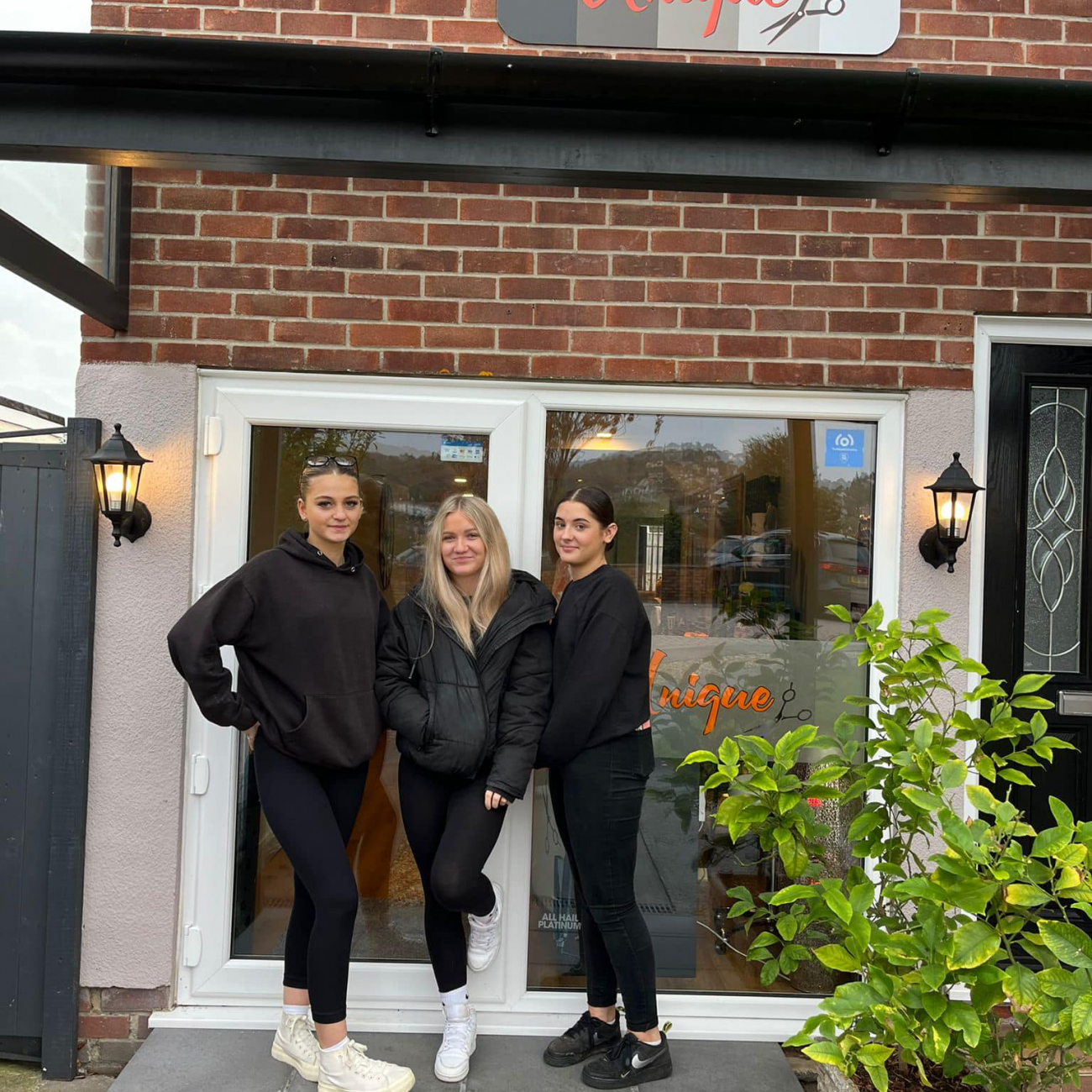
The wonderful Level 1 Hairdressing learners were welcomed by Emma, the salon owner of Unique Hair, for work experience in an industry standard salon. Unique Hair is an independently run hair salon, local to the college, currently underway to becoming a Career Excellence Hub ambassador. This results in the college and the salon working very closely together to ensure the content in the course is of upmost importance to the learners, and even results in work experience opportunities which otherwise would not be offered to L1 learners!
Emma had six Level 1 learners in total spread over three Mondays, where she opened the salon especially for work experience days. Emma sourced her own clients for the learners to work on, undergoing treatments such as meeting and greeting clients, shampooing, conditioning and applying treatments, as well as blow-drying, curling and setting clients’ hair. This gave the students the chance to use industry-standard equipment, and experience first-hand, what a day working in the salon would be like.
While Level 1 learners would not usually gain the opportunity to have work experience, Emma was so keen to help out and allow the students to develop employability skills to increase success in their futures in the industry. The students commented, “It was such a great opportunity, and really helpful experience for what working day to day in a salon would be like. Emma was great at explaining everything, and really kind when explaining everything, including the new techniques. We’d absolutely love to go back!”
The learners’ tutor, Kelly, told us, “It has been amazing to see the development of their skills since this experience!”
Rachel Harrison, the Workplace Coordinator for Hair, Beauty and Hospitality commented: “The learners absolutely loved their time at the salon, and having the chance to try out new products; the opportunity was invaluable for the learners. Here at Weston College, we focus on finding the learner’s career aspirations first, then assist in how they can reach this. Having a whole day in an industry-standard salon is one of the most beneficial ways to help in reaching their dream jobs; I am so grateful to Emma for her kindness and hospitality towards the learners, and being their mentor for the whole day! I hope we are able to provide this work experience to Level 1 learners in the future!”

The West of England Institute of Technology (WEIoT) has launched a new “soft skills certificate” to enable people to gain the soft skills and certified credentials requested and recognised by local employers.
Enhancing soft skills such as Teamwork, Adaptability and Critical thinking can enable individuals to work more effectively and collaboratively with colleagues to enhance and progress careers.
This free, time limited, flexible and modular training is being delivered by education and industry specialist partners delivering 7 modules which can be mixed and matched and tailored to meet individual and business needs:
- Digital Skills For Inclusive Cloud Collaboration
- Effective Communication
- Insights Discovery
- New World Working
- Soft Skills For Project Managers
- Team Working
- Workplace Skills And Behaviours
Face to face, online and twilight delivery options are available through one of the WEIoT education partners: Weston College, Bath College, Yeovil College, City of Bristol College and Provek. All training must be completed by 31 March 2023.
Businesses can utilise this new certificate to develop the skills and careers of their workforce in line with current and emerging skills needs and new world working practices. This will ultimately improve workforce productivity, satisfaction, and retention.
Individuals can enhance and accredit their soft skills credentials, enabling them to work more effectively and collaboratively with colleagues and to enhance and progress their careers.
This is also supported through the inclusion of Credly Digital Credentials, which are included with the certificate, to acknowledge and share achievements.
Click here to read more about each module in order to sign up and complete this certificate for free before 31st March.
The WEIoT is part of the government’s flagship programme designed to spearhead the delivery of higher technical education; to support the economy with a skilled workforce that can drive productivity and take advantage of key growth opportunities.
The WEIoT+ Soft Skills Certificate is funded through the Department for Education’s Skills Development Fund, aimed at helping employers and individuals access the skills needed to enhance careers, support local innovation and economic

A letter from UK Health Security Agency and North Somerset Council:
Dear parents, guardians and carers,
Re: Increase in scarlet fever and Group A Streptococcal infections
We are writing to inform you of a recent national increase in notifications of scarlet fever to the UK Health Security Agency (UKHSA), above seasonal expected levels.
We would like to take this opportunity to remind you of the signs, symptoms and the actions to be taken if you think that you or your child might have scarlet fever.
Signs and symptoms of scarlet fever
Scarlet fever is a common childhood infection caused by Streptococcus pyogenes, or group A Streptococcus (GAS). It is not usually serious, but should be treated with antibiotics to reduce the risk of complications (such as pneumonia) and spread to others. The early symptoms of scarlet fever include sore throat, headache, fever, nausea and vomiting. After 12 to 48 hours, the characteristic red, pinhead rash develops, typically first appearing on the chest and stomach, then rapidly spreading to other parts of the body, and giving the skin a sandpaper-like texture. The scarlet rash may be harder to spot on darker skin, although the 'sandpaper' feel should be present. Patients typically have flushed cheeks and be pale around the mouth. This may be accompanied by a bright red ‘strawberry’ tongue.
If you think you, or your child, might have scarlet fever:
-
contact your GP or NHS 111 as soon as possible
-
make sure that you or your child take(s) the full course of any antibiotics prescribed. Although you or your child will feel better soon after starting the course of antibiotics, you must complete the course to ensure that you do not carry the bacteria in your throat after you have recovered
-
stay at home, away from nursery, school or work for at least 24 hours after starting the antibiotic treatment, to avoid spreading the infection
You can help stop the spread of infection through frequent hand washing and by not sharing eating utensils, clothes, bedding and towels. All contaminated tissues should be disposed of immediately.
Invasive Group A Strep (iGAS)
The same bacteria which cause scarlet fever can also cause a range of other types of infection such as skin infections (impetigo) and sore throat. In very rare cases, the bacteria can get into the bloodstream and cause an illness called invasive group A strep (iGAS). Whilst still very uncommon, there has been an increase in iGAS cases this year, particularly in children under 10 years old. It is very rare for children with scarlet fever to develop iGAS infection.
As a parent, you should trust your own judgement. Contact NHS 111 or your GP if:
-
your child is getting worse
-
your child is feeding or eating much less than normal
-
your child has had a dry nappy for 12 hours or more or shows other signs of dehydration
-
your baby is under 3 months and has a temperature of 38C, or is older than 3 months and has a temperature of 39C or higher
-
your baby feels hotter than usual when you touch their back or chest, or feels sweaty
-
your child is very tired or irritable
Call 999 or go to A&E if:
-
your child is having difficulty breathing – you may notice grunting noises or their tummy sucking under their ribs
-
there are pauses when your child breathes
-
your child’s skin, tongue or lips are blue
-
your child is floppy and will not wake up or stay awake
Stop the spread
During periods of high incidence of scarlet fever, there may also be an increase in outbreaks in schools, nurseries and other childcare settings. Children and adults with suspected scarlet fever should stay off nursery / school / work until 24 hours after the start of appropriate antibiotic treatment. Good hygiene practice such as hand washing remains the most important step in preventing and controlling spread of infection.
Yours faithfully
Professor Dominic Mellon
MSc Dip HEP MEPS FRSPH FFPH Regional Deputy Director for South West UK Health Security Agency
Matt Lenny
Director of Public Health and Regulatory Services
North Somerset Council
Annex: Resources
-
NHS information on scarlet fever: https://www.nhs.uk/conditions/scarlet-fever/
-
UKHSA advice on the diagnosis and treatment of scarlet fever: https://www.gov.uk/government/publications/scarlet-fever-symptoms-diagnosis-treatment
-
UKHSA guidance on the management of scarlet fever outbreaks in schools: https://assets.publishing.service.gov.uk/government/uploads/system/uploads/attachment_data/file/1110540/Guidelines_for_the_public_health_management_of _scarlet_fever_outbreaks.pdf
-
UKHSA guidance on Health protection in education and childcare settings: https://www.gov.uk/government/publications/health-protection-in-schools-and- other-childcare-facilities/managing-specific-infectious-diseases-a-to-z
-
Additional resources to promote hand and respiratory hygiene in schools: http://www.e-bug.eu/
WHICH LEVEL IS RIGHT FOR ME?