


Previous
Next

COURSES FOR SCHOOL LEAVERS

Your Future Starts Here

With hundreds of exciting courses, this is where your journey begins. From day one, you'll be supported, inspired, and on track to a rewarding career.

See Subjects

Join a Career Excellence Hub and gain real-world skills, experience, and confidence to reach your goals.

Whether you're finishing school, changing direction, or learning English with our ESOL courses – we’ve got you covered.

Get started today – pick a subject and apply online in just 5 minutes!

QUALIFICATIONS EXPLAINED

A Levels develop the knowledge, skills and study habits to excel at university, as well as the attributes recognised by employers.

Your academic studies will be complemented with enrichment opportunities such as trips, mentoring and work experience, providing the perfect springboard for your future career.

A Levels are assessed through exams at the end of two years of study. Most learners study three subjects - some choose four.

With an apprenticeship you’ll go straight into the workplace and be shown clear routes to progress straight into employment within a specific occupation. You can achieve nationally recognised qualifications, earn a wage, and gain skills that will see you get ahead. On average you will spend 20% of your learning time in the college and 80% within the workplace

Professional and technical qualifications are designed to provide you with the knowledge, skills and behaviours needed to gain employment within specific industries or occupations. They provide a balance between theory and practical skills development. They are suited to those who want to get hands-on experience within a particular vocational area. These programmes include work placements. Assessment is more varied and will include exams, coursework and practical work.

T Levels give you the chance to learn what a real career is like while you continue your studies. T Levels have been designed with leading businesses and employers to give you the knowledge and skills you need, including a minimum of 45 days on an industry placement – this means you will spend 80% of your learning time in College and 20% within the workplace.

LATEST NEWS

Love our Colleges

Further education (FE) colleges are an essential cog in the education ‘machine’ in England.

As Principal of a college, you might say I’m biased.

But I’d argue that’s given me extensive, first-hand experience of how colleges help people of all ages and backgrounds make the most of their talents and ambitions. And these are only the direct benefits. If you consider the role colleges play and the influence they have in the wider communities, it’s clear they are in driving social mobility and boosting local and regional economies.

And these are only the direct benefits. If you take into account the role colleges play and the influence they have in the wider communities, it’s clear they are driving social mobility and boosting local and regional economies.

To put it bluntly, colleges matter – to their students, staff and local communities.

However, it’s no exaggeration to say their futures are in jeopardy due to the extensive and continued funding cuts affecting the sector.

For too long the vital work of colleges has been overlooked and underfunded.

The total college income in England has fallen by £1 billion since the start of the decade, which represents a funding cut of around 30%.

This drop in funding has led to:

  • Fewer hours of teaching and support for young people
  • Course closures
  • A reduction in the number of learning opportunities for adults
  • The value of staff pay falling by over 25% since 2009
  • Job losses and recruitment problems
  • College teachers earning £7,000 less on average than school teachers.

The situation is completely unsustainable and we need action now.

Fortunately that action is materialising in the form of the ‘Love our Colleges’ campaign, led by the Association of Colleges who are uniting the sector in pursuit of one overarching goal – appropriate funding of further education.

This includes:

  • Increasing the 16-19 funding rate by 5% a year for the next five years, and extending the pupil premium to cover post-16 students
  • Fully funding a National Retraining Scheme to support Level 3 to 5 skills
  • Introducing a lifetime learning entitlement to fund skills training for all adults who have not previously achieved a level 3 qualification.

As well as making the case for extra government funding and fair pay in FE, ‘Love our Colleges’ is also highlighting the great work that goes on in colleges, and the brilliant staff that make it all possible.

The campaign is supported by UCU, Unison, Unite, GMB, NEU, NUS, TUC, ASCL and the Association of Colleges, who organise and co-ordinate a string of events and activities throughout the year.

But among the many great aspects of ‘Love our Colleges’ is that individual colleges and students can get involved to keep the issue at the top of the government’s agenda.

For instance, you can support the campaign by tweeting using the #LoveOurColleges hashtag to say why you think the government should invest more in colleges and their staff and students; and write to your local MP asking them to support fair funding in FE and sign Early Day Motion 1686 calling for urgent investment in FE colleges.

To find out more about Love our Colleges and its various events, take a look here


Dr Paul

T Level

Weston College will be at the forefront of the brand new Digital T Level qualification, which will be launched to students in September 2020.

The T Level qualification is a highly technical alternative to A Levels, and is part of the Government’s commitment to giving people access to high-quality training opportunities.

T Levels will combine classroom theory, practical learning and an industry placement. The industry placement is a core component of each T Level and ensures students spend at least 315 hours (approximately 45 days) utilising the skills and knowledge they have learnt in the classroom and applying them in the workplace.

Damian Hinds, Education Secretary, said: “Everyone agrees that a radical shake-up of technical and vocational education in this country is long overdue. T Levels are our chance to do that – offering young people high-quality alternatives to our world-class A Levels from September 2020.”

Dr Paul Phillips CBE, Principal and Chief Executive of Weston College Group, said: “The College is keen to start working with businesses in the digital sector to develop partnerships that offer industry placements to learners on the Digital T Level route.

“Industry placements can benefit businesses by helping them identify and nurture their future talent, allowing them to discover an early talent pipeline for their next generation of workforce.

"Also these placements can help to develop existing staff’s mentoring and management skills whilst improving recruitment sources for jobs, in a challenging recruitment marketplace."

If your business is interested in offering an industry placement for a Digital T Level student from September 2020, please fill out the form below and a member of our team will be in touch to let you know how.

weston college students

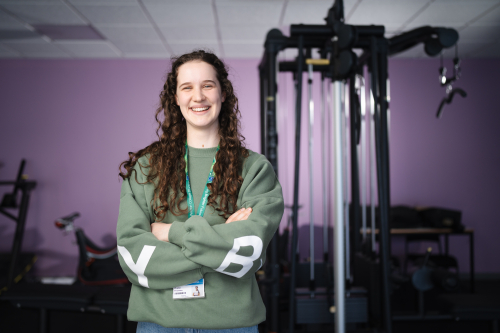
Rimante joined Weston College as a 16-year-old to study a Level 3 course. Since then, she’s progressed through University College Weston, gained employment at the College and now works in the HR department. Here she talks about her journey and offers advice to potential students.

After attending a taster day, I knew the College and the Travel and Tourism BTEC Extended Diploma was for me. The course gave me an insight into the different sectors of the industry, which helped me decide what I wanted to focus in the future. The lecturers also came from different industry backgrounds and related the subject back to real experiences, which made it very interesting to study.

The residential trips were also amazing. I went to Gambia twice and got to understand how tourism works over there and what impact the big travel organisations have on the country’s economy. The trips also helped us relate our studies to ‘real life’.

We had several guest lecturers – from various backgrounds like Bristol Airport – and visited the Virgin Atlantic customer experience day where we got an insight about their branding and how they deliver customer experience.

Aside from subject-specific skills and knowledge, the course gave me skills I can apply in virtually any job role, such as researching, report and presentation writing and budgeting. Those are the skills that all employers out there are looking for and it makes you stand out from other applications.

If anyone’s thinking about studying the course, I’d say ‘go for it’, because it opens so many career paths. Even if you end up working in a different industry – like myself – the knowledge you gain is transferable and it doesn’t limit you in the future.

After this course I progressed to the foundation degree in Tourism Management at University Centre Weston. This was the logical choice as I’d enjoyed the Level 3 course so much and knew how great the facilities and lecturers at Weston College were.

The class sizes were also smaller than other places, which meant I got more support when I needed it. Plus, the course was only two days per week, so I could continue working and gaining industry experience while studying.

After the foundation degree I moved on to the Business Management with Sustainability BA (Hons) top up. It was also while I was studying my degree that I started working at the College as a part-time Trainee Clerical Assistant.

After I graduated I also had the opportunity to volunteer with Nicaraguan project workers in Quisuli Arriba in the north of the country to hold educational workshops about the importance of clean water and effective sanitation processes. Read more

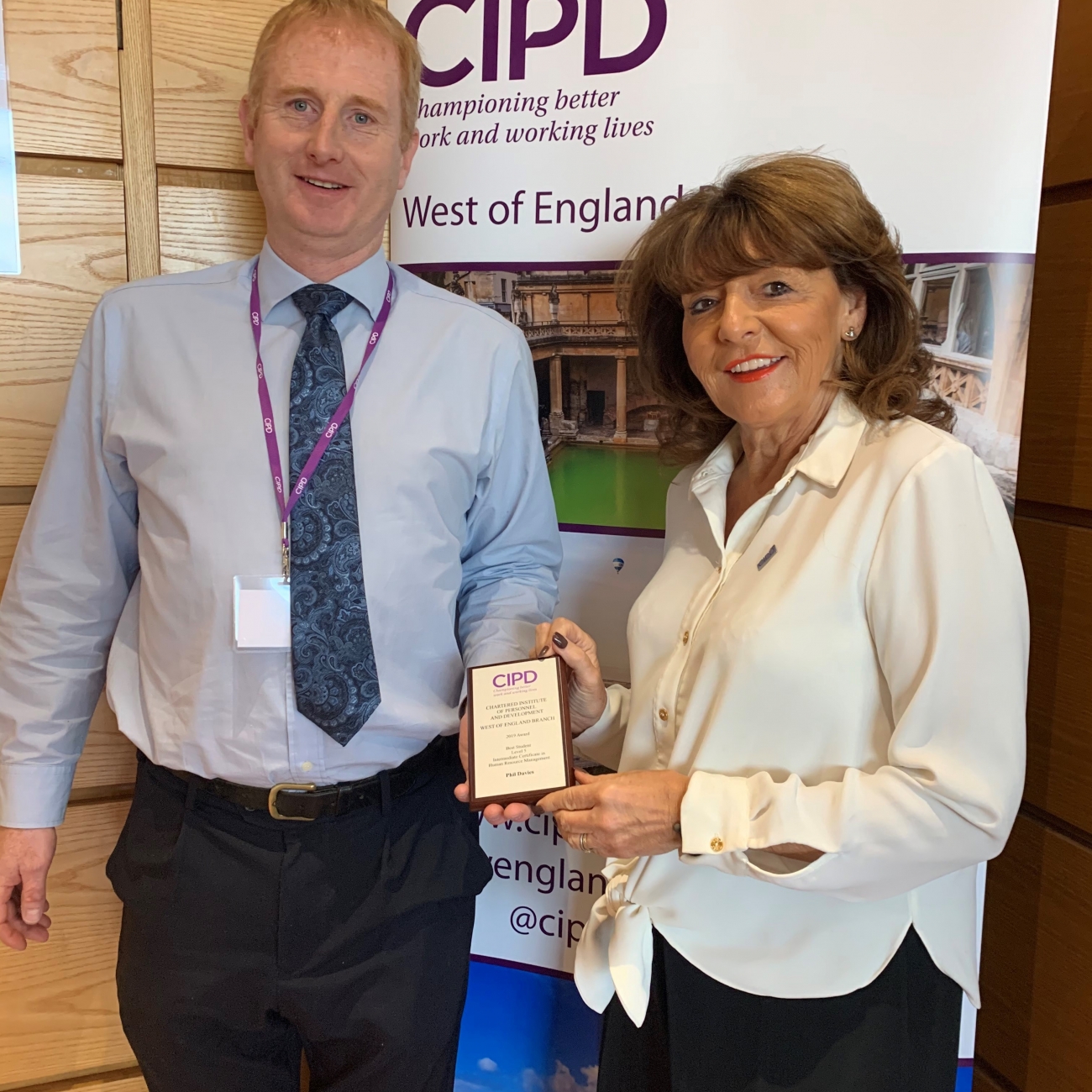
I then joined the HR team at the college, whilst studying for the Human Resources Practice CIPD Certificate, this was an evening course once a week for a year. This course gave me a solid introduction into HR and helped me develop the skills that are required for a HR role.

I then went on to complete the level 5 Human Resource Management CIPD Certificate, which was also one evening a week for a year. This course helped to further developed my professional practice, looked at business issues in the context of HR, employment law, resourcing/talent planning and reward management.

If you are looking to start your HR career or wish to get the qualification to support your position/further develop your career. I would recommend these courses, they help you to link the theory with real practice and are certified by the Chartered Institute of Personnel and Development (CIPD). 

It’s been a really enjoyable and rewarding journey, and I can’t recommend the College highly enough.

If you’re thinking about following a similar path, I’d advise attending the open days that are held throughout the year. Here, you can speak to the many lecturers and careers advisors, and ask any questions about the potential study routes and career paths.

Join us

WHICH LEVEL IS RIGHT FOR ME?

arrow icon arrow icon

Got a question?

Whatever you'd like to know, we're here to help...

Apply or find out more


Marketing Permissions

We’d love to keep you informed about vacancies, courses, and updates we think you’ll find valuable. You can unsubscribe or opt out at any time.
Your personal information will be handled in accordance with our Privacy Policy.

Please let us know how you’d like to hear from us:

Email

By submitting this form you are consenting to Weston College recording and processing the personal information on this form, for any purposes of the college associated with the provision of advice and guidance to potential students on the range of courses available to them, college facilities and any other associated information. In accordance with the Data Protection Act 2018, the information will only be used for the above mentioned purposes.

You will need to complete a full enrolment form prior to starting your course.

CAPTCHA
This question is for testing whether or not you are a human visitor and to prevent automated spam submissions.
Love our Colleges

Further education (FE) colleges are an essential cog in the education ‘machine’ in England.

As Principal of a college, you might say I’m biased.

But I’d argue that’s given me extensive, first-hand experience of how colleges help people of all ages and backgrounds make the most of their talents and ambitions. And these are only the direct benefits. If you consider the role colleges play and the influence they have in the wider communities, it’s clear they are in driving social mobility and boosting local and regional economies.

And these are only the direct benefits. If you take into account the role colleges play and the influence they have in the wider communities, it’s clear they are driving social mobility and boosting local and regional economies.

To put it bluntly, colleges matter – to their students, staff and local communities.

However, it’s no exaggeration to say their futures are in jeopardy due to the extensive and continued funding cuts affecting the sector.

For too long the vital work of colleges has been overlooked and underfunded.

The total college income in England has fallen by £1 billion since the start of the decade, which represents a funding cut of around 30%.

This drop in funding has led to:

  • Fewer hours of teaching and support for young people
  • Course closures
  • A reduction in the number of learning opportunities for adults
  • The value of staff pay falling by over 25% since 2009
  • Job losses and recruitment problems
  • College teachers earning £7,000 less on average than school teachers.

The situation is completely unsustainable and we need action now.

Fortunately that action is materialising in the form of the ‘Love our Colleges’ campaign, led by the Association of Colleges who are uniting the sector in pursuit of one overarching goal – appropriate funding of further education.

This includes:

  • Increasing the 16-19 funding rate by 5% a year for the next five years, and extending the pupil premium to cover post-16 students
  • Fully funding a National Retraining Scheme to support Level 3 to 5 skills
  • Introducing a lifetime learning entitlement to fund skills training for all adults who have not previously achieved a level 3 qualification.

As well as making the case for extra government funding and fair pay in FE, ‘Love our Colleges’ is also highlighting the great work that goes on in colleges, and the brilliant staff that make it all possible.

The campaign is supported by UCU, Unison, Unite, GMB, NEU, NUS, TUC, ASCL and the Association of Colleges, who organise and co-ordinate a string of events and activities throughout the year.

But among the many great aspects of ‘Love our Colleges’ is that individual colleges and students can get involved to keep the issue at the top of the government’s agenda.

For instance, you can support the campaign by tweeting using the #LoveOurColleges hashtag to say why you think the government should invest more in colleges and their staff and students; and write to your local MP asking them to support fair funding in FE and sign Early Day Motion 1686 calling for urgent investment in FE colleges.

To find out more about Love our Colleges and its various events, take a look here


Dr Paul

T Level

Weston College will be at the forefront of the brand new Digital T Level qualification, which will be launched to students in September 2020.

The T Level qualification is a highly technical alternative to A Levels, and is part of the Government’s commitment to giving people access to high-quality training opportunities.

T Levels will combine classroom theory, practical learning and an industry placement. The industry placement is a core component of each T Level and ensures students spend at least 315 hours (approximately 45 days) utilising the skills and knowledge they have learnt in the classroom and applying them in the workplace.

Damian Hinds, Education Secretary, said: “Everyone agrees that a radical shake-up of technical and vocational education in this country is long overdue. T Levels are our chance to do that – offering young people high-quality alternatives to our world-class A Levels from September 2020.”

Dr Paul Phillips CBE, Principal and Chief Executive of Weston College Group, said: “The College is keen to start working with businesses in the digital sector to develop partnerships that offer industry placements to learners on the Digital T Level route.

“Industry placements can benefit businesses by helping them identify and nurture their future talent, allowing them to discover an early talent pipeline for their next generation of workforce.

"Also these placements can help to develop existing staff’s mentoring and management skills whilst improving recruitment sources for jobs, in a challenging recruitment marketplace."

If your business is interested in offering an industry placement for a Digital T Level student from September 2020, please fill out the form below and a member of our team will be in touch to let you know how.

weston college students

Rimante joined Weston College as a 16-year-old to study a Level 3 course. Since then, she’s progressed through University College Weston, gained employment at the College and now works in the HR department. Here she talks about her journey and offers advice to potential students.

After attending a taster day, I knew the College and the Travel and Tourism BTEC Extended Diploma was for me. The course gave me an insight into the different sectors of the industry, which helped me decide what I wanted to focus in the future. The lecturers also came from different industry backgrounds and related the subject back to real experiences, which made it very interesting to study.

The residential trips were also amazing. I went to Gambia twice and got to understand how tourism works over there and what impact the big travel organisations have on the country’s economy. The trips also helped us relate our studies to ‘real life’.

We had several guest lecturers – from various backgrounds like Bristol Airport – and visited the Virgin Atlantic customer experience day where we got an insight about their branding and how they deliver customer experience.

Aside from subject-specific skills and knowledge, the course gave me skills I can apply in virtually any job role, such as researching, report and presentation writing and budgeting. Those are the skills that all employers out there are looking for and it makes you stand out from other applications.

If anyone’s thinking about studying the course, I’d say ‘go for it’, because it opens so many career paths. Even if you end up working in a different industry – like myself – the knowledge you gain is transferable and it doesn’t limit you in the future.

After this course I progressed to the foundation degree in Tourism Management at University Centre Weston. This was the logical choice as I’d enjoyed the Level 3 course so much and knew how great the facilities and lecturers at Weston College were.

The class sizes were also smaller than other places, which meant I got more support when I needed it. Plus, the course was only two days per week, so I could continue working and gaining industry experience while studying.

After the foundation degree I moved on to the Business Management with Sustainability BA (Hons) top up. It was also while I was studying my degree that I started working at the College as a part-time Trainee Clerical Assistant.

After I graduated I also had the opportunity to volunteer with Nicaraguan project workers in Quisuli Arriba in the north of the country to hold educational workshops about the importance of clean water and effective sanitation processes. Read more

I then joined the HR team at the college, whilst studying for the Human Resources Practice CIPD Certificate, this was an evening course once a week for a year. This course gave me a solid introduction into HR and helped me develop the skills that are required for a HR role.

I then went on to complete the level 5 Human Resource Management CIPD Certificate, which was also one evening a week for a year. This course helped to further developed my professional practice, looked at business issues in the context of HR, employment law, resourcing/talent planning and reward management.

If you are looking to start your HR career or wish to get the qualification to support your position/further develop your career. I would recommend these courses, they help you to link the theory with real practice and are certified by the Chartered Institute of Personnel and Development (CIPD). 

It’s been a really enjoyable and rewarding journey, and I can’t recommend the College highly enough.

If you’re thinking about following a similar path, I’d advise attending the open days that are held throughout the year. Here, you can speak to the many lecturers and careers advisors, and ask any questions about the potential study routes and career paths.

Join us