




COURSES FOR SCHOOL LEAVERS
Your Future Starts Here
With hundreds of exciting courses, this is where your journey begins. From day one, you'll be supported, inspired, and on track to a rewarding career.
See SubjectsJoin a Career Excellence Hub and gain real-world skills, experience, and confidence to reach your goals.
Whether you're finishing school, changing direction, or learning English with our ESOL courses – we’ve got you covered.
Get started today – pick a subject and apply online in just 5 minutes!

Find Your Future Path
















QUALIFICATIONS EXPLAINED
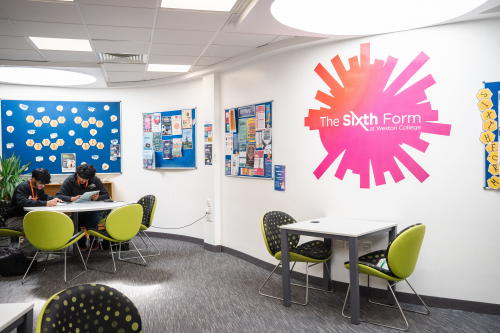
A Levels develop the knowledge, skills and study habits to excel at university, as well as the attributes recognised by employers.
Your academic studies will be complemented with enrichment opportunities such as trips, mentoring and work experience, providing the perfect springboard for your future career.
A Levels are assessed through exams at the end of two years of study. Most learners study three subjects - some choose four.
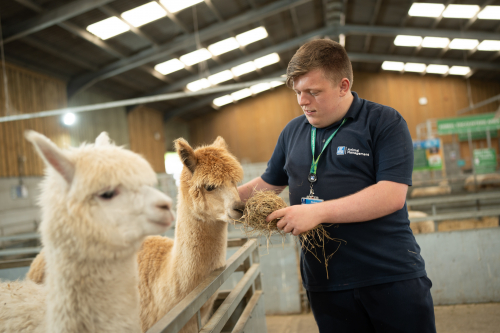
With an apprenticeship you’ll go straight into the workplace and be shown clear routes to progress straight into employment within a specific occupation. You can achieve nationally recognised qualifications, earn a wage, and gain skills that will see you get ahead. On average you will spend 20% of your learning time in the college and 80% within the workplace
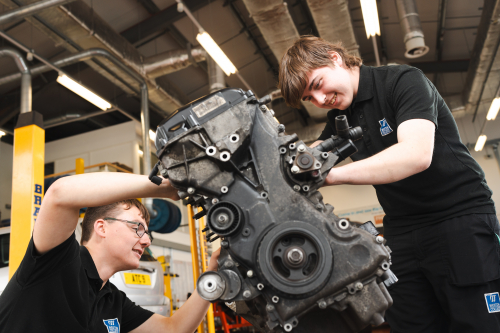
Professional and technical qualifications are designed to provide you with the knowledge, skills and behaviours needed to gain employment within specific industries or occupations. They provide a balance between theory and practical skills development. They are suited to those who want to get hands-on experience within a particular vocational area. These programmes include work placements. Assessment is more varied and will include exams, coursework and practical work.
T Levels give you the chance to learn what a real career is like while you continue your studies. T Levels have been designed with leading businesses and employers to give you the knowledge and skills you need, including a minimum of 45 days on an industry placement – this means you will spend 80% of your learning time in College and 20% within the workplace.
LATEST NEWS

So your secondary education is coming to an end and you're faced with many choices...
Different people learn in different ways, and some may choose to stay on at a local sixth form. For the majority of local school leavers, Weston College is a popular option due to the diverse range of courses and wanting to experience a fresh environment with a lively and exciting atmosphere as well.
If you're considering College but are unsure about how it compares to school, read on!
Weston College is a quarter of the way through its ambitious 200 in 100 campaign, which seeks to promote apprenticeships to both businesses and potential apprentices.
After just 25 days the College has managed to attract 72 pledges meaning that it is well on track to achieve its target of 200 apprenticeship pledges in just 100 days. Among the businesses who have pledged are Alliance Homes Group, Restor8, Thatchers, Sidcot School and the NHS.
Another company who has pledged to take on apprentices is SACO, which has hired two Team Leading Level 3 apprentices.
Di Gwinnel, HR Business Partner for SACO said: “It is exciting to get involved with the 200 in 100 campaign and show our support for developing aspirational talented individuals. We have taken on two apprentices and the whole business is looking forward to helping them develop.
“Weston College has been extremely helpful and I would highly recommend getting in contact with them to support you with the whole apprenticeship process.”
Dr Paul Phillips CBE, Principal and Chief Executive of the Weston College Group, said: “Apprenticeships play an important role in developing highly skilled workforces for organisations and it is fantastic to see how many businesses are making use of our Training Solutions team to help develop young people and adults across the South West.
“We have seen more apprenticeship opportunities open up for our students across a range of sectors, which is very exciting for the College and our learners.”
You can keep an eye on the campaign’s progress across social media, with #200in100 being used on Twitter.
For more information and to pledge go to: www.weston.ac.uk/200in100. You can also email the apprenticeship team at enquiries@weston.ac.uk or call on 01934 411 594.
If you're looking to get a job, a CV is one of the most important and useful tools you can use. CVs are an overview of your work and study history that introduces you to the potential employer, giving them an overview of your abilities that will hopefully lead them to inviting you in for an interview or offering you a job.
Many employers nowadays use online application forms, but a CV is still useful as you can collect all of the relevant information in one place - which will help you memorise your key qualifications, skills and experience when it comes to an interview.
If you want to find out how to write the perfect CV, read on...
Things to include
First of all, think about the information you'll need to include. These should be the key things that make you the right person for the job. Many people have a 'standard' CV that they adapt depending on the role they are applying for, but every CV should include:
- Your details. This includes your name, address, email and telephone number. You don't have to include personal information such as your date of birth, gender, etc.
- Your background and key skills. Most CVs start with an introductory paragraph which tells employers who you are, what you're applying for and a bit about why you're applying for the role.
- Your work experience. Start with your most recent job and work backwards, including: the name of the employer, the dates you worked for them, the job title, and a list of your main duties. Focus on the relevant experience and list any voluntary work you've done. If the job you're applying for is your first job, think about work experience you took part in in year 10 or things you've done as part of your course that are relevant to the role.
- Your qualifications. Again, list the most recent qualifications first and work backwards, listing the qualification name, where you studied and the year you got the qualification. Bear in mind that employers might ask for copies of the certificates!
- Other information. List anything else that might be of interest to an employer, for example: computer literacy, languages you speak, achievements such as the Duke of Edinburgh award, driving licence, anything else that makes you the ideal candidate for the role.
- Your interests. Employers tend to employ people who they think will fit in with their business. Try to include interests that make you sound like a team player, and highlight interests that are relevant to the position you're applying for (for example, if you're applying for a job in catering, include that you're interested in food, cooking at home, etc.).
- References. Employers might want to contact a former employee or lecturer to ask whether they'd recommend you - particularly if this is your first job. If you don't want the employer contacting the references until you are offered the job or an interview, write: "References available on request."
Useful tips
Things you should do:
- Be clear, use headings, paragraphs and bullet points. This makes your CV easy to read. You can use a résumé template on Microsoft Word to help you with the layout.
- Choose a professional font, and try not to make the font too big or too small. Size 11 or 12 is perfect.
- Check the spelling and grammar.
- Keep it short. Employers have to read hundreds of CVs so you should aim for a maximum of two sides of A4.
- Adapt the CV to the job you're applying for.
Things you should avoid:
- Lying or exaggerating too much! The employer will find out if you don't have the skills or qualifications when your aren't able to perform the job as well as you made out. Similarly, being too modest is also a bad thing!
- Embarrassing email addresses. Before you start on your job search, you should set up a 'professional' email - it'll give the employer a better impression than the email you set up when you were younger!
- Don't over-design it. The best CVs are easy to read and follow a consistent format (that means no images, coloured text, borders, etc.).
Want some help?
If you're putting together your CV but are feeling stuck, our expert progression team is on hand to help you out. The team is based primarily at the Knightstone Campus, but drop-in sessions are held weekly at Loxton and South West Skills, and they are always contactable by email or over the phone.
Click here to find out more!
WHICH LEVEL IS RIGHT FOR ME?