




COURSES FOR SCHOOL LEAVERS
Your Future Starts Here
With hundreds of exciting courses, this is where your journey begins. From day one, you'll be supported, inspired, and on track to a rewarding career.
See SubjectsJoin a Career Excellence Hub and gain real-world skills, experience, and confidence to reach your goals.
Whether you're finishing school, changing direction, or learning English with our ESOL courses – we’ve got you covered.
Get started today – pick a subject and apply online in just 5 minutes!

Find Your Future Path




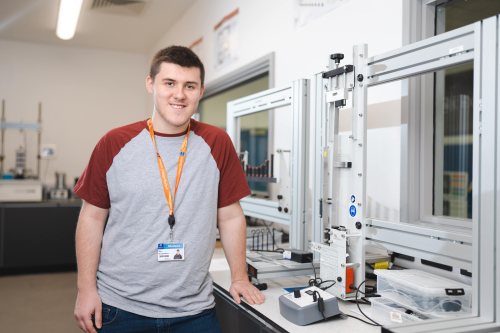



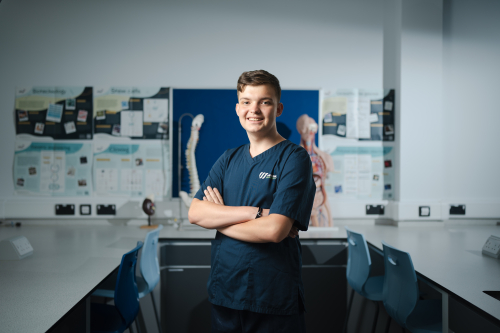







QUALIFICATIONS EXPLAINED
A Levels develop the knowledge, skills and study habits to excel at university, as well as the attributes recognised by employers.
Your academic studies will be complemented with enrichment opportunities such as trips, mentoring and work experience, providing the perfect springboard for your future career.
A Levels are assessed through exams at the end of two years of study. Most learners study three subjects - some choose four.
With an apprenticeship you’ll go straight into the workplace and be shown clear routes to progress straight into employment within a specific occupation. You can achieve nationally recognised qualifications, earn a wage, and gain skills that will see you get ahead. On average you will spend 20% of your learning time in the college and 80% within the workplace
Professional and technical qualifications are designed to provide you with the knowledge, skills and behaviours needed to gain employment within specific industries or occupations. They provide a balance between theory and practical skills development. They are suited to those who want to get hands-on experience within a particular vocational area. These programmes include work placements. Assessment is more varied and will include exams, coursework and practical work.
T Levels give you the chance to learn what a real career is like while you continue your studies. T Levels have been designed with leading businesses and employers to give you the knowledge and skills you need, including a minimum of 45 days on an industry placement – this means you will spend 80% of your learning time in College and 20% within the workplace.
LATEST NEWS

Prison learners were given the opportunity to showcase their talents at Weston College’s annual Creative Arts Summer Festival.
The festival, which enabled students from across the College creative arts faculty to exhibit their work, took place from June 11th to 20th and attracted rave reviews.
Work was produced by students studying media production, graphic design, photography, contemporary arts, as well as art and design.
It was also a unique opportunity for the College learners in prisons across the South West and South East, who provided poetry, oil paintings, pencil drawings ceramics and sculptures. Weston College delivers education in 19 prisons across the country.
Hundreds of people from across the region attend the festival each year, including those working and studying in the creative arts industries. Referring to the prison learners’ work, one visitor said: “There is a real depth and substance in the work. As a graphic designer and artist it is apparent to me that art has an ability to expose the truth in everybody without judgement.
“They are clearly very talented individuals who have become lost in society through mistakes made through peer pressure and a lack of positive role models.”
Weston College’s Prison Education provision will continue to showcase the many talents of learners within the prison network. The aim is to support the successful rehabilitation, resettlement and employment of offenders when they are released.
Click here to read more about the Prison Education provision recently winning a £17m prison learning contract…


Weston Bay learners have been renovating the 1st North Worle Scout Hut over the last three weeks, painting, decorating and clearing the gardens.
To fund this they have been fundraising through a summer fete and a bag packing session at Asda. The learners then went and bought all the paints and gardening tools needed.
Weston Bay learners will be hosting the grand opening this Thursday (27th June) from 4-5.30pm at the North Worle Scout Hut. There will be some food, drink and speeches from the learners. Please come along and show your support.

The treatment of further education (FE) is nothing short of shocking and the recent Augar report is a condemnation of what has happened to the ‘poor relation’ in the educational sector.
As a practitioner who has had the opportunity to work in the school/academy, FE and HE sectors, I am amazed at the lack of investment by Government for what I passionately regard as the key driver of skills and aspirations for our economy. The question now is whether this is the light at the end of the tunnel, or if the glimmer is about to be extinguished as a result of the political malaise our country now finds itself in.
As I write this article, I have literally hundreds of learners taking GCSEs or Functional Skills examinations in mathematics and English. An inordinate number of dedicated staff have coached and developed these 17-year-olds to give them the best possible chance of success, while the level of pastoral support that has gone into supporting learners has been extensive. Our College cannot afford to produce this level of support, but we do because these young people need these skills to progress. And our finances are pushed to the wire as a result.
Of course, there is another issue here. Why are so many learners arriving at the College with such poor achievement in these core subjects? The answer is clear – they have not had the necessary teaching at their previous schools and academies. A specialist in lean management principles would have a field day here, but the problem is tackled too late. The Government must target this robustly. After all, how can a school or academy that cannot get the majority of their learners through such exams be deemed ‘outstanding’? Words fail me.
So, is the Augar report correct? Does it go far enough and can it change our sector? The first issue for me is the sheer breadth of the report which, whilst highly critical of the lack of funding for FE, is contained within a detailed evaluation of all post-18 delivery. The messages within it, however, are very clear and, although most of the observations are common sense to the FE practitioner, I wonder how well they will be both received and understood. Only this week, one MP commented that they had already resolved the issues in FE. Deluded? Most definitely. Ready for change? Not on the basis of that comment! Yet, colleges continue to suffer and one has to wonder what it will take to galvanise action.
The recommendations within the report are, as I’ve said previously, not new to those of us in the sector. They include reducing the inflexible and costly rules to allow for strategic focus and planning; the rationalisation of colleges, where necessary; reversing reductions in core funding; introducing an appropriate adult budget; investing in workforce so there is comparability of salaries with schools, academies and HEIs; and proper recognition for college identity. This would provide a major start to correcting years of starvation of resources, including capital investment.
The next stage? Watch, wait and maintain impetus I guess. We are in a time of change and influence, but imagine if the findings of Augar were even more concise and stated that Government had in effect:
- Failed to strategically plan
- Allowed a growing deficit to spiral out of control
- Complicated processes and done little to enable progression
- Ensured an inequality in pay and working conditions
- Failed to invest appropriately.
Do you not think this is starting to look like a report from the FE Commissioner? It’s time for intervention I think. Will it happen? Who knows? The danger that if it doesn’t happen the reality is now actually even more dangerous for skills in general than our sector!
Dr Paul Phillips, CBE
Principal and Chief Executive
WHICH LEVEL IS RIGHT FOR ME?