




COURSES FOR SCHOOL LEAVERS
Your Future Starts Here
With hundreds of exciting courses, this is where your journey begins. From day one, you'll be supported, inspired, and on track to a rewarding career.
See SubjectsJoin a Career Excellence Hub and gain real-world skills, experience, and confidence to reach your goals.
Whether you're finishing school, changing direction, or learning English with our ESOL courses – we’ve got you covered.
Get started today – pick a subject and apply online in just 5 minutes!

Find Your Future Path












QUALIFICATIONS EXPLAINED
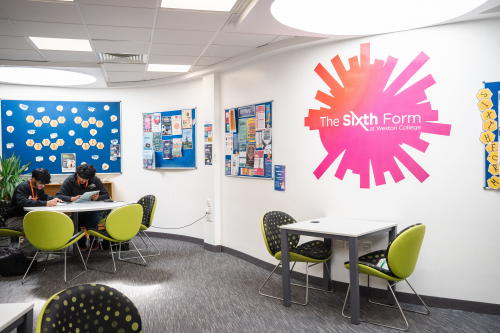
A Levels develop the knowledge, skills and study habits to excel at university, as well as the attributes recognised by employers.
Your academic studies will be complemented with enrichment opportunities such as trips, mentoring and work experience, providing the perfect springboard for your future career.
A Levels are assessed through exams at the end of two years of study. Most learners study three subjects - some choose four.
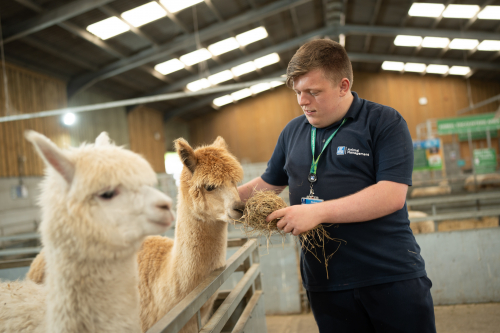
With an apprenticeship you’ll go straight into the workplace and be shown clear routes to progress straight into employment within a specific occupation. You can achieve nationally recognised qualifications, earn a wage, and gain skills that will see you get ahead. On average you will spend 20% of your learning time in the college and 80% within the workplace
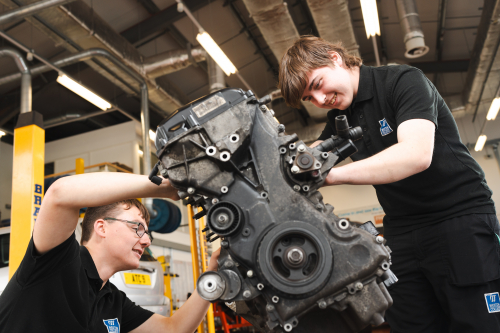
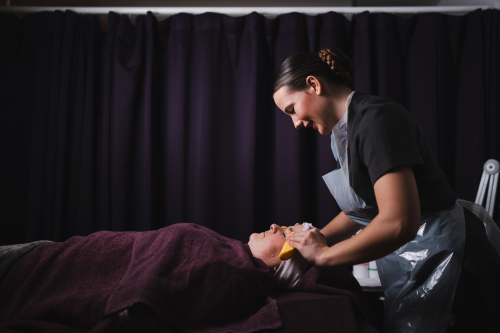
Professional and technical qualifications are designed to provide you with the knowledge, skills and behaviours needed to gain employment within specific industries or occupations. They provide a balance between theory and practical skills development. They are suited to those who want to get hands-on experience within a particular vocational area. These programmes include work placements. Assessment is more varied and will include exams, coursework and practical work.
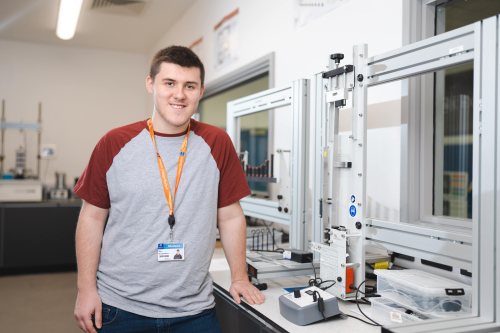
T Levels give you the chance to learn what a real career is like while you continue your studies. T Levels have been designed with leading businesses and employers to give you the knowledge and skills you need, including a minimum of 45 days on an industry placement – this means you will spend 80% of your learning time in College and 20% within the workplace.
LATEST NEWS
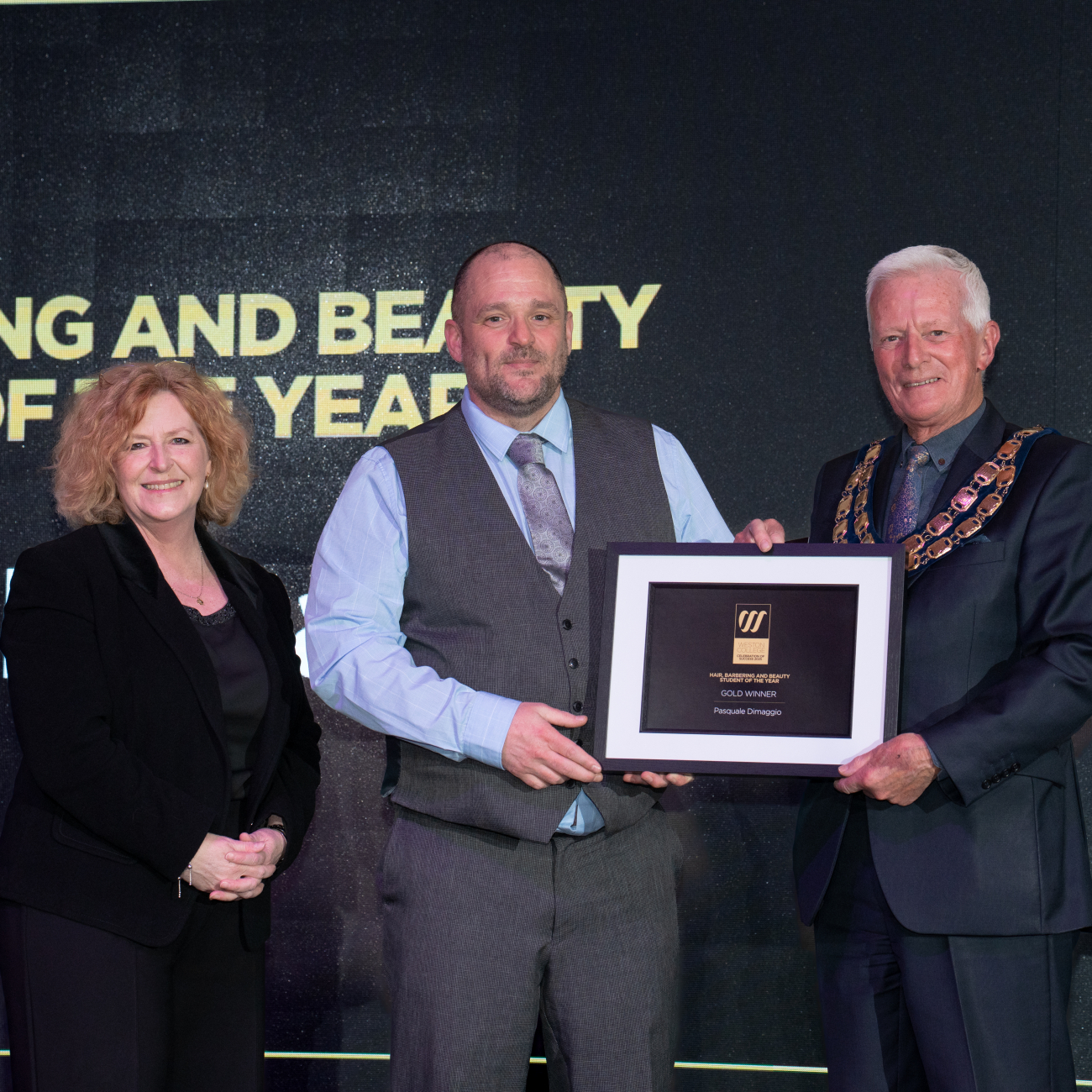
We spoke with Pasquale, who completed our Level 2 Barbering course and won our Hair, Barbering and Beauty Student of the Year Award and Adult Student of the Year Award at Celebration of Success, to find out how the course has impacted his career.
Why did you decide to come back to college?
There are several reasons why I decided to come back to College, with the main reason and focus being my Father, who was a Barber all his life. Being a proud Italian, I grew up knowing most of Bristol's Italian Barbers and, to this day, their sons who are Barbers. My father was suffering and, later last year, passed away with Dementia and was in a home.
Xmas 2024, I took some friends of his who are Barbers to visit him in the home. When they saw my dad’s hair and beard, they instantly wanted to cut his hair and make him look more like himself. The nurses were dubious due to H/S. My father looked at the Ward Manager and said, "I'm a Barber." He pointed at his friend and said, "He's a Barber," then missed me and pointed at his other friend and said, "He's a barber," which hurt me as we had a dream growing up of Pasquale’s (father and sons).
My health over the last few years has been getting worse, as I have been battling Osteoarthritis of both hips and currently waiting for a hip replacement. For the last 25 years, I have been in field sales and account management. On average, I was travelling 35 to 40k miles a year and it’s taken a toll on my body, as well as the stresses of targets. I decided it was time to change and complete what I should have done when I left school.
Had you studied barbering/had any experience before?
My first memories is of an 8-year-old going to work with my father and sweeping hair for £5 per day, and later did 16 months of an NVQL2 Hairdressing at Brunel College, as well as working in two Barber Shops in Bristol - Peters and Directors - but dropped out in 1996 due to nearly losing a finger in a freakish accident. After operations and physio, I missed my year group and fell into sales. I had to use my love of talking somewhere.
How did you find balancing the course with work/life?
As mentioned, my father was in a care home. I had legal power of attorney over him and was the only family member in this country, so my work-life balance was all over the place. The motivation to pass and to be able to say, “Dad, I am a qualified barber,” is what kept me going, as well as keeping busy. My tutor, Holly, was fantastic and I owe her so much. I have never been academic; growing up with dyslexia in the 80s/90s, I chose to be the class clown, and that’s how I made it through school. Holly noticed my teaching needs and inspired me to complete the course and business diploma. I’m pretty sure if it hadn’t been for Holly, I would have struggled and probably not completed the course.
What inspired you to offer free haircuts to the elderly and less fortunate?
Needing to gain experience and confidence in cutting and dealing with people, I decided to offer free haircuts, as well as being able to keep a consistent posting on social media and build my portfolio. After losing my father, I felt it was right to give back to the elderly.
Do you have a rough estimate on how many free haircuts you have offered?
Hard to tell, over 100. I have been at Tollington Lodge for 1 year, and on average, I do 7 to 8 haircuts there a month free of charge, as well as for people from Facebook who contact me.
What challenges did you face when setting up your business, and how did you overcome them?
Finding clientele willing to let me loose on their hair is where the old people and free haircuts come in, as well as word of mouth and advertising on Facebook. It also didn’t help that in January I came off my bike and broke my collarbone and fractured a rib. I had to take 7 weeks off cutting, missing one nursing home visit, which I take seriously.
What do you hope to achieve with your business in the next few years?
Although I converted space at home into a barber shop, I am finding the general public are wary of coming to my home, so my mobile side of things has taken off better. I have also recently agreed to become Nataro Care Home barber, which has 13 sites around the Southwest. So, for the next 12 to 24 months, I will be working with a minimum of 3 or 4 homes per week, improving my skills and confidence, with a view of opening up a high street barber shop in Weston at the end of 2027/28.
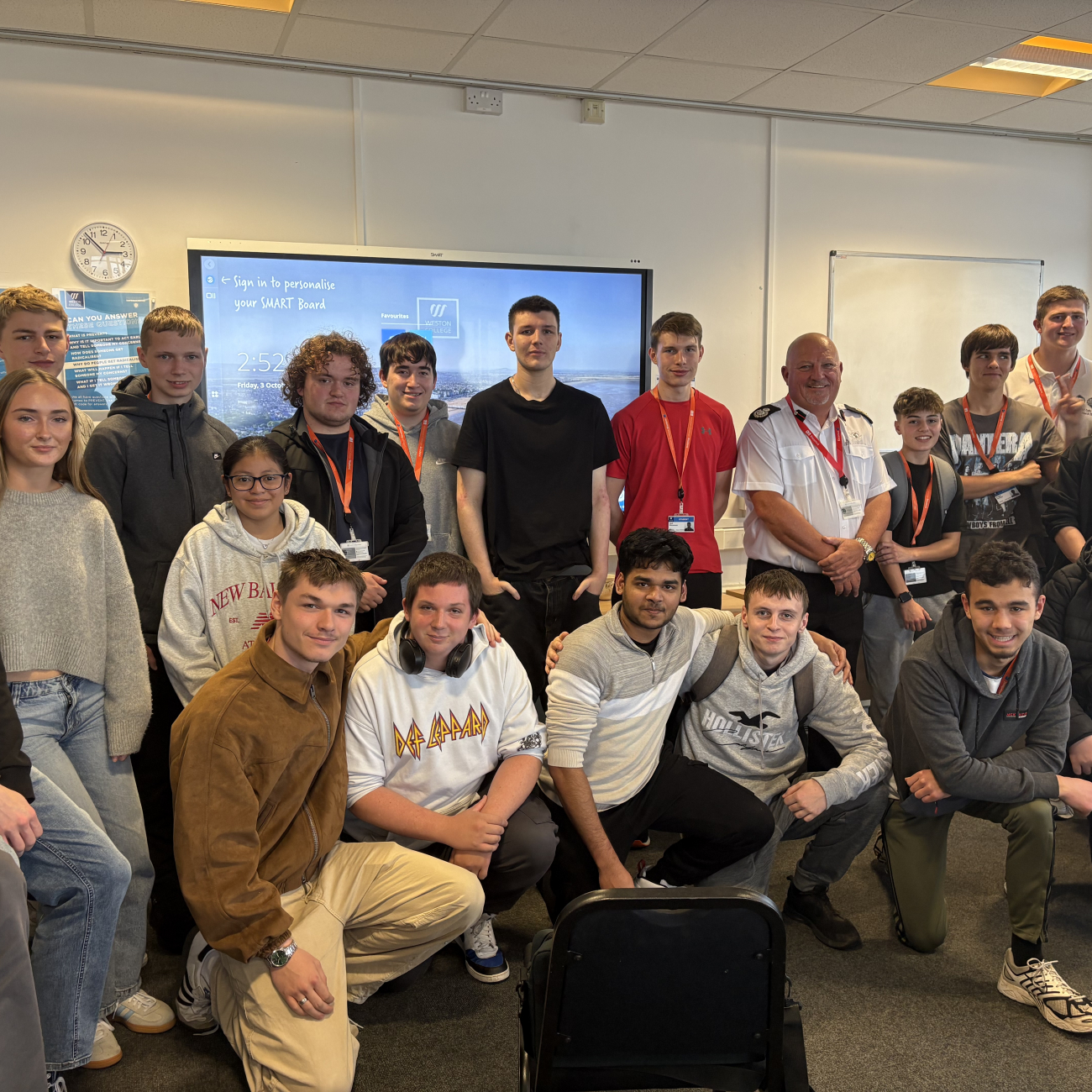
Last month, our Year 2 Uniformed Protective Services (UPS) learners were privileged to receive an incredibly impactful guest lecture from Firefighter Richard Welch, who served as Lambeth Borough Commander during the Grenfell Tower fire.
As part of their course, learners are required to evaluate emergency response strategies, making Richard’s first-hand insights into operational decision-making and crisis management invaluable to their studies.
Our UPS learners often aspire to join the armed forces or emergency services, pursuing careers as Police Officers, Firefighters, or within the Royal Army or Royal Navy. These are highly disciplined and community-focused professions, and opportunities to learn directly from experienced professionals help our students understand the realities, responsibilities, and human impact of protective service careers.
Richard began by outlining his impressive career journey. Having joined the London Fire Brigade in 1996, he progressed through a range of operational and leadership roles across the capital before becoming the Assistant Chief Fire Officer for Service Delivery Support at Avon Fire and Rescue Service.
During his lecture, Richard reflected on his role on the night of 14 June 2017, when he led the response as Borough Commander to the Grenfell Tower fire. He described the procedures and protocols followed, the scale of the operation, the efforts to rescue residents, and the devastating speed with which the fire spread through the building.
This visit was particularly emotional and thought-provoking. Having spoken at the college previously, Richard tailored this talk to include more in-depth context about responding to major emergencies, focusing on the techniques and strategies used during high-pressure incidents and how to manage the emotional and mental health challenges that can follow.
He shared deeply personal reflections on what it was like to make difficult, life-saving decisions under extreme pressure, offering candid advice on how emergency responders can care for their own wellbeing while supporting others in times of crisis.
Nicola Stent, one of our Uniformed Protective Services Lecturer, expressed her appreciation for Richard’s honesty and the students’ professionalism, saying, “Richard’s first-hand accounts were incredibly powerful and moving and the learners engaged with maturity and genuine curiosity. His reflections on Grenfell Tower and his advice on resilience and emotional wellbeing offered invaluable lessons for the students. It is these honest insights and advice that make guest lectures so important for students personal and professional development.”
Learners left the lecture inspired, with a clearer understanding of what it takes to serve their communities with resilience and compassion. Many commented on how the session made their career ambitions feel achievable and meaningful, providing them with guidance on how to succeed and thrive in the face of future challenges.
A big thank you to Richard Welch for sharing his first-hand experiences, professional expertise, and personal reflections — offering our learners a profound lesson in leadership, courage, and humanity within the protective services.
This guest lecture forms part of the Protective Services Careers Excellence Hub. Weston College's Career Excellence Hubs are designed to be the launching pad for our learners' careers. In a world where connections and relevant skills matter more than ever, these hubs offer a holistic approach that prepares learners to thrive in their chosen industries. With the support of these hubs, our learners are well-equipped to make a significant impact in their professional journeys.
Progress to the next level in Public Services! At University Centre Weston (UCW) our students give us impressive feedback, with our latest National Student Survey results putting us above average in all nine areas! Find out more about our exceptional teaching, wellbeing services and learning resources by visiting our website. Click here!
If you are passionate about education and are looking for an opportunity to join the staff team at a leading college, then look at the latest job vacancies available at Weston College here. You can find all the latest job opportunities that Weston College has to offer, with a commitment to providing quality education for learners and a focus on continuous professional development for staff, Weston College is an excellent place to work and grow in your career.

Welcome to the October Edition of the Careers and Employability Team Blog!
It’s been a busy and exciting month here at Weston College, with UCAS applications in full swing as learners take the next big step toward their futures. We’ve also proudly celebrated T Level Week, recognising the achievements of our learners and the value these qualifications bring to their career journeys.
Looking ahead, we’re gearing up for our annual Careersfest event on 18th November! This is a fantastic opportunity for learners to connect directly with employers and universities, ask questions, and gather insights to help shape their career decisions.
As always, our team is here to support every learner—whether you're exploring career options, preparing for university, or looking to boost your employability skills.
If you’d like to get in touch with us, please don’t hesitate to email cet@weston.ac.uk.

Supporting Your Young Person with Their UCAS Application
As we move through the autumn term, UCAS applications are a key focus for many of our learners who are planning their next steps into higher education. To help guide and support this process, we’ve put together some important information to help you support your young person. If you have any questions or would like further support, please get in touch using uni.help@weston.ac.uk
UCAS Drop-In Sessions
We’re running weekly UCAS drop-in sessions where learners can get one-to-one support with their applications:
· Knightstone Campus – Every Monday lunchtime in the Library
· Loxton Campus – Every Tuesday lunchtime in the Library
Internal Deadline
To ensure applications are submitted on time and with the best possible quality, our internal UCAS deadline is 14th November. Meeting this deadline allows us to review applications and provide feedback before they are sent to UCAS.

🎉 Celebrating T Levels Week 2025!
From 13th to 17th October, we proudly joined the nationwide celebration of T Levels Week 2025, spotlighting the incredible achievements of our learners and the transformative impact of industry placements.
Throughout the week, we:
- Celebrated learner success stories from their industry placements, showcasing the skills and confidence they’ve gained.
Prepared future learners for their upcoming placements with tailored workshops, employer engagement sessions, and practical guidance.
Engaged with employers and partners to strengthen placement opportunities and highlight the value of T Level learners in the workplace.
- Shared inspiring stories on social media using the hashtags #TLevelsWeek and #TLevelHero, to raise awareness of all the amazing opportunities on offer.
T Levels continue to bridge the gap between education and employment, offering students a unique blend of classroom learning and real-world experience. We’re proud to be part of this journey and to support the next generation of skilled professionals.
Here’s to our learners, educators, and industry partners - thank you for making T Levels Week 2025 a success!

Key Dates:
12th November - Pathways to Success Open Evening
14th November - Internal UCAS deadline
18th November - Careersfest
14th January - Equal Opportunities UCAS application deadline
Get in touch with the Careers and Employability Team, by clicking here.
WHICH LEVEL IS RIGHT FOR ME?