




COURSES FOR SCHOOL LEAVERS
Your Future Starts Here
With hundreds of exciting courses, this is where your journey begins. From day one, you'll be supported, inspired, and on track to a rewarding career.
See SubjectsJoin a Career Excellence Hub and gain real-world skills, experience, and confidence to reach your goals.
Whether you're finishing school, changing direction, or learning English with our ESOL courses – we’ve got you covered.
Get started today – pick a subject and apply online in just 5 minutes!

Find Your Future Path


















QUALIFICATIONS EXPLAINED
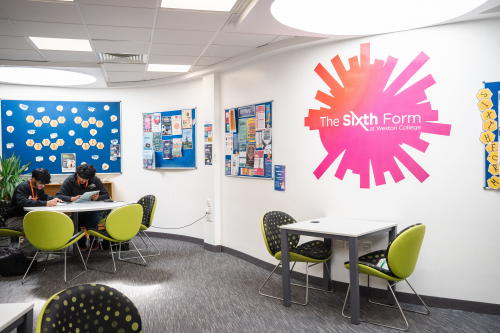
A Levels develop the knowledge, skills and study habits to excel at university, as well as the attributes recognised by employers.
Your academic studies will be complemented with enrichment opportunities such as trips, mentoring and work experience, providing the perfect springboard for your future career.
A Levels are assessed through exams at the end of two years of study. Most learners study three subjects - some choose four.
With an apprenticeship you’ll go straight into the workplace and be shown clear routes to progress straight into employment within a specific occupation. You can achieve nationally recognised qualifications, earn a wage, and gain skills that will see you get ahead. On average you will spend 20% of your learning time in the college and 80% within the workplace
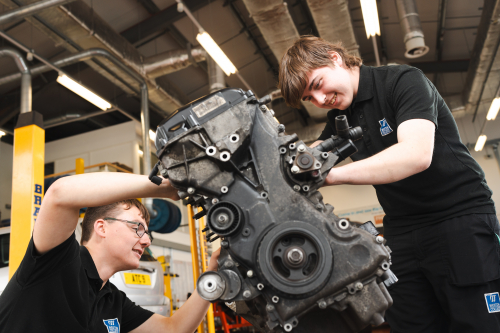
Professional and technical qualifications are designed to provide you with the knowledge, skills and behaviours needed to gain employment within specific industries or occupations. They provide a balance between theory and practical skills development. They are suited to those who want to get hands-on experience within a particular vocational area. These programmes include work placements. Assessment is more varied and will include exams, coursework and practical work.
T Levels give you the chance to learn what a real career is like while you continue your studies. T Levels have been designed with leading businesses and employers to give you the knowledge and skills you need, including a minimum of 45 days on an industry placement – this means you will spend 80% of your learning time in College and 20% within the workplace.
LATEST NEWS

For anyone over the age of 19 and looking to return to education, financing your course can seem like a huge hurdle. However, there are a variety of options when it comes to helping you pay for your course – some people may even find that they are eligible to take a course for free.
We’ve broken down how to pay for your course, along with which icons and symbols to look out for on the course pages.
Full fees and supported fees
On the left of our course pages there is a box labelled ‘financial information’ which is where you will see the course fees and any relevant icons and symbols. The fee listed here, whether supported or full, is the absolute maximum fee anyone will pay for that course.
‘Full’ fees are exactly what they sound like – the full fee for the course. If something is listed as a ‘supported’ fee, this means that funding is available to the College to discount the course’s ‘full’ fee. Therefore, if a course says it has a ‘supported’ fee, this means that the full fee has been discounted for all people taking the course and you will only have to pay the final supported fee.
Although not all of our courses have a supported fee, the amount you see is the maximum you will have to pay.
Free* courses
 Some courses have the above symbol in their financial information, which means some people qualify for free tuition and won’t have to pay anything for that particular course.
In order to get courses with this symbol for free, you will need to meet certain conditions. Although these conditions may differ depending on the course, if you click on the symbol a screen will pop-up that will tell you which specific conditions you have to meet.
When you click the symbol, it might say this:
“The qualification you have chosen to study is part of the Legal Entitlements list and you are aged 19-23 at the start of your course and you do not already have a qualification at Level 3 or higher.”
This condition means that if you don’t already have a Level 3 qualification (such as AS/A Levels, NVQ Level 3, BTEC Extended Diploma, Advanced Apprenticeship etc.) and are aged 19-23 when you start the course, you will not have to pay any fees. However, if you do have a Level 3 qualification or are aged 24+, you will have to pay the full or supported fee displayed.
When you click the symbol, it might say something a bit different, such as:
“This course is Free* if you are:
Receiving Universal Credit, earn less than 16 times the national minimum wage a week or less than £330 a month and are determined by JCP as being in one of the following groups: All Work Related Requirement Group, Work Preparation Group, Work Focused Interview Group
Unemployed and receiving JSA/ESA or wider benefits.
Or
Aged 19-23 at the start of your course and you do not already have any qualifications at Level 2 or higher and you intend to study at this level in the future.”
When you this message, it is clearly stating the conditions that must be met in order to complete the course for free. In the first part, you must meet all of the listed conditions in order to qualify for free tuition.
However, if you don’t meet the conditions listed in the first part, you may still qualify for free tuition in the next condition which again clearly lists all the conditions you must meet to be eligible.
Remember, you must meet everything listed in the first condition, or everythinglisted in the second condition. Otherwise, you must pay the full or supported fee listed.
24+
 If you see this symbol and you do not qualify for free tuition/there is no Free* symbol, then you might be able to apply for an advanced learner loan to finance the course.
Advanced Learner Loans are available to anyone aged 19 or over (this used to be 24, however was reduced to 19), and is not means tested or based on your income or current financial situation. Also, your current qualifications will not stop you from taking out a loan regardless of the level.
These loans can be used to pay for qualifications at Level 3 or above.
For more information on Advanced Learner Loans, see our information page here.
ELC
 Enhanced Learning Credits (ELC) are available to serving members of the British Armed Forces, or those who have recently left. To be eligible, you must meet certain criteria according to the ELC scheme, and there are two tiers of funding available depending on length of service.
For more information about the ELC scheme, visit www.enhancedlearningcredits.com.

A Formula Ford champion from Langley has been working with Weston College students to coach them for a national competition.
Roger Orgee Jr gave the students an exclusive session on carting, teaching them the driving techniques that they hope will see them through to the national karting finals.
The top three student drivers will represent the college in an exciting national karting competition next year.
As part of Weston College's sponsorship of the local Roger Orgee Racing team, the College’s motorsport study programme provides students with the opportunity to work with Formula Ford race mechanics in the College workshops and out on track on the local racing circuit.
Next year Roger is moving up to the National Formula Ford championship and is planned to involve Weston College motorsport degree students at the race meetings as part of their work experience.

Martin Baker has recently taken the reigns as Head Chef of popular wedding venue, Rookery Manor, Weston-super-Mare.
As a professional chef, working long hours in a busy kitchen, Martin is only too aware of the importance of looking after health and diet. The tasty, calorie-rich dishes a chef cooks for guests at their workplace are often very different from the diet they tend to follow in between shifts and when off duty.
Martin has been working with Weston College through a chefs’ forum academy and has worked with students in the training kitchens on campus to give them a taste of what is expected of them once they make their way into the world of work. Martin is looking forward to welcoming catering students from Weston College into his kitchen for work experience at Rookery Manor.
Load up on fruit
Fruit and veg are packed with vitamins, minerals and fibre - Follow this rule and you’re less likely to get high cholesterol high blood pressure and some cancers - Remember your five a day!
Eat better fats
Saturated and trans fats raise bad cholesterol levels and cause heart disease. Cut out bacon, butter, untrimmed meats… also cookies and crackers are a ‘no-no’. Swap full fat milk to semi-skimmed and try a turkey burger next time you fancy its beefy cousin!
Drink lots of water
Cut out carbonated drinks, sports drinks and coffee - six to eight pints of water per day flushes out toxins!
Eat more fibre
t reduces belly fat, gives you greater energy and lowers the chance of type 2 diabetes. Eat whole grain bread and whole meal pasta. Cook with brown rice instead of white.
Cut down portion sizes
Grab a smaller plate for food – the smaller the plate, the smaller the portion – You will still feel the satisfaction of eating a full plate.
WHICH LEVEL IS RIGHT FOR ME?