




Courses for 16 to 18-year-olds (old)
COURSES FOR SCHOOL LEAVERS
With hundreds of unique, exciting and inspiring programmes to choose from, everything you need to create your brighter future is waiting for you at Weston College.
From the minute you walk through the door, the experience and the environment that we create is all about maximising your potential. It’s about preparing and motivating you for a fresh and focused career pathway.
Every Weston College student becomes part of one of our exciting new Career Excellence Hubs. This means you will take part in a study programme with lots of career boosting benefits, all with the aim of help you to go further, giving you the opportunity to become career ready with the skills, knowledge and expertise you need to be successful in your next step and reach your ultimate goal - whatever that may be!
Whether you are looking for the next step after school or the next step in your career, we're bound to have a programme for you. Take a look below at the different types of qualifications available for school leavers and young people between 16 and 18 years old.
Did you know we also run English for Speakers of Other Languages (ESOL)?
Start your brighter future by selecting a subject you're interested in below, and don't forget - you can apply online and it only takes 5 minutes!
Discover our range of courses for school leavers aged 16-18 using the search options below...
Select a Course Subject:
Search courses by keyword:
Search by Keyword:
Select a Career:

Scroll down to view our courses
or select a section to jump to:
Scroll down to view our courses
or select a section to jump to:
Find Your Future Path















Qualifications Explained
At Weston College we know that everyone learns differently. That’s why we deliver a variety of different qualification types - to give you the chance to learn in the way that suits you the most.
A Levels
A Levels develop the knowledge, skills and study habits to excel at university, as well as the attributes recognised by employers. Your academic studies will be complemented with enrichment opportunities such as trips, mentoring and work experience, providing the perfect springboard for your future career. A Levels are assessed through exams at the end of two years of study. Most learners study three subjects - some choose four.
Apprenticeships
With an apprenticeship you’ll go straight into the workplace and be shown clear routes to progress straight into employment within a specific occupation. You can achieve nationally recognised qualifications, earn a wage, and gain skills that will see you get ahead. On average you will spend 20% of your learning time in the college and 80% within the workplace..
Professional and Technical Qualifications
Professional and technical qualifications are designed to provide you with the knowledge, skills and behaviours needed to gain employment within specific industries or occupations. They provide a balance between theory and practical skills development. They are suited to those who want to get hands-on experience within a particular vocational area. These programmes include work placements. Assessment is more varied and will include exams, coursework and practical work.
Traineeships
Traineeships are a great way for 16 to 24-year-olds who haven’t yet gained the skills and experiences necessary to apply for jobs and apprenticeships. They are taught mostly in the workplace and include a mixture of personal and social development, and employability skills. The aim of a traineeship is to train you within a company so that you are more likely to be offered an apprenticeship or a job.

T Levels give you the chance to learn what a real career is like while you continue your studies. T Levels have been designed with leading businesses and employers to give you the knowledge and skills you need, including a minimum of 45 days on an industry placement – this means you will spend 80% of your learning time in College and 20% within the workplace.
CHOOSING WHAT TO STUDY
We are all about CAREERS NOT COURSES and pride ourselves on being able to offer a huge range of programmes to ensure you develop the skills and knowledge employers and universities are looking for. As the only education provider in North Somerset that enables you to work your way up from an entrylevel programme to a degree, we’re here to help you choose the right programme for you.
We can help you choose your study programme or apprenticeship by accessing the following support:
School Liaison Team
Working with local schools we help you find out about college life and programmes of study, and we provide you with advice and guidance about what programmes will best suit you. We will either visit your school, attend careers fairs and parents’ evenings or coordinate campus and virtual events such as our taster days, holiday workshops and tours.
Events
We put on a number of events over the year, which will be a mixture of face-to-face and virtual events. These provide you and your family with the opportunity to explore our facilities, speak to our lecturers, find out about the support on offer and choose the right programme for you. Our events also give you the opportunity to engage with a number of employers to find out about careers in their industry and why they value the calibre of candidates that come from Weston College.
CAREERS ADVICE
- On our website you can access a wealth of career guidance, such as:
- All the programmes you can study.
- What our alumni have gone on to achieve.
- Labour Market Intelligence (LMI) that will help explain what relevant careers and jobs are available, including salaries.
- NEW – Subject careers roadmaps, so you can map your journey with us and ensure it will get you into your chosen career. Also, check out Career Coach - this provides you with the opportunity to:
- Take an assessment that matches you with careers.
- Explore broad career pathways that match your strengths and interests.
- Compare careers within a pathway - including salaries, required education and more.
- Explore our programmes that will set you on the path to your desired career.
- Take a career assessment - and receive an in-depth report that can help you identify the best programme and career path for you!
We’re here and happy to help – if you would like more advice and guidance, contact our school liaison team by emailing schoolteam@weston.ac.uk. - they you can arrange a one-to-one careers appointment with our specialist staff.
LATEST NEWS

<p>At Weston College, we recognise the importance of providing learners with SEND access to valuable work experience opportunities. Currently, only around 5% of people with learning disabilities in the UK are in employment. We are committed to helping improve this statistic, and meaningful work experience plays a vital role in that effort.</p><p>Fortunately, we have developed strong partnerships with local stakeholders who share our commitment to improving employment opportunities for learners with SEND. Through these collaborations, learners on our Preparation for Life course are given the opportunity to practise the employment skills they develop at college within real-world working environments. At the same time, our partners are enhancing their knowledge and understanding of how best to support individuals with SEND in the workplace.</p><p>With this in mind, we would like to shine a spotlight on some of these fantastic providers.</p><p> </p><p><a href="https://n-somerset.gov.uk/directories/libraries/weston-super-mare-libra… Library</strong></a></p><p>Firstly, Weston-Super-Mare Library has supported four learners with placements this year: Jordan, Coby, John, and Jordan. All have spoken highly of their experiences and the support they received from the library team. Jordan shared:</p><p><em>“I have learnt to recognise the skills and qualities I need for work and getting the chance to put them into practice has been really fun.”</em> </p><p>We would like to send a massive thanks to Charlotte Rumble and all the team at Weston-Super-Mare Library.</p><img src="/sites/default/files/inline-images/Weston%20Library%20-%20Thomas_0.jpg" data-entity-uuid="d6337fe9-db08-4206-b33f-70afeac09815" data-entity-type="file" alt="Student working at Weston Library" width="335" height="391"><p> </p><p><a href="https://westonsupermare.foodbank.org.uk/"><strong>Weston-super-Mare Foodbank</strong></a></p><p>A huge thank you goes to Weston-super-Mare Foodbank Warehouse. Lucy Cooper and the team have been dedicated to providing meaningful work opportunities for our learners for a number of years. Their continued commitment to supporting each learner as an individual, helping them to develop their skills while also understanding the vital role the Foodbank plays within the local community, has enabled many learners to work towards and achieve their aspirations.</p><p>This year, Weston-super-Mare Foodbank has supported six learners: Emily, Lexie, Jack, Zyisha, Bailey, and Kaylum. Kaylum shared:</p><p><em>“I love going out to the foodbank on Wednesdays. We get to work and help people. I want to have a job after college.”</em></p><p> </p><p><a href="https://www.somersetwoodrecycling.co.uk/"><strong>Somerset Wood Recycling Centre</strong></a></p><p>Next on our list of local stakeholders to thank for providing work experience opportunities for learners with SEND is Somerset Wood Recycling Centre.</p><p>Tom and the team at Somerset Wood Recycling Centre have supported two learners from the Preparation for Life course this year and are keen to continue this partnership into the next academic year. Ben and Brad have both benefited from these placements, gaining valuable hands-on experience in a supportive environment.</p><p>Brad shared his experience, saying:</p><p><em>“I have thought about studying carpentry in the future, and going to work here has helped me with my decision-making.”</em></p><p> </p><p><a href="https://www.strawberrycycles.com/"><strong>Strawberry Line Cafe and Cycle Project</strong></a></p><p>We would also like to highlight the fantastic support offered by the Strawberry Line Café and Cycle Project.</p><p>Sally Willcock and the team at the Strawberry Line have worked closely with us to provide truly meaningful opportunities for three learners this year. They have demonstrated a strong commitment to learner development and growth through practical, hands-on experience, working in partnership with us to prepare learners for their next steps.</p><p>Abbi, Kane and Ava have all taken part in placements at the Strawberry Line this year. For Ava, this opportunity has provided the confidence to progress onto the Supported Internship programme at Weston College. We wish her the very best of luck as she takes this next step.</p><p> </p><p><a href="https://www.thegreenhousewsm.co.uk/"><strong>The Greenhouse Cafe and </strong></a><a href="https://www.thelauriston.co.uk/"><strong>Lauriston Hotel</strong></a></p><p>Finally, as part of our commitment to recognising the invaluable contribution of local stakeholders who provide work experience opportunities for learners on the Preparation for Life course, and who are helping to improve employment outcomes for individuals with SEND across the UK, we would like to extend our thanks to The Greenhouse Café and the Lauriston Hotel. Nicole Day, along with the teams and both the Lauriston Hotel and Greenhouse Café have shown a continued commitment to supporting these learners to develop their skills.</p><p>This year, they have supported Luke, Hayden, Lauren, Joel and Brad by offering opportunities to experience real working environments and develop key employability and teamwork skills that will support them in their next steps.</p><p>Luke, who attended a placement at the Lauriston Hotel, shared:</p><p><em>“I am going to IntoWork next year, and working with others at the Lauriston Hotel, as well as developing my skills in the simulated Grove Café lessons at college, makes me feel ready to work hard.”</em></p>

<p>Representatives from Weston College Group attended the <strong>Farnborough International Airshow 2026</strong>, strengthening relationships with leading employers and exploring the latest innovations shaping the future of aerospace, aviation, and advanced manufacturing.</p><p>Over two days, members of the College's Strategic Partnerships team met with key industry leaders, including <strong>Airbus, ADS South West </strong>and a range of employers from across the aerospace and manufacturing supply chain. Discussions focused on developing new partnerships and creating opportunities that will support learners at the College's new <a href="https://www.weston.ac.uk/amtec">Advanced Manufacturing and Technology Centre (AMTEC)</a>, which opens this September.</p><p>The visit highlighted the rapid pace of technological advancement across the sector and reinforced Weston College's commitment to ensuring learners are equipped with the skills, knowledge and experiences required to succeed in future-facing careers.</p><p>Tracie Leahy, Programme Director TEC and National Partnerships at Weston College Group, said:</p><p><em>"Farnborough International Airshow provides a unique opportunity to engage directly with some of the world's leading aerospace and engineering organisations. As we prepare to open AMTEC, these conversations are invaluable in helping us understand the evolving needs of industry and ensuring our curriculum remains relevant, responsive, and ambitious.</em></p><p><em>"Our employer partnerships are at the heart of everything we do. By working alongside industry leaders, we can create meaningful opportunities for learners and help develop the highly skilled workforce that the sector needs for the future."</em></p><p>The visit included exclusive tours of the <strong>Emirates Airbus A350</strong>, the <strong>Airbus A400M</strong>, and a range of exhibits showcasing cutting-edge technologies that are transforming the aerospace and manufacturing industries.</p><p>Lynsey McKinstry, Skills Partnership Manager Weston College Group, added:</p><p><em>"Attending an event of this scale reinforces the importance of aligning education with industry. Seeing aircraft that our learners help to manufacture through our employer partnerships in Filton was a proud moment and a powerful reminder of the impact further education can have on people's lives and careers.</em></p><p><em>"AMTEC represents a major investment in the future of technical education in the South West, and opportunities like this help ensure our learners benefit from the very latest industry insight, innovation and employer engagement."</em></p><p>Key discussions throughout the event focused on future skills requirements, sustainability, digital technologies and strengthening pathways into high-value careers across aerospace, engineering and advanced manufacturing.</p><p>The visit supports Weston College Group's commitment to connecting learners with world-class employers through its Careers Excellence Hubs, employer partnership network and industry-led curriculum. As the College prepares to launch AMTEC, Farnborough International Airshow 2026 provided a valuable platform to build relationships, identify emerging trends and ensure learners are equipped to thrive in one of the UK's most innovative and rapidly evolving sectors. </p><p>The opening of AMTEC this September marks a significant milestone for technical education in the South West, creating new opportunities for learners to gain the specialist skills that employers need today and in the future.</p><p> </p>
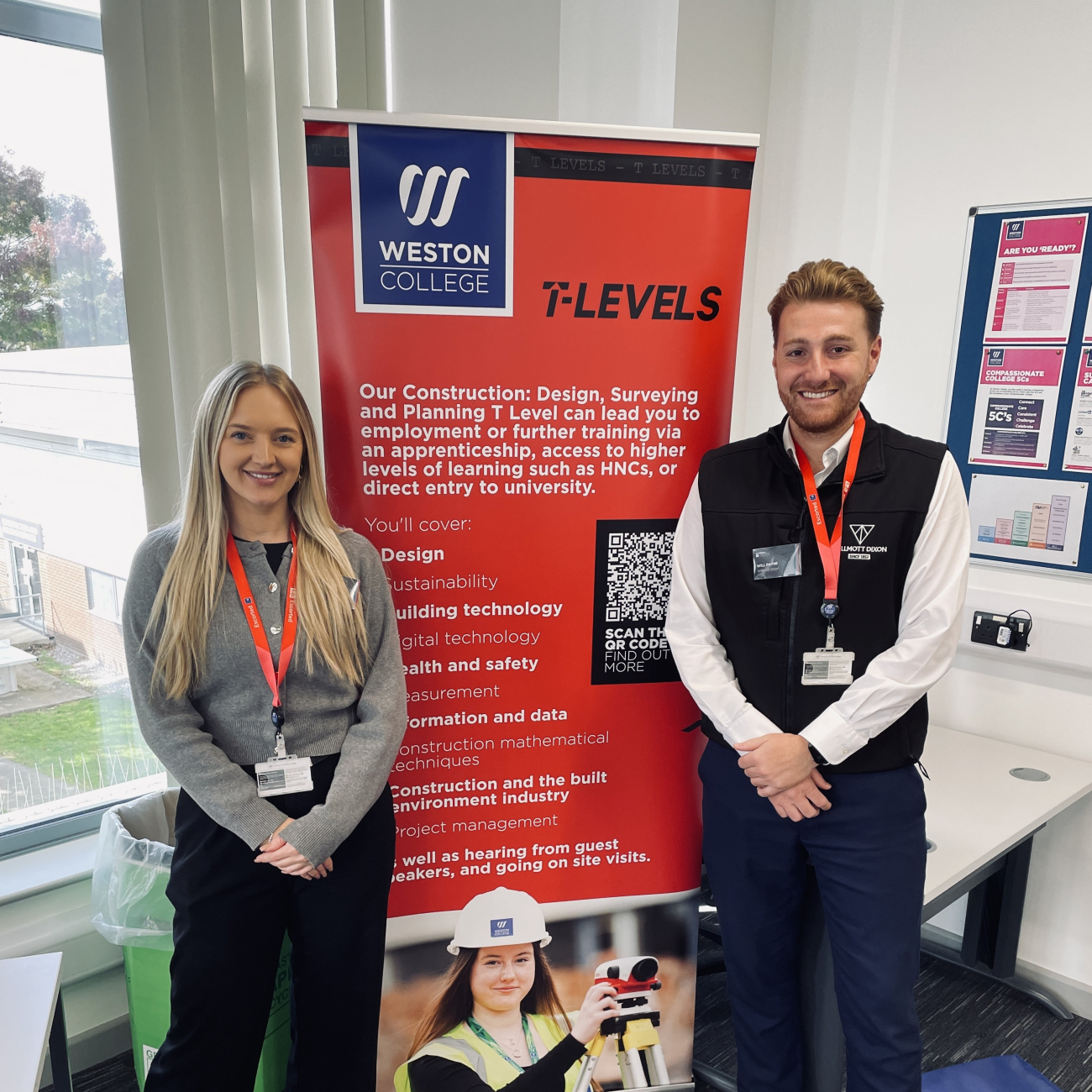
<p>We spoke with Will Payne, Social Value Manager at <a href="https://www.willmottdixon.co.uk/">Willmott Dixon</a>, about <a href="https://www.willmottdixon.co.uk/">Willmott Dixon's</a> partnership with Weston College as a CEH Partner, how they support students through industry placements, and their commitment to inspiring the next generation by showcasing the many pathways into the construction industry.</p><p> </p><p><strong>Can you introduce </strong><a href="https://www.willmottdixon.co.uk/"><strong>Willmott Dixon</strong></a><strong> and tell us a bit about what you do?</strong></p><p><a href="https://www.willmottdixon.co.uk/">Willmott Dixon</a> is a UK-based, privately owned construction, development, and interior fit-out company founded in 1852. It delivers a wide range of projects across sectors such as education, healthcare, housing, justice, defence, and commercial property.</p><p>The company describes its purpose as delivering brilliant buildings, transforming lives, strengthening communities, and enhancing the environment for future generations. It is led by Rick Willmott, the fifth generation of the founding family, and is known for its strong focus on sustainability, social value, and community impact.</p><p>As a Social Value Manager, I help ensure that every <a href="https://www.willmottdixon.co.uk/">Willmott Dixon</a> project in the Wales and South West Region leaves a positive legacy by creating opportunities for local people, strengthening communities, and delivering measurable social, economic, and environmental benefits alongside the construction work.</p><p> </p><p><strong>How have Weston College students been involved in the Airfield Primary School project?</strong></p><p>As Social Value Manager, I, Will Payne, have worked closely with Weston College to support students' development and prepare them for careers within construction and the wider world of work. This has included delivering careers talks that provided insight into the construction industry, different career pathways, employability skills and the opportunities available to young people entering the sector.</p><p><a href="https://www.willmottdixon.co.uk/">Willmott Dixon</a> has also attended employer breakfast meetings with college lecturers and senior strategic representatives from Weston College. These discussions have helped influence the development of the College's T Level curriculum, ensuring it reflects current industry needs and equips students with the skills and knowledge required by employers. We have also provided guidance on how industry placements can be structured to deliver the best possible experience and outcomes for students.</p><p>To further support employability, we have delivered work experience placements, mock interview sessions, giving students valuable experience of recruitment processes while helping them build confidence, communication skills and interview techniques. Students have also benefited from guest speaker sessions delivered by members of the <a href="https://www.willmottdixon.co.uk/">Willmott Dixon</a> team, sharing real-life experiences and career journeys from across the construction industry.</p><p>In addition, students have been invited to visit the Airfield Primary School project through organised site tours. These visits have provided first-hand exposure to a live construction environment, allowing students to see construction processes in action, meet project professionals and gain a deeper understanding of the diverse roles involved in delivering a major education project.</p><p>Through these activities, Weston College students have gained practical industry insight, enhanced employability skills, and developed a stronger understanding of the opportunities available within the construction sector, helping to support their transition from education into employment.</p><p> </p><p><strong>What has your experience of offering industry placements been like?</strong></p><p>Our experience of offering industry placements has been extremely positive. They provide young people with valuable exposure to the construction industry, helping them develop practical skills, workplace confidence and a better understanding of potential career pathways.</p><p>The students we have hosted from Weston College have been a real credit to themselves and the College. They have arrived on time, shown a strong willingness to learn and fully engaged with the opportunities available to them.</p><p>During their placements, students have participated in project meetings, supported the wider project team and gained first-hand experience of working on a live construction project. This has helped them understand how different roles work together to successfully deliver new build developments.</p><p> </p><p><strong>What are the biggest benefits of hosting an industry placement student?</strong></p><p>One of the biggest benefits is developing future talent. We've supported several students from industry placements into permanent roles with Willmott Dixon, including through our Management Trainee Scheme.</p><p>Placements also benefit our project teams by giving employees, particularly junior team members, the opportunity to mentor and support a student, helping develop their own leadership and communication skills.</p><p>Finally, working with placement students strengthens our relationship with colleges and provides valuable insight into what is being taught, helping to ensure education and industry remain aligned and relevant to the skills needed in construction today.</p><p> </p><p><strong>What kinds of projects and day-to-day tasks do industry placement students get involved in?</strong></p><p>Our industry placement students have gained experience across a wide range of projects, including education, healthcare and defence schemes. We aim to provide opportunities wherever possible, regardless of the type of project, ensuring students gain exposure to different areas of the construction industry.</p><p>Students are involved in a variety of day-to-day activities to give them a well-rounded experience. They work alongside different teams and disciplines, including site management, quantity surveying, health and safety, design, environmental and digital construction.</p><p>While some students arrive with a clear career path in mind, exposure to different roles often helps them discover opportunities they may not have previously considered. Even if they remain focused on their chosen career, they leave with a much better understanding of how the various departments work together to successfully deliver a construction project.</p><p> </p><p><strong>What do you look for when selecting students for an industry placement?</strong></p><p>When selecting students for an industry placement, attitude is the most important factor. We're looking for students who are reliable, enthusiastic and genuinely interested in developing a career within the industry.</p><p>Just like any recruitment process, we want to see someone who is committed, willing to learn and prepared to give their best. Technical knowledge can be developed over time, but a positive attitude, strong work ethic and a willingness to get involved are what really help students succeed.</p><p>Students who show they are keen to learn, take initiative and go beyond the minimum expectations are often the ones who make the biggest impact and get the most from the opportunity. These are the qualities we look for when identifying and selecting students for industry placements.</p><p> </p><p><strong>In what other ways has </strong><a href="https://www.willmottdixon.co.uk/"><strong>Willmott Dixon</strong></a><strong> worked with Weston College?</strong></p><p><a href="https://www.willmottdixon.co.uk/">Willmott Dixon</a> has built a strong and long-standing relationship with Weston College and continues to support the College wherever possible.</p><p>Alongside supporting T Level and construction students, we have also worked closely with Weston College's employment programme, which helps unemployed people develop the skills, confidence and qualifications needed to return to work.</p><p>As part of the programme, I have delivered sessions explaining what it is like to work for a Tier 1 construction company, providing learners with an insight into the opportunities available within the industry and the pathways into employment. These sessions are particularly valuable for individuals looking to enter construction for the first time, as well as those returning to the sector after a period away.</p><p>I often deliver these sessions alongside one of our recruitment partners, giving learners direct access to organisations that can support them into genuine employment opportunities. Through this collaboration, a number of participants have gone on to secure roles on our projects, helping to create local employment opportunities and supporting people back into work.</p><p> </p><p><strong>What advice would you give to employers thinking about offering industry placements?</strong></p><p>My advice would be simple: <strong>go for it.</strong> While it can feel a little daunting at first, the benefits far outweigh any concerns.</p><p>Industry placements provide a fantastic opportunity to support young people as they take their first steps into a career. As employers, particularly larger organisations, we have an important role to play in helping develop the next generation of talent and giving students meaningful experiences that prepare them for the world of work.</p><p>The students we've worked with have brought enthusiasm, fresh perspectives and a real willingness to learn. In return, they gain valuable industry experience, develop their confidence and build the skills needed for future employment.</p><p>Whether directly or through your supply chain, everyone has a part to play in creating opportunities for young people. By opening your doors to industry placements, you're not only investing in the future workforce but also helping enthusiastic students realise their potential and build successful careers in construction.</p><p> </p><p><strong>Is there anything you would like to add?</strong></p><p>As I mentioned, we have a long-standing and valued relationship with Weston College, and it's important that we continue to build on this partnership for the benefit of the College, its students and <a href="https://www.willmottdixon.co.uk/">Willmott Dixon</a>.</p><p>Weston College makes it incredibly easy for employers to get involved and support its programmes. The team is proactive in engaging with industry, hosting regular meetings, networking events and employer forums to ensure course content remains relevant and aligned with current industry needs. We are always kept informed about opportunities to contribute and are invited to participate in a wide range of activities that support students' learning and development.</p><p>Most importantly, Weston College consistently delivers positive outcomes for its learners, helping to prepare them for successful careers and further opportunities.</p><p>We're grateful for the opportunity to work alongside Weston College and look forward to continuing our partnership and supporting the great work they do for many years to come.</p>