




T Levels
CREATED WITH BUSINESS
T Levels have been designed with leading businesses and employers to give you the knowledge and skills you need. More than 200 businesses – including Fujitsu and Skanska – have been involved so you can be confident your T Level will move you to the next level.
GET AHEAD IN YOUR CAREER
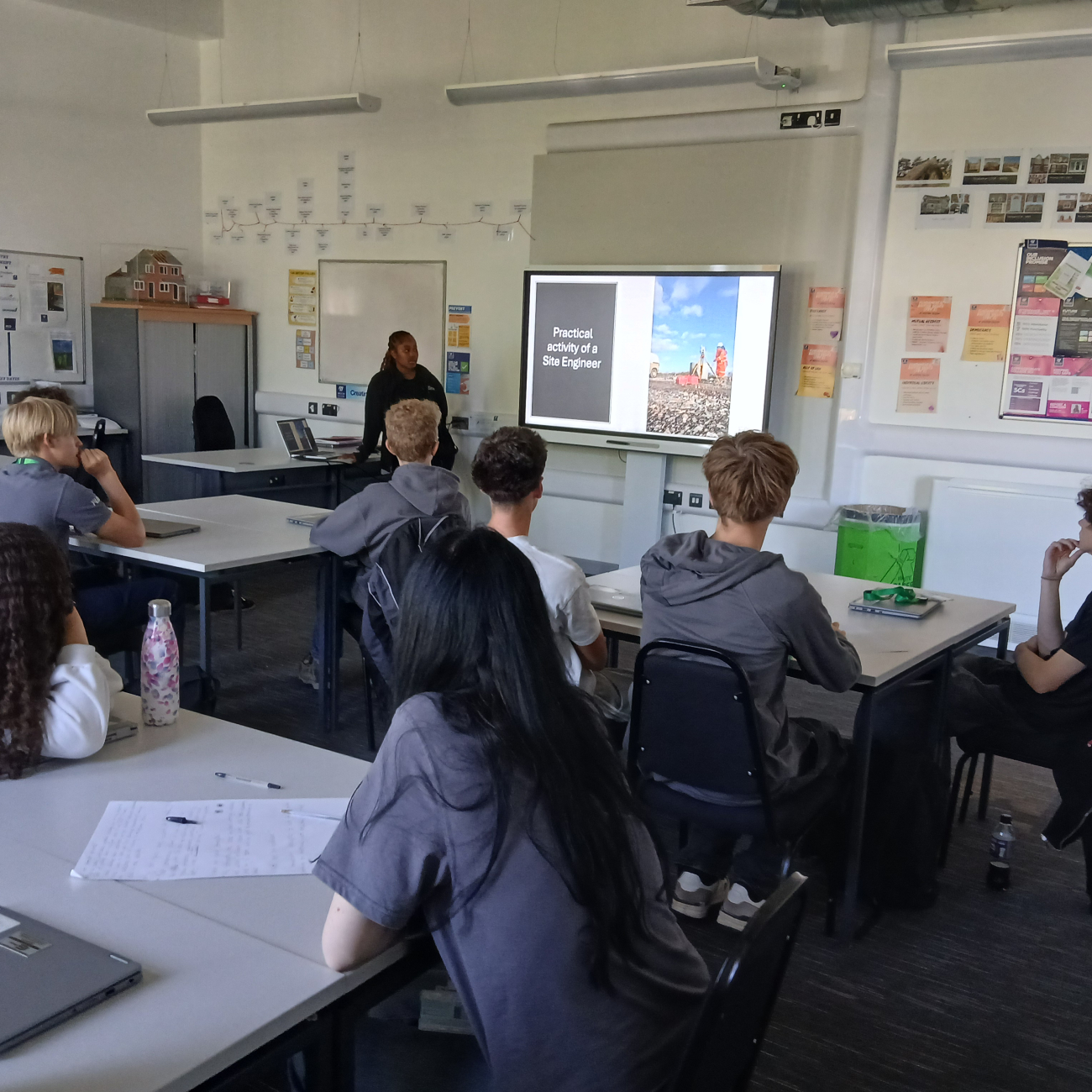
T Levels give you the chance to learn what a real career is like while you continue your studies. Your industry placement will last for at least 45 days.
QUALIFICATIONS THAT COUNT
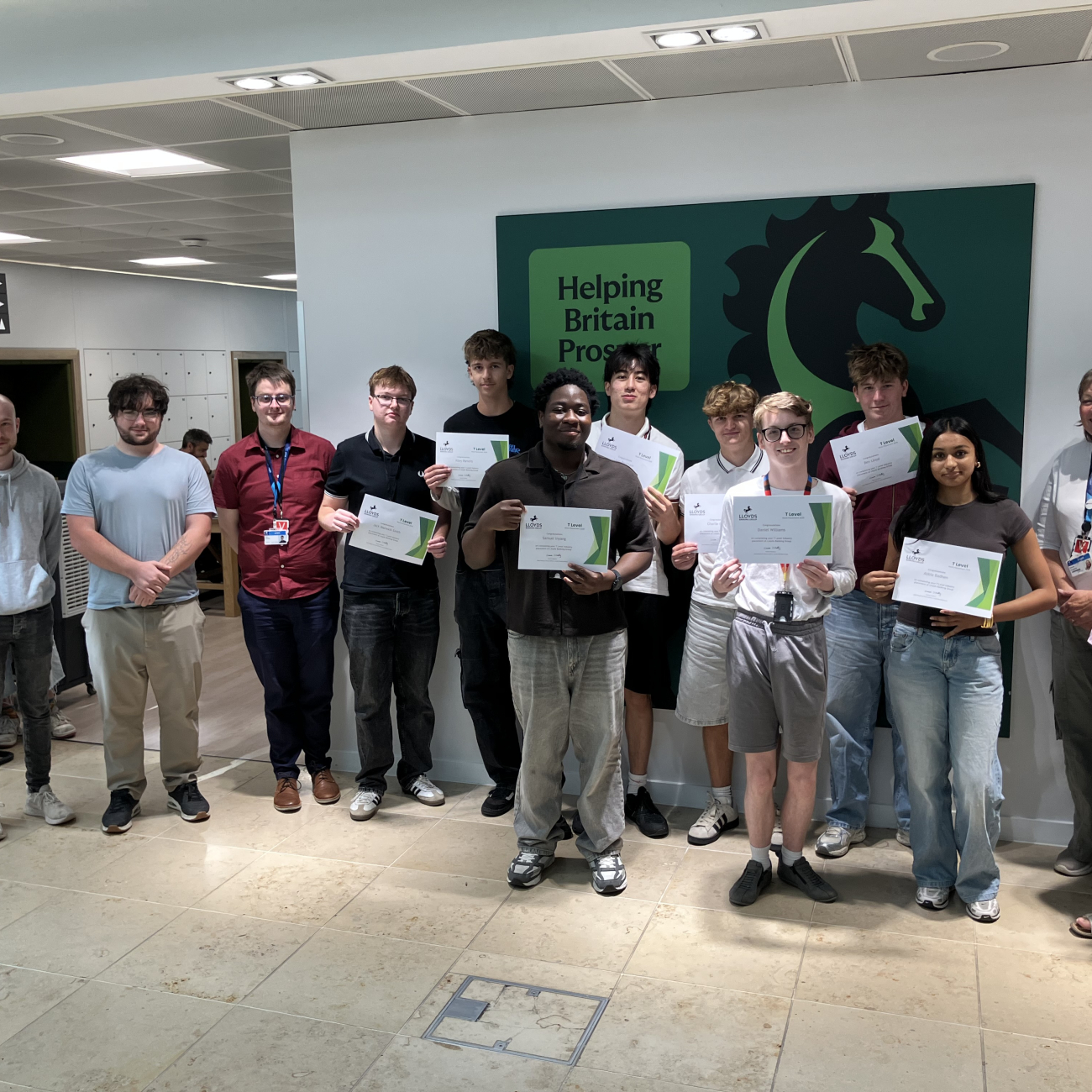
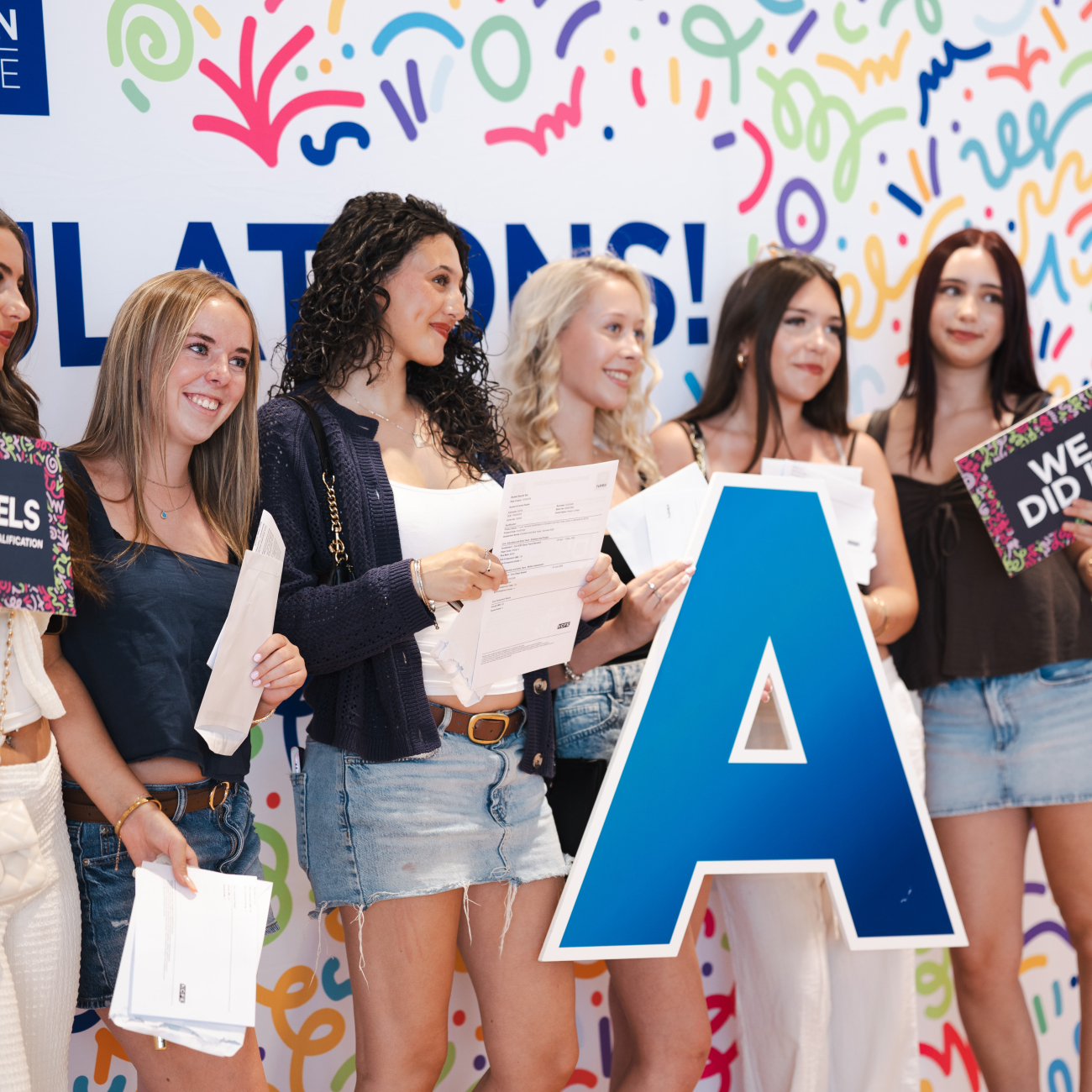
When you pass your T Level, you will get a nationally recognised certificate showing the overall grade you achieved - pass, merit, distinction or distinction*. It will also give details of what you learned on the course to help you move into skilled employment or a higher apprenticeship.
AWARDED UCAS POINTS
Your T Level will be worth UCAS points – a T Level Distinction* is worth the same as 3 A Levels at A* – and will be recognised by universities and other education providers so you can choose to continue studying if you wish.
LEARN YOUR WAY
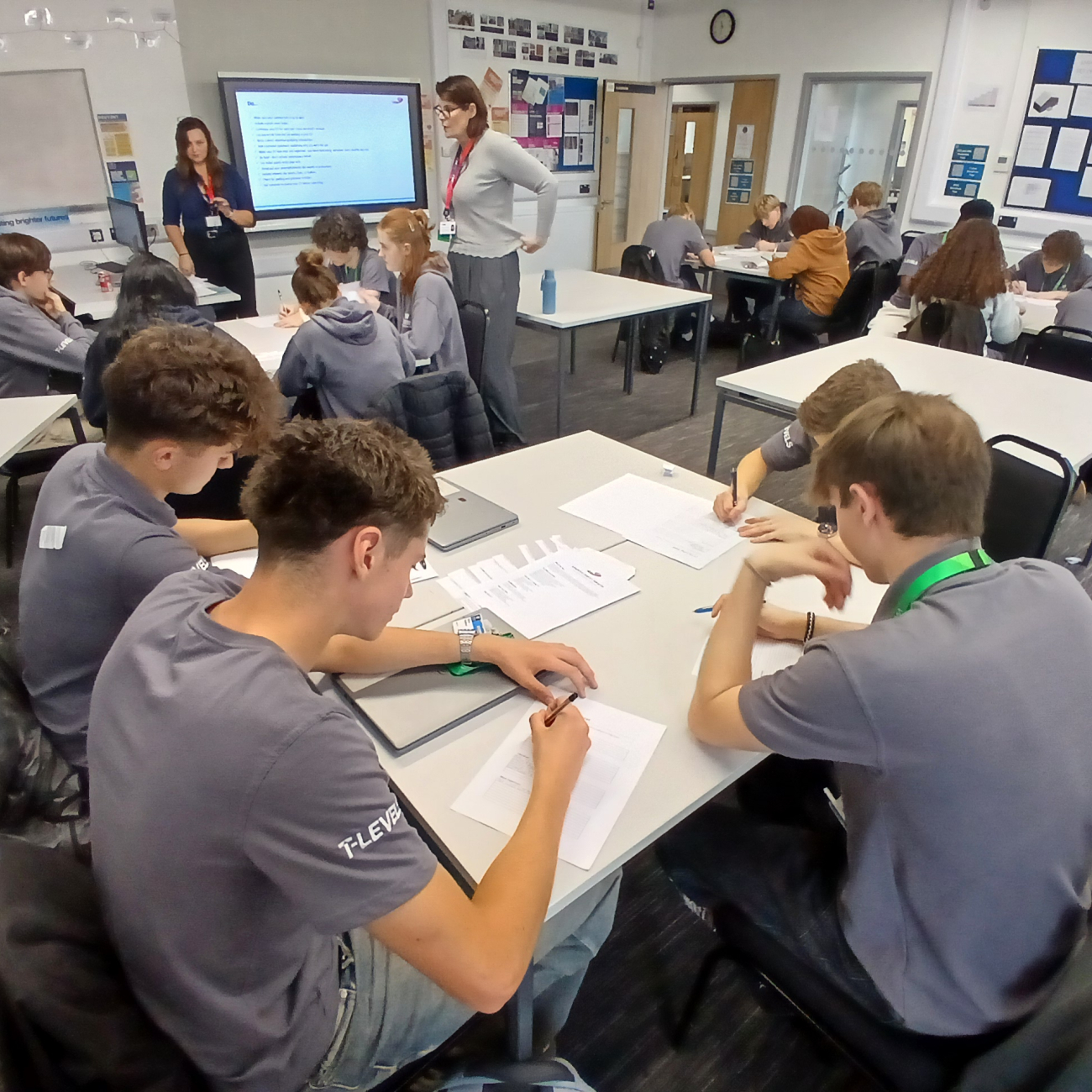
T Levels involve more classroom study than apprenticeships, which means you can experience an industry while you continue your studies. Like A Levels, there are no tuition fees to study a T Level if you start before you are 19.
Animal Management and Science, T Level
Combine your passion for animals with scientific knowledge and industry experience. This two-year T Level…
Business, Management and Leadership, T Level
Develop the skills, knowledge, and industry experience needed to succeed in today's business world. This…
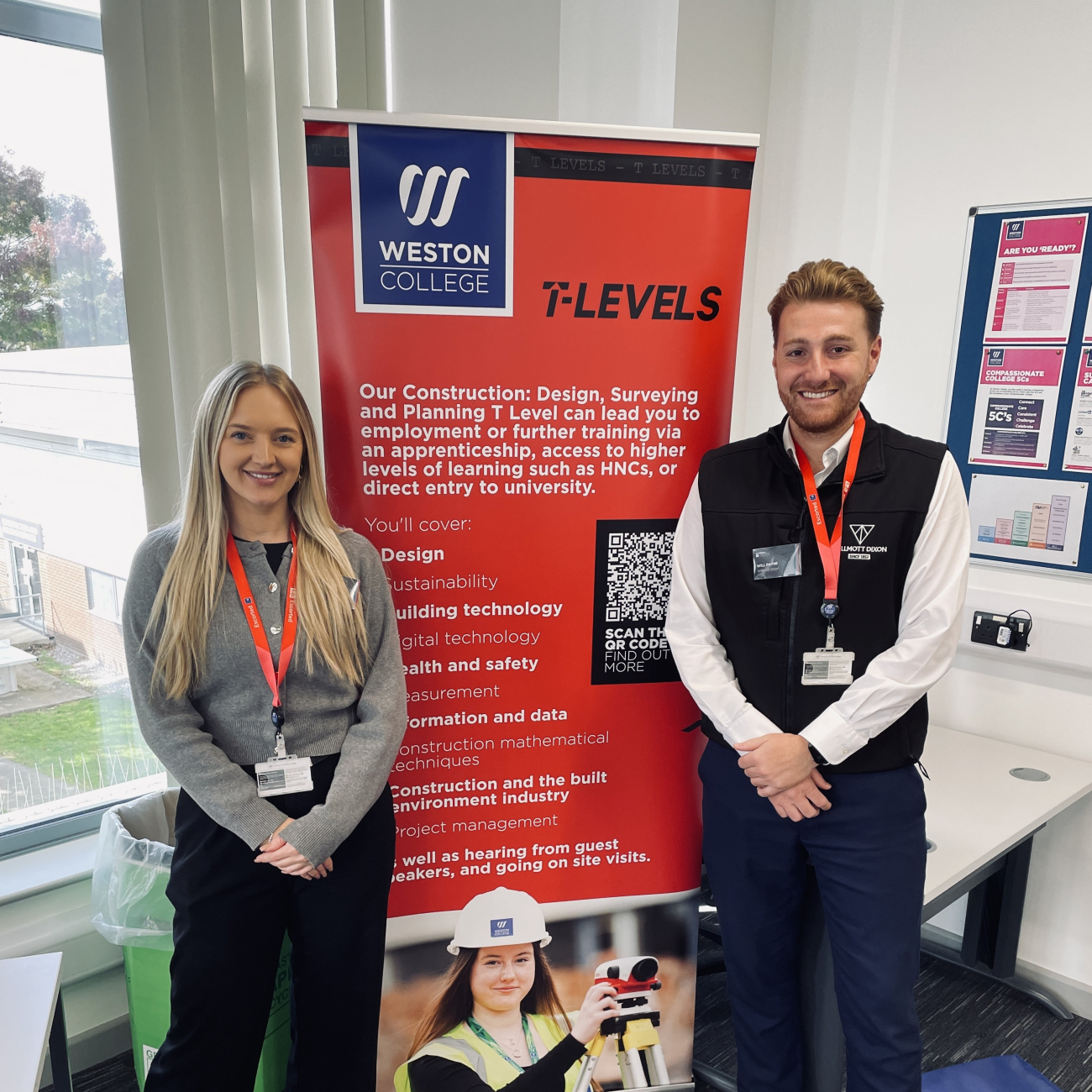
Design, Surveying and Planning for Construction, T Level
Shape the future of the built environment with this employer-designed T Level. Combining classroom learning…
Digital Production, Design & Development, T Level
Develop the technical skills employers need with this industry-focused T Level. Learn software development,…
Digital: Support Services, T Level
T Levels are designed to provide a technical alternative to A Levels and are developed in collaboration with…
Education and Early Years - Assisting Teaching, T Level
Prepare for a rewarding career supporting young children with this employer-designed T Level. Combine…
Design and Development
Engineering and Manufacturing, T Level
Develop the technical skills to manufacture, improve, and maintain the products that power modern life.…
Manufactoring, Processing & Control
Engineering and Manufacturing, T Level
Develop the technical skills to manufacture, improve, and maintain the products that power modern life.…
Fashion, T Level
Turn your passion for fashion into a career with this two-year T Level. Combining classroom learning with…
Health Supporting Adult Nurse Team, T Level
Develop your creativity and technical skills while building a professional portfolio that prepares you for…
Media Broadcast and Production, T Level
Turn your creativity into a career with this industry-focused T Level in Media Broadcast and Production.…
- Show me:
- All
- In College
- Apprenticeships
- T-Levels
Combine your passion for animals with scientific knowledge and industry experience. This two-year T Level develops the technical skills, practical experience, and confidence needed for university or a career in the animal management and science sector. Course Overview The Animal Management and Science T Level is a two-year technical qualificat...
Click HereCombine your passion for animals with scientific knowledge and industry experience. This two-year T Level develops the technical skills, practical experience, and confidence needed for university or a career in the animal management and science sector. Course Overview The Animal Management and Science T Level is a two-year technical qualificat...
Click HereDevelop the skills, knowledge, and industry experience needed to succeed in today's business world. This employer-designed T Level combines classroom learning with a substantial industry placement, helping you build leadership, management, and professional skills that are highly valued by employers and universities. Course Overview The Busines...
Click HereDevelop the skills, knowledge, and industry experience needed to succeed in today's business world. This employer-designed T Level combines classroom learning with a substantial industry placement, helping you build leadership, management, and professional skills that are highly valued by employers and universities. Course Overview The Busines...
Click HereDesign, Surveying and Planning for Construction, T Level
Shape the future of the built environment with this employer-designed T Level. Combining classroom learning with a substantial industry placement, you'll develop the technical knowledge, digital skills, and practical experience needed for a career in surveying, civil engineering, design, or construction project planning.Course OverviewThe Desi...
Click HereDesign, Surveying and Planning for Construction, T Level
Shape the future of the built environment with this employer-designed T Level. Combining classroom learning with a substantial industry placement, you'll develop the technical knowledge, digital skills, and practical experience needed for a career in surveying, civil engineering, design, or construction project planning.Course OverviewThe Desi...
Click HereDevelop the technical skills employers need with this industry-focused T Level. Learn software development, digital design, and programming while completing a substantial industry placement that prepares you for university, apprenticeships, or a career in the digital sector. Course Overview The Digital Production, Design & Development T Le...
Click HereDevelop the technical skills employers need with this industry-focused T Level. Learn software development, digital design, and programming while completing a substantial industry placement that prepares you for university, apprenticeships, or a career in the digital sector. Course Overview The Digital Production, Design & Development T Le...
Click HereEducation and Early Years - Assisting Teaching, T Level
Prepare for a rewarding career supporting young children with this employer-designed T Level. Combine classroom learning with extensive industry placement experience to develop the knowledge, skills, and confidence needed for careers in early years education or higher education. Course Overview The Early Years Educator T Level is a two-year te...
Click HereEducation and Early Years - Assisting Teaching, T Level
Prepare for a rewarding career supporting young children with this employer-designed T Level. Combine classroom learning with extensive industry placement experience to develop the knowledge, skills, and confidence needed for careers in early years education or higher education. Course Overview The Early Years Educator T Level is a two-year te...
Click HereEducation and Early Years - Assisting Teaching, T Level
Prepare for a rewarding career supporting young children with this employer-designed T Level. Combine classroom learning with extensive industry placement experience to develop the knowledge, skills, and confidence needed for careers in early years education or higher education. Course Overview The Early Years Educator T Level is a two-year te...
Click HereDevelop the technical skills to manufacture, improve, and maintain the products that power modern life. Combining classroom learning with a substantial industry placement, this T Level prepares you for higher education, apprenticeships, or a career in advanced manufacturing and engineering. Course Overview This two-year T Level combines techn...
Click HereDevelop the technical skills to manufacture, improve, and maintain the products that power modern life. Combining classroom learning with a substantial industry placement, this T Level prepares you for higher education, apprenticeships, or a career in advanced manufacturing and engineering. Course Overview This two-year T Level combines techn...
Click HereDevelop the technical skills to manufacture, improve, and maintain the products that power modern life. Combining classroom learning with a substantial industry placement, this T Level prepares you for higher education, apprenticeships, or a career in advanced manufacturing and engineering. Course Overview This two-year T Level combines techn...
Click HereDevelop the technical skills to manufacture, improve, and maintain the products that power modern life. Combining classroom learning with a substantial industry placement, this T Level prepares you for higher education, apprenticeships, or a career in advanced manufacturing and engineering. Course Overview This two-year T Level combines techn...
Click HereTurn your passion for fashion into a career with this two-year T Level. Combining classroom learning with industry placements, you'll develop the creative, technical, and practical skills needed to progress to higher education, an apprenticeship, or a career in the fashion and textiles industry. Course Overview The Fashion T Level is a vocatio...
Click HereTurn your passion for fashion into a career with this two-year T Level. Combining classroom learning with industry placements, you'll develop the creative, technical, and practical skills needed to progress to higher education, an apprenticeship, or a career in the fashion and textiles industry. Course Overview The Fashion T Level is a vocatio...
Click HereDevelop your creativity and technical skills while building a professional portfolio that prepares you for higher education or a career in the creative industries. This inspiring course combines practical photography with artistic exploration and visual storytelling. Course Overview Throughout this course, you’ll explore a broad range of pho...
Click HereDevelop your creativity and technical skills while building a professional portfolio that prepares you for higher education or a career in the creative industries. This inspiring course combines practical photography with artistic exploration and visual storytelling. Course Overview Throughout this course, you’ll explore a broad range of pho...
Click HereTurn your creativity into a career with this industry-focused T Level in Media Broadcast and Production. Combining professional media training with a substantial industry placement, you'll develop the technical, creative, and production skills needed to succeed in today's fast-paced media industry. Course Overview Designed in collaboration wit...
Click HereNo courses to show for this type


EQUIVALENT TO 3 A LEVELS

A 45-DAY INDUSTRY PLACEMENT

80% CLASSROOM, 20% WORK
DO I GET UCAS TARIFF POINTS?
Yes you do, the table below shows how many points you will be awarded based on your final T-Level grade.
| UCAS Tariff points | T Level overall grade | Equivalent in A Level |
| 168 | Distinction* | A*A*A* |
| 144 | Distinction | AAA |
| 120 | Merit | BBB |
| 96 | Pass (C or above on the core) | CCC |
| 72 | Pass (D or above on the core) | DDD |
OUR T-LEVEL VIDEOS
FAQs
T Levels are new courses launching in September 2020 for 16-19 year olds who have completed their GCSEs. Equivalent to three A Levels, the two-year courses have been developed in collaboration with employers and businesses, including Amazon, KPMG, Fujitsu, Skanska, NHS and GlaxoSmithKline, so that the content meets the needs of industry and prepares students for work.
T Levels will offer students a mixture of classroom learning and ‘on-the-job’ training during an industry placement of at least 45 days (315 hours). They will provide the knowledge and experience needed to open doors into a skilled job, higher apprenticeship or university.
here will be 25 T Levels in total which are being phased in over the next four years. Students will be able to study a T Level in the following subjects:
• Accountancy
• Agriculture, land management and production
• Animal care and management
• Building services engineering
• Catering
• Craft and design
• Cultural heritage and visitor attractions
• Design, development and control
• Design, surveying and planning
• Digital business services
• Digital production, design and development
• Digital support and services
• Education
• Financial
• Air, beauty and aesthetics
• Health
• Healthcare science
• Human resources
• Legal
• Maintenance, installation and repair
• Management and administration
• Manufacturing and process
• Media, broadcast and production
• Onsite construction
• Science
The first three T Levels, Digital, Construction and Education & Childcare, will be offered at selected colleges, schools and further education providers across England in September 2020. This means that students in Year 11 are the first to be eligible to take a T Level.
We will be launching in September 2020 Digital: Digital Production, Design and Development T Level, as well as the Education and Childcare: Education T Level transition course.
T Levels will become another option for students looking to continue studies after GCSE alongside apprenticeships and A Levels. As part of our wider reforms we are also reviewing qualifications at Level 3 and below to help streamline qualifications available to students at post 16.
A T Level qualification is a two-year course, including the industry placement. This is a significant increase on most current technical education courses, ensuring that students gain as much experience as possible while undertaking the qualification and are well prepared for the workplace.
T Levels will be based on the same high standards as apprenticeships, designed by employers and approved by the Institute for Apprenticeships and Technical Education.
Apprenticeships are different in that they are typically 80% on-the-job training and 20% in the classroom learning, and are more suited to students who know what occupation they see themselves working in, want to earn a wage, learn at the same time and are ready to enter the workforce at age 16.
Students who successfully complete a T Level will receive an overall grade of pass, merit, distinction or distinction*, along with a nationally recognised certificate to show their overall grade and a breakdown of their results.
A T Level entails the following, which students must complete to achieve a grade:
• A technical qualification, which will cover:
o Core theory, concepts and skills for the student’s chosen industry area
o A specialist skills and knowledge for an occupation or career relevant to the student’s interest
• Direct, hands-on experience in an industry placement with an employer in a relevant field
• A minimum standard in maths and English (if students have not already achieved them)
Yes, to help students get into higher education, UCAS tariff points will be allocated to T Levels, in the same way they are with A Levels. This means they will be just as academically stretching and offer students the options of progressing to a job, higher technical training, a degree or an apprenticeship.
UCAS points will only be allocated to the overall T Level grade. Students must achieve at least an overall pass grade to receive UCAS points.
Each overall T Level grade equates to the following amount of UCAS tariff points:
168 UCAS Tariff Points - Distinction* T Level overall grade
144 UCAS Tariff Points - Distinction T Level overall grade
120 UCAS Tariff Points - Merit T Level overall grade
96 UCAS Tariff Points - Pass (C) T Level overall grade
72 UCAS Tariff Points - Pass (D or E) T Level overall grade
Government will have committed half a billion pounds to delivering T Levels once they are fully rolled out. This includes the recent announcement that the further education sector will receive an additional £400m. This includes funding earmarked specifically to support workforce development and to build capacity on industry placements.
We also recommend that you add a question that covers the specific entry requirements for your school or college.
REGISTER YOUR INTEREST
LATEST NEWS
<p>Just a few years ago, we launched the exciting <a href="https://www.weston.ac.uk/what-can-i-study/courses-16-18-year-olds/t-lev… Level</a> provision, designed to seamlessly integrate classroom learning with invaluable real-world experience.</p><p>As <a href="https://www.weston.ac.uk/what-can-i-study/courses-16-18-year-olds/t-lev… Levels</a> continue to transform vocational training across the UK, you're likely brimming with questions about what these qualifications truly entail for you and how the industry placement works – from finding the placement to the types of tasks you will complete.</p><p>To give you the inside scoop, we spoke with Sandra Bull (<strong>SB</strong>), Assistant Principal and <a href="https://www.weston.ac.uk/what-can-i-study/courses-16-18-year-olds/t-lev… Level</a> Lead at Weston College, and Paul Korb (<strong>PK</strong>), Health and Safety, Compliance and Sustainability Manager at Rotamec, who welcomes <a href="https://www.weston.ac.uk/what-can-i-study/courses-16-18-year-olds/t-lev… Level</a> learners each year.</p><p>Together, they delve into the details, highlighting the immense benefits and diverse opportunities that <a href="https://www.weston.ac.uk/what-can-i-study/courses-16-18-year-olds/t-lev… Levels</a> offer.</p><p> </p><p><em><strong>How does the Industry Placement fit into the overall T Level programme?</strong></em></p><p><strong>SB</strong>: Each curriculum area designs their delivery with several selected employers as part of our Career Excellence Hub. They use them and the qualification spec to ensure that the placement is built in at the most appropriate time for that industry sector.</p><p>This may alter with each curriculum, for example Education and Early years have a national shortage of room staff so our learners assist via weekly placements.</p><p>In Digital we have employers happier to give projects so this specific division offer placements in blocks so that learners can see a project move from its start to completion.</p><p><strong>PK</strong>: Bringing T Level students into the Rotamec business gives our staff a great opportunity to practise their mentoring skills.</p><p>Young people bring fresh ideas and new ways of thinking that can help our existing staff think differently about the way they do things. In addition to this, it allows the business to assess suitable candidates for an apprenticeship position, a try before we buy scenario.</p><p> </p><p><em><strong>How will my child find an employer to complete an Industry Placement with – do they need to apply and complete an interview?</strong></em></p><p><strong>SB</strong>: We have a team of experienced staff to assist when finding the correct placement. This team will make contact with your child once they are enrolled to the course and between them and the tutor you will have all the guidance and advice required to select the best option.</p><p>Most industry placement will require the learner to have an interview, and this is a great way to find out their expectations and if that fits your child’s career aspiration.</p><p><strong>PK</strong>: Going into any workplace for the first time can be very daunting, especially for youngsters.</p><p>Rotamec has a robust partnership with Weston College. Because of this, Rotamec wishes to ensure that your child feels at ease coming into our workplace and settles into the business in no time.</p><p>The college will arrange everything for your child and will communicate its plan for the placement with us. Prior to attending the workplace, the college will ensure that your child is ready for the placement.</p><p> </p><p><em><strong>Can you provide an overview of the type of tasks my child will be doing during their Industry Placement?</strong></em></p><p><strong>SB</strong>: The Placement Officer and Tutor attached to your industry will explain what tasks may be required to complete and how this will fit into the overall qualification specification leading to the achievement.</p><p><strong>PK</strong>: Each placement will be different depending on the course your child is on. Rotamec ensures that the activities undertaken during the placement, under pins the course.</p><p>Therefore, we will ensure that the placement has a blended learning outcome for your child. There may be some tasks that your child will undertake, but this is essential to give the child the chance to experience a normal working day that may be varied.</p><p> </p><p><em><strong>How many hours per week/term will my child be expected to work during their Industry Placement?</strong></em></p><p><strong>SB</strong>: The overall expectation generally is around 315 hours over the year (for some sectors this will be higher for example Engineering and Early years) so this can be split into even blocks across the two years or their will be an expectation to attend weekly. During your child’s interview for a T Level this will be explained to them linked to their pathway and sector.</p><p><strong>PK</strong>: The placement could vary for each cohort. For T Levels, the work placement will be a minimum of 45 days. However, if your child wishes to attend additional days, we will ensure arrangements are made with the college to accommodate this. School holidays are very popular for the learners to do extra days.</p><p> </p><p><em><strong>What are the benefits for my son/daughter in completing an Industry Placement?</strong></em></p><p><strong>SB</strong>: Placements give valuable work experience, which are very important when it comes to building up a CV. It reflects the learner’s ambition, their work ethic and reliability.</p><p>On top of this, several T Level learners in the past have gained degree apprenticeships with the organisation that they completed their placement with, so this is certainly a big benefit of the T Level.</p><p><strong>PK</strong>: Focusing on professional skills, T Levels have been designed with leading employers to give you the knowledge and skills you need to progress into work, further study or an apprenticeship.</p><p>T Levels combine class-based learning with an industry placement, giving you the chance to get hands-on experience and learn what a real career is like while you continue your studies.</p><p> </p><p><em><strong>What kind of supervision and support will be provided to my child during their Industry Placement?</strong></em></p><p><strong>SB</strong>: Each placement has a dedicated manager or mentor who will be involved with regular reviews between the learner and the college tracking progression and areas to develop.</p><p><strong>PK</strong>: Each candidate is assigned a mentor during their placement. We offer a variety of experience across all departments within the business, and each of the mentors will ensure the safeguarding of the students and support them in the learning, experience and safety.</p><p> </p><p><em><strong>How will my child's progress be monitored and evaluated during their Industry Placement?</strong></em></p><p><strong>SB</strong>: Targets will be set by the learner and the tutor, but also with the mentor and our placement team as required, to ensure progression is measured and at a level that suits their abilities and assessment schedule.</p><p><strong>PK</strong>: As a business, we have created a learning plan that will support the students during their placement with us.</p><p>The learning plan not only assists the mentor in ensuring that the student gets the most out of their experience, but it further ensures that the business covers all the relevant subjects covered on the student’s course.</p><p> </p><p><em><strong>Are there opportunities for my child to continue working with the company after completing their Industry Placement?</strong></em></p><p><strong>SB</strong>: Absolutely and for many this is why they have chosen the T Level route. The programme gives you time and the employer time to find out what options would best fit you into the company as your skills and work behaviours develop. It also gives learners the time to work out if the company is the right fit for them, once they have completed their course.</p><p><strong>PK</strong>: The placement not only benefits the student during their experience with us, but it further allows the business to assess and find the ideal candidate who wishes to pursue a career in our industry. It allows us to “try before we buy” and we will offer an apprenticeship at the completion of their course.</p><p>Not only does this benefit the business, but it also allows the student to sample our business and decide if this is a career path they wish to pursue.</p><p> </p><p><em><strong>What safety measures are in place to ensure my child's wellbeing during their Industry Placement?</strong></em></p><p><strong>SB</strong>: Each placement is required to work with the Placement Officer providing insurance and safety measures. The placement will provide learners with an induction to the environment and their placement officer will be the main contact if something is not correct.</p><p><strong>PK</strong>: The safeguarding of all our staff and especially your child is paramount to us. As a business we have a rigorous Safety Management System to ensure that the students and staff are kept safe. Every staff member and student have a safety induction on their first day in the business. Further safety briefings and training will be provided during their placement. No student is left unattended, during the working hours.</p><p> </p><p><em><strong>Will my child have the opportunity to work on real projects or tasks relevant to their T Level course during their Industry Placement?</strong></em></p><p><strong>SB</strong>: Yes, most placements work on projects that are happening in the workplace now, so it gives the learner a true reflection on what the expectations are if they were to join them as a team after completing the T level.</p><p><strong>PK</strong>: Initially in the first few days, the business will supply training units for the candidates to train on. After a few sessions with the mentor, if they deem the candidates competent enough, they will allow the candidates to work on live projects.</p><p> </p><p><em><strong>Will my child have a designated mentor or point of contact at the company during their Industry Placement?</strong></em></p><p><strong>SB</strong>: Yes, a designated Placement Officer and a Personal Tutor who they will see very regularly.</p><p><strong>PK</strong>: Every student is assigned a mentor that will oversee their work placement. They will also provide feedback to the students and college on their progress. This will identify their strengths and weaknesses that will help the student to develop.</p><p> </p><p><em><strong>How does the Industry Placement align with the specific pathway or specialisation my child is pursuing within their T Level?</strong></em></p><p><strong>SB</strong>: For most T Level routes, you can have two placements in the programme. For many this may result in one for the first year linked to core elements of delivery, with a change over the summer period (as you enter into the second year) to a placement more specific to the chosen pathway.</p><p><strong>PK</strong>: Our business ensures that the lesson plan aligns itself to the specific pathway that the student is on. Sometimes the student may learn additional skills. This is modelled to give the student the maximum experience during their placement.</p><p> </p><p><em><strong>Can you provide examples of past successful Industry Placements and the impact they've had on students' education and career paths?</strong></em></p><p><strong>SB</strong>: We have had a lot of success stories from across our T Level provision. We have seen learners gain scholarships for university, gain their dream degree apprenticeship, and have the doors opened to an exciting career.</p><p>A few success stories include:</p><p>Lauren studied our Health T Level and found her placement really challenging initially but she was supported throughout her placement, where she impressed so much that on completion she gained a job with that employer.</p><p>Maria studied a Digital T Level and completed her placement with Zig Zag Education, where she was working on developing websites. Since completing her T Level, she has gone on to gain a role with Hinkley Point as a Delivery Management System Coordinator.</p><p>Ben completed his construction T Level last year, and on the back of his success was offered a degree apprenticeship with the organisation he completed his placement with.</p><p>Alex was on our Digital T Level programme where he completed his placement with SenseIT, and he has now progressed on to a Digital Technology Degree Apprenticeship with Airbus.</p><p><strong>PK</strong>: Rotamec has some staff who started their placements with us, and applied for an apprenticeship after they left school. Once they had completed their studies, they spent 3 years developing their skills and are now managers of their departments.</p><p>The business has also been recognised within our industry and the various colleges for the contributions to the skills and training of the students and has won various awards. This was all based on the successful accomplishments and the positive impact the students have had on our business.</p><p> </p><p><em><strong>As an employer, what is the best thing about Industry Placements from your point of view?</strong></em></p><p><strong>PK</strong>: Every student that attends our business, could be the future engineer for our industry. They could also be the next supervisor, foreman, or manager. If the student has the attitude for the job, we will assist the student to develop their skills and development. The students assist with the day to day running of the business and has really had a positive impact.</p><p> </p><p>A big thank you to Sandra and Paul for their contribution.</p><p>If you would like to find out more about T Levels, then please <a href="https://www.weston.ac.uk/what-can-i-study/courses-16-18-year-olds/t-lev… here</a>.</p>

<p>Two <a href="https://www.weston.ac.uk/what-can-i-study/courses-16-18-year-olds/t-lev… Level</a> students have recently had the exciting opportunity to complete their placement with Griffiths Farrans JV, as part of their commitment to support the next generation of talent in construction and civil engineering.</p><p>The work placement element of<a href="https://www.weston.ac.uk/what-can-i-study/courses-16-18-year-olds/t-lev…; T Levels</a> (which equates to 20% of the duration of the course) gives learners the opportunity to put the theory they have learned in the classroom into practice and gain real-life experience in an industry related to their course.</p><p>Ned and Kimberly, who study Construction: Design, Surveying and Planning, have been working on an exciting public transport project at Bristol Airport since April, which has involved helping in delivering an enlarged public transport interchange with an enhanced internal road system.</p><p>The learners are also working on an additional multi-story car park which includes waiting rooms and rest facilities. These projects are part of Bristol Airport’s multi-million-pound transformational development plan which aims to allow 12 million passengers a year to use the Airport.</p><p>Kimberly says that the activities she usually carries out day-to-day at her work placement involve taking levels, marking out points for ground works, and creating surveys. The area that she has found the most interesting has been using modern technology to set out different aspects of the construction of the project such as a total station, magnet field controller and GPS to take levels and to set out on site.</p><p>When asked if Kimberly would encourage others to apply to T Levels, she said, “I would definitely recommend T Levels to other students. <a href="https://www.weston.ac.uk/what-can-i-study/courses-16-18-year-olds/t-lev… Levels</a> give you a more practical insight of the career field you want to go into.”</p><p>“Going to placement has really helped me think about my future and has provided a clearer vision of what I may want to do for my future. I am confident that this is the career field I am meant to be in, and I really enjoy it.”</p><p>Click here to read more about T Levels available at Weston College: <a href="https://www.weston.ac.uk/what-can-i-study/courses-16-18-year-olds/t-lev…;
<p style="margin-bottom:8px;margin-left:0;margin-top:0px;"><span style="font-size:inherit;">We are proud to announce that one of our outstanding T Level students, Katy Bateman, has been selected to participate in a national campaign organised by the Department for Education. Katy, currently in her second year of the T Level program, has been chosen to represent the Education pathway. </span></p><p style="margin-bottom:8px;margin-left:0;margin-top:0px;"><span style="font-size:inherit;">The filming team visited Katy at the College in December and filmed a captivating "day in the life" piece for Snapchat, that will prominently feature on Snapchat's Explore page as part of a paid-for national campaign to showcase real young people navigating their technical education pathways. This campaign, set to go live today, aims to inspire and inform millions of young individuals across England, with an expected audience reach of 5.8 million people aged 14-19. </span></p><p style="margin-bottom:8px;margin-left:0;margin-top:0px;"><span style="font-size:inherit;">Katy shared her excitement about being part of this initiative, stating, "The filming experience was really interesting and something I've never done before. I found it quite fun!" Katy is currently undertaking her T Level Education placement at Grove Junior School, where she is immersed in the vibrant environment of Year 3 education. </span></p><p style="margin-bottom:8px;margin-left:0;margin-top:0px;"><span style="font-size:inherit;">Looking ahead, Katy has ambitious plans for her future. After completing her T Level, she intends to take a gap year to explore different facets of education, including volunteering at a local forest school. Subsequently, she aims to pursue further studies at University Centre Weston (UCW), focusing on education, society, and childhood. </span></p><p style="margin-bottom:8px;margin-left:0;margin-top:0px;"><span style="font-size:inherit;">Well done Katy for flying the flag for T Levels and Weston College – we are so proud of all you have achieved so far and the exciting future that awaits you, take a look at the ad here: </span></p><p> </p><p><iframe width="750" height="500" src="https://www.youtube.com/embed/6zlia9w0JS4?si=ClljQVBpg_1K4BKe" title="YouTube video player" frameborder="0" allow="accelerometer; autoplay; clipboard-write; encrypted-media; gyroscope; picture-in-picture; web-share" allowfullscreen=""></iframe></p><p style="margin-bottom:8px;margin-left:0;margin-top:0px;"> </p><p style="margin-bottom:8px;margin-left:0;margin-top:0px;"><span style="font-size:inherit;">For more information about Weston College and our T Level programs, please visit </span><a href="https://www.weston.ac.uk/what-can-i-study/courses-16-18-year-olds/t-lev…; rel="noreferrer noopener" title="https://www.weston.ac.uk/what-can-i-study/courses-16-18-year-olds/t-lev…; target="_blank">T Levels | Weston College</a><span style="font-size:inherit;"> </span></p><p style="margin-bottom:8px;margin-left:0;margin-top:0px;"> </p><p style="margin-bottom:8px;margin-left:0;margin-top:0px;"><strong style="-webkit-text-stroke-width:0px;background-color:transparent;border-width:0px;box-sizing:border-box;color:rgb(56, 74, 77);font-family:"Hco Gotham", "Open Sans", Arial, sans-serif;font-size:18px;font-style:normal;font-variant-caps:normal;font-variant-ligatures:normal;letter-spacing:normal;margin:0px;orphans:2;outline:0px;padding:0px;text-align:start;text-decoration-color:initial;text-decoration-style:initial;text-decoration-thickness:initial;text-indent:0px;text-transform:none;vertical-align:baseline;white-space:normal;widows:2;word-spacing:0px;">If you are passionate about education and are looking for an opportunity to join the staff team at a leading college, then look at the latest job vacancies available at Weston College </strong><a class="ProsemirrorEditor-link" style="-webkit-text-stroke-width:0px;background-color:transparent;border-width:0px;box-sizing:border-box;color:rgb(16, 108, 177);font-family:"Hco Gotham", "Open Sans", Arial, sans-serif;font-size:18px;font-style:normal;font-variant-caps:normal;font-variant-ligatures:normal;font-weight:500;letter-spacing:normal;margin:0px;orphans:2;outline:0px;padding:0px;text-align:start;text-decoration:none;text-indent:0px;text-transform:none;vertical-align:baseline;white-space:normal;widows:2;word-spacing:0px;" href="https://www.weston.ac.uk/jobs?utm_source=main-menu&utm_medium=main-… style="background-color:transparent;border-width:0px;box-sizing:border-box;font-size:18px;margin:0px;outline:0px;padding:0px;vertical-align:baseline;">here</strong></a><strong style="-webkit-text-stroke-width:0px;background-color:transparent;border-width:0px;box-sizing:border-box;color:rgb(56, 74, 77);font-family:"Hco Gotham", "Open Sans", Arial, sans-serif;font-size:18px;font-style:normal;font-variant-caps:normal;font-variant-ligatures:normal;letter-spacing:normal;margin:0px;orphans:2;outline:0px;padding:0px;text-align:start;text-decoration-color:initial;text-decoration-style:initial;text-decoration-thickness:initial;text-indent:0px;text-transform:none;vertical-align:baseline;white-space:normal;widows:2;word-spacing:0px;">. You can find all the latest job opportunities that Weston College has to offer, with a commitment to providing quality education for learners and a focus on continuous professional development for staff, Weston College is an excellent place to work and grow in your career.</strong></p>