




T Levels
CREATED WITH BUSINESS
T Levels have been designed with leading businesses and employers to give you the knowledge and skills you need. More than 200 businesses – including Fujitsu and Skanska – have been involved so you can be confident your T Level will move you to the next level.
GET AHEAD IN YOUR CAREER
T Levels give you the chance to learn what a real career is like while you continue your studies. Your industry placement will last for at least 45 days.
QUALIFICATIONS THAT COUNT
When you pass your T Level, you will get a nationally recognised certificate showing the overall grade you achieved - pass, merit, distinction or distinction*. It will also give details of what you learned on the course to help you move into skilled employment or a higher apprenticeship.
AWARDED UCAS POINTS
Your T Level will be worth UCAS points – a T Level Distinction* is worth the same as 3 A Levels at A* – and will be recognised by universities and other education providers so you can choose to continue studying if you wish.
LEARN YOUR WAY
T Levels involve more classroom study than apprenticeships, which means you can experience an industry while you continue your studies. Like A Levels, there are no tuition fees to study a T Level if you start before you are 19.
Animal Management and Science, T Level
Combine your passion for animals with scientific knowledge and industry experience. This two-year T Level…
Business, Management and Leadership, T Level
Develop the skills, knowledge, and industry experience needed to succeed in today's business world. This…
Design, Surveying and Planning for Construction, T Level
Shape the future of the built environment with this employer-designed T Level. Combining classroom learning…
Digital Production, Design & Development, T Level
Develop the technical skills employers need with this industry-focused T Level. Learn software development,…
Digital: Support Services, T Level
T Levels are designed to provide a technical alternative to A Levels and are developed in collaboration with…
Education and Early Years - Assisting Teaching, T Level
Prepare for a rewarding career supporting young children with this employer-designed T Level. Combine…
Design and Development
Engineering and Manufacturing, T Level
Develop the technical skills to manufacture, improve, and maintain the products that power modern life.…
Manufactoring, Processing & Control
Engineering and Manufacturing, T Level
Develop the technical skills to manufacture, improve, and maintain the products that power modern life.…
Fashion, T Level
Turn your passion for fashion into a career with this two-year T Level. Combining classroom learning with…
Health Supporting Adult Nurse Team, T Level
Develop your creativity and technical skills while building a professional portfolio that prepares you for…
Media Broadcast and Production, T Level
Turn your creativity into a career with this industry-focused T Level in Media Broadcast and Production.…
- Show me:
- All
- In College
- Apprenticeships
- T-Levels
Combine your passion for animals with scientific knowledge and industry experience. This two-year T Level develops the technical skills, practical experience, and confidence needed for university or a career in the animal management and science sector. Course Overview The Animal Management and Science T Level is a two-year technical qualificat...
Click HereCombine your passion for animals with scientific knowledge and industry experience. This two-year T Level develops the technical skills, practical experience, and confidence needed for university or a career in the animal management and science sector. Course Overview The Animal Management and Science T Level is a two-year technical qualificat...
Click HereDevelop the skills, knowledge, and industry experience needed to succeed in today's business world. This employer-designed T Level combines classroom learning with a substantial industry placement, helping you build leadership, management, and professional skills that are highly valued by employers and universities. Course Overview The Busines...
Click HereDevelop the skills, knowledge, and industry experience needed to succeed in today's business world. This employer-designed T Level combines classroom learning with a substantial industry placement, helping you build leadership, management, and professional skills that are highly valued by employers and universities. Course Overview The Busines...
Click HereDesign, Surveying and Planning for Construction, T Level
Shape the future of the built environment with this employer-designed T Level. Combining classroom learning with a substantial industry placement, you'll develop the technical knowledge, digital skills, and practical experience needed for a career in surveying, civil engineering, design, or construction project planning.Course OverviewThe Desi...
Click HereDesign, Surveying and Planning for Construction, T Level
Shape the future of the built environment with this employer-designed T Level. Combining classroom learning with a substantial industry placement, you'll develop the technical knowledge, digital skills, and practical experience needed for a career in surveying, civil engineering, design, or construction project planning.Course OverviewThe Desi...
Click HereDevelop the technical skills employers need with this industry-focused T Level. Learn software development, digital design, and programming while completing a substantial industry placement that prepares you for university, apprenticeships, or a career in the digital sector. Course Overview The Digital Production, Design & Development T Le...
Click HereDevelop the technical skills employers need with this industry-focused T Level. Learn software development, digital design, and programming while completing a substantial industry placement that prepares you for university, apprenticeships, or a career in the digital sector. Course Overview The Digital Production, Design & Development T Le...
Click HereEducation and Early Years - Assisting Teaching, T Level
Prepare for a rewarding career supporting young children with this employer-designed T Level. Combine classroom learning with extensive industry placement experience to develop the knowledge, skills, and confidence needed for careers in early years education or higher education. Course Overview The Early Years Educator T Level is a two-year te...
Click HereEducation and Early Years - Assisting Teaching, T Level
Prepare for a rewarding career supporting young children with this employer-designed T Level. Combine classroom learning with extensive industry placement experience to develop the knowledge, skills, and confidence needed for careers in early years education or higher education. Course Overview The Early Years Educator T Level is a two-year te...
Click HereEducation and Early Years - Assisting Teaching, T Level
Prepare for a rewarding career supporting young children with this employer-designed T Level. Combine classroom learning with extensive industry placement experience to develop the knowledge, skills, and confidence needed for careers in early years education or higher education. Course Overview The Early Years Educator T Level is a two-year te...
Click HereDevelop the technical skills to manufacture, improve, and maintain the products that power modern life. Combining classroom learning with a substantial industry placement, this T Level prepares you for higher education, apprenticeships, or a career in advanced manufacturing and engineering. Course Overview This two-year T Level combines techn...
Click HereDevelop the technical skills to manufacture, improve, and maintain the products that power modern life. Combining classroom learning with a substantial industry placement, this T Level prepares you for higher education, apprenticeships, or a career in advanced manufacturing and engineering. Course Overview This two-year T Level combines techn...
Click HereDevelop the technical skills to manufacture, improve, and maintain the products that power modern life. Combining classroom learning with a substantial industry placement, this T Level prepares you for higher education, apprenticeships, or a career in advanced manufacturing and engineering. Course Overview This two-year T Level combines techn...
Click HereDevelop the technical skills to manufacture, improve, and maintain the products that power modern life. Combining classroom learning with a substantial industry placement, this T Level prepares you for higher education, apprenticeships, or a career in advanced manufacturing and engineering. Course Overview This two-year T Level combines techn...
Click HereTurn your passion for fashion into a career with this two-year T Level. Combining classroom learning with industry placements, you'll develop the creative, technical, and practical skills needed to progress to higher education, an apprenticeship, or a career in the fashion and textiles industry. Course Overview The Fashion T Level is a vocatio...
Click HereTurn your passion for fashion into a career with this two-year T Level. Combining classroom learning with industry placements, you'll develop the creative, technical, and practical skills needed to progress to higher education, an apprenticeship, or a career in the fashion and textiles industry. Course Overview The Fashion T Level is a vocatio...
Click HereDevelop your creativity and technical skills while building a professional portfolio that prepares you for higher education or a career in the creative industries. This inspiring course combines practical photography with artistic exploration and visual storytelling. Course Overview Throughout this course, you’ll explore a broad range of pho...
Click HereDevelop your creativity and technical skills while building a professional portfolio that prepares you for higher education or a career in the creative industries. This inspiring course combines practical photography with artistic exploration and visual storytelling. Course Overview Throughout this course, you’ll explore a broad range of pho...
Click HereTurn your creativity into a career with this industry-focused T Level in Media Broadcast and Production. Combining professional media training with a substantial industry placement, you'll develop the technical, creative, and production skills needed to succeed in today's fast-paced media industry. Course Overview Designed in collaboration wit...
Click HereNo courses to show for this type


EQUIVALENT TO 3 A LEVELS

A 45-DAY INDUSTRY PLACEMENT

80% CLASSROOM, 20% WORK
DO I GET UCAS TARIFF POINTS?
Yes you do, the table below shows how many points you will be awarded based on your final T-Level grade.
| UCAS Tariff points | T Level overall grade | Equivalent in A Level |
| 168 | Distinction* | A*A*A* |
| 144 | Distinction | AAA |
| 120 | Merit | BBB |
| 96 | Pass (C or above on the core) | CCC |
| 72 | Pass (D or above on the core) | DDD |
OUR T-LEVEL VIDEOS
FAQs
T Levels are new courses launching in September 2020 for 16-19 year olds who have completed their GCSEs. Equivalent to three A Levels, the two-year courses have been developed in collaboration with employers and businesses, including Amazon, KPMG, Fujitsu, Skanska, NHS and GlaxoSmithKline, so that the content meets the needs of industry and prepares students for work.
T Levels will offer students a mixture of classroom learning and ‘on-the-job’ training during an industry placement of at least 45 days (315 hours). They will provide the knowledge and experience needed to open doors into a skilled job, higher apprenticeship or university.
here will be 25 T Levels in total which are being phased in over the next four years. Students will be able to study a T Level in the following subjects:
• Accountancy
• Agriculture, land management and production
• Animal care and management
• Building services engineering
• Catering
• Craft and design
• Cultural heritage and visitor attractions
• Design, development and control
• Design, surveying and planning
• Digital business services
• Digital production, design and development
• Digital support and services
• Education
• Financial
• Air, beauty and aesthetics
• Health
• Healthcare science
• Human resources
• Legal
• Maintenance, installation and repair
• Management and administration
• Manufacturing and process
• Media, broadcast and production
• Onsite construction
• Science
The first three T Levels, Digital, Construction and Education & Childcare, will be offered at selected colleges, schools and further education providers across England in September 2020. This means that students in Year 11 are the first to be eligible to take a T Level.
We will be launching in September 2020 Digital: Digital Production, Design and Development T Level, as well as the Education and Childcare: Education T Level transition course.
T Levels will become another option for students looking to continue studies after GCSE alongside apprenticeships and A Levels. As part of our wider reforms we are also reviewing qualifications at Level 3 and below to help streamline qualifications available to students at post 16.
A T Level qualification is a two-year course, including the industry placement. This is a significant increase on most current technical education courses, ensuring that students gain as much experience as possible while undertaking the qualification and are well prepared for the workplace.
T Levels will be based on the same high standards as apprenticeships, designed by employers and approved by the Institute for Apprenticeships and Technical Education.
Apprenticeships are different in that they are typically 80% on-the-job training and 20% in the classroom learning, and are more suited to students who know what occupation they see themselves working in, want to earn a wage, learn at the same time and are ready to enter the workforce at age 16.
Students who successfully complete a T Level will receive an overall grade of pass, merit, distinction or distinction*, along with a nationally recognised certificate to show their overall grade and a breakdown of their results.
A T Level entails the following, which students must complete to achieve a grade:
• A technical qualification, which will cover:
o Core theory, concepts and skills for the student’s chosen industry area
o A specialist skills and knowledge for an occupation or career relevant to the student’s interest
• Direct, hands-on experience in an industry placement with an employer in a relevant field
• A minimum standard in maths and English (if students have not already achieved them)
Yes, to help students get into higher education, UCAS tariff points will be allocated to T Levels, in the same way they are with A Levels. This means they will be just as academically stretching and offer students the options of progressing to a job, higher technical training, a degree or an apprenticeship.
UCAS points will only be allocated to the overall T Level grade. Students must achieve at least an overall pass grade to receive UCAS points.
Each overall T Level grade equates to the following amount of UCAS tariff points:
168 UCAS Tariff Points - Distinction* T Level overall grade
144 UCAS Tariff Points - Distinction T Level overall grade
120 UCAS Tariff Points - Merit T Level overall grade
96 UCAS Tariff Points - Pass (C) T Level overall grade
72 UCAS Tariff Points - Pass (D or E) T Level overall grade
Government will have committed half a billion pounds to delivering T Levels once they are fully rolled out. This includes the recent announcement that the further education sector will receive an additional £400m. This includes funding earmarked specifically to support workforce development and to build capacity on industry placements.
We also recommend that you add a question that covers the specific entry requirements for your school or college.
REGISTER YOUR INTEREST
LATEST NEWS

<p>We recently caught up with Maria, a talented second year student currently studying T Level Production Design and Development.</p><p>Maria began her journey at Weston college with the T Level Computing and Digital technical progression programme which provided her the opportunity to develop skills such as teamworking, basic python coding and website deigning. Maria stated that the level two technical progression programme helped ‘develop her skills and understanding of programming’ and ‘gave her an insight about the technical and non-technical skills that she needed to develop further’.</p><p>Moving onto the T Level Digital Production Design and Development Maria continued her excellence, especially when completing her industry placement. Her determination and passion drove her to be the first student to complete all the industry placement hours working on PHP development systems. Her hard work was reflected with excellent feedback from her industry placement employer.</p><p>Maria decided on studying a T Level due to the 315 hours of industry placement offered, which she realised would allow her to gain knowledge and experience to help her continue into either a skilled job, higher apprenticeship or university. Maria found her T Level ‘fun, and not as difficult or stressful as it might seem’, she also thoroughly enjoyed when she got to create her own website from scratch.</p><p>The Digital Production Design and Development T Level, is a two year course based at Knightstone campus. The T Level is designed and developed in collaboration with employers, which allows students to have a mixture of classroom learning and work-based experience to help build technical skills to kick start your career into the digital sector. Studying this course means you will be apart of our computing and IT career excellence hub, as well as provided with the opportunity to join our esports academy!</p><p>Throughout the T Level Maria has grown in both confidence and knowledge, and her tutor is confident she will continue this trend and become an invaluable member of any team within the industry. After completing her course, Maria hopes to take a gap year to develop her skills further and the progress onto a higher apprenticeship!</p><p>We wish you the best of luck Maria!</p>
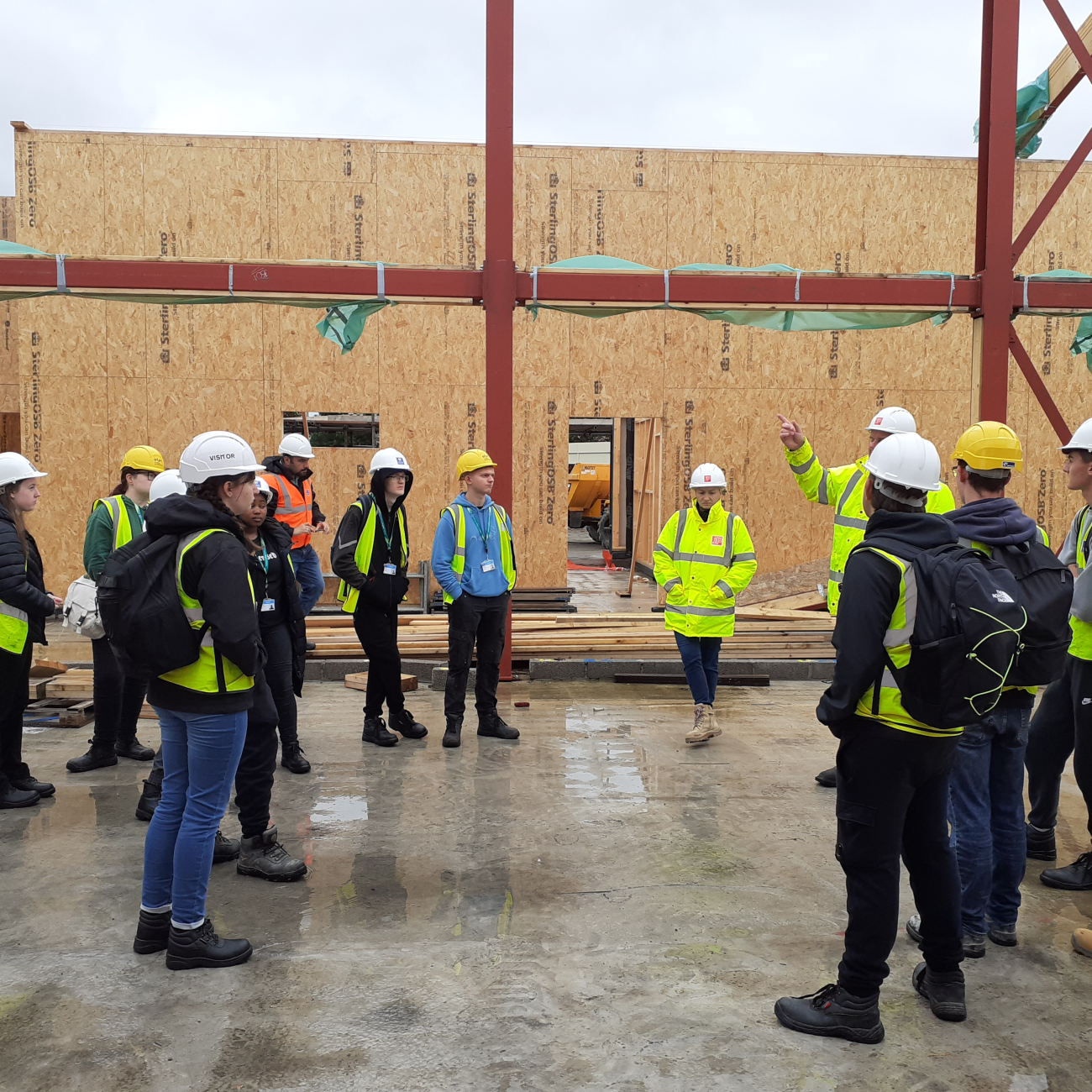
<p>Last week twelve first year T Level learners, studying Design, Surveying and Planning for Construction, went on a site visit to the Ashcombe Primary School Construction project, which is being built by John Perkins Construction Limited.</p>
<p>Before entering the site, learners were issued with all the correct Personal Protective Equipment and given a Health and Safety Site Induction by Richard Mann, the Site Manager for John Perkins Construction.</p>
<p>Once ready to enter the site, learners were then treated to a comprehensive site tour from Richard, which included visiting the new classrooms, reception area, school hall and other back-up facilities.</p>
<p>Throughout the tour Richard explained what materials were used and methods of construction. It was a fantastic interactive session, where learners asked multiple questions, allowing them to delve deeper into the techniques used, in more detail.</p>
<p>At the end of the tour, Richard kindly offered to host the T Level learners on site again in Spring next year, to see the progress on the build and experience the internal fit-out works of the project.</p>
<p>Daniel Comerford, Lecturer in Construction Professions at Weston College, said: “I would like to say a big thank you to everyone that made our recent possible – our learners found the site visit extremely beneficial.</p>
<p>“On the back of the visit, learners are writing up a technical report, which includes items such as health and safety, timber frames and foundation details.</p>
<p>“We look forward to working closely with John Perkins Construction Limited over the coming academic year.”</p>
<p>This employer project forms part of the subject <a href="https://www.weston.ac.uk/career-excellence-hubs">Careers Excellence Hub</a>; Weston College is committed to preparing learners for success in a rapidly evolving job market which is reflected in our offer via our bespoke Career Excellence Hubs, which form an integral part of all college programmes. In a world where professional networks and industry-specific skills are integral to landing employment, these hubs provide a unique solution to bridge the gap between education and industry demands.</p>
<div style="mso-element:para-border-div;border:none;border-bottom:solid windowtext 1.5pt;
padding:0cm 0cm 1.0pt 0cm">
<p class="MsoNormal" style="border:none;mso-border-bottom-alt:solid windowtext 1.5pt;
padding:0cm;mso-padding-alt:0cm 0cm 1.0pt 0cm"><a href="https://www.weston.ac.uk/what-can-i-study/courses-16-18-year-olds/surve… you would like to find out more about our Construction T Level courses, please click here.</a></p>
</div>
<p>In a resounding testament to educational excellence, Weston College's <a href="https://www.weston.ac.uk/what-can-i-study/courses-16-18-year-olds/t-lev… Level</a> learners have achieved an extraordinary 100% pass rate this year – outshining the national pass rate of 90.5%.</p>
<p>T Levels, introduced as a new technical qualification pathway, emphasise a blend of classroom learning and practical experience, making Weston College's achievement even more noteworthy.</p>
<p>The achievement of a flawless pass rate is a reflection of the dedication put forth by students and the unwavering support provided by staff at Weston College.</p>
<p>Sandra Bull, Assistant Principal of Curriculum and Cross College T Level Lead, at Weston College, said: “We are so proud of our T Level learners, and the amazing results that they have achieved – bucking the national trend!</p>
<p>“The results demonstrate the hard work and commitment of our students, staff and also the employer partners who play such an important role in the T Level journey for our learners.</p>
<p>“Our learners are now progressing onto their next stage, which looks different for each learner, with some progressing to university, some going on to complete degree apprenticeships and others going straight into their chosen industry.</p>
<p>“These results, and the feedback we are receiving, demonstrate the impact that T Levels can have and is having on creating the next generation of skilled employees for the evolving demands of the modern workforce.”</p>
<p>One of the driving forces behind this remarkable success is the college's emphasis on putting the learner first. Weston College is renowned for its student-centred approach, ensuring that each individual's unique strengths are harnessed and that support is on hand to support learners in any way that is needed. The dedicated teaching staff, equipped with a wealth of expertise, have played a pivotal role in shaping students into confident, knowledgeable professionals ready to make a meaningful impact.</p>
<p>Hear from some of the learners, and the impact T Levels has had on them, below.</p>